
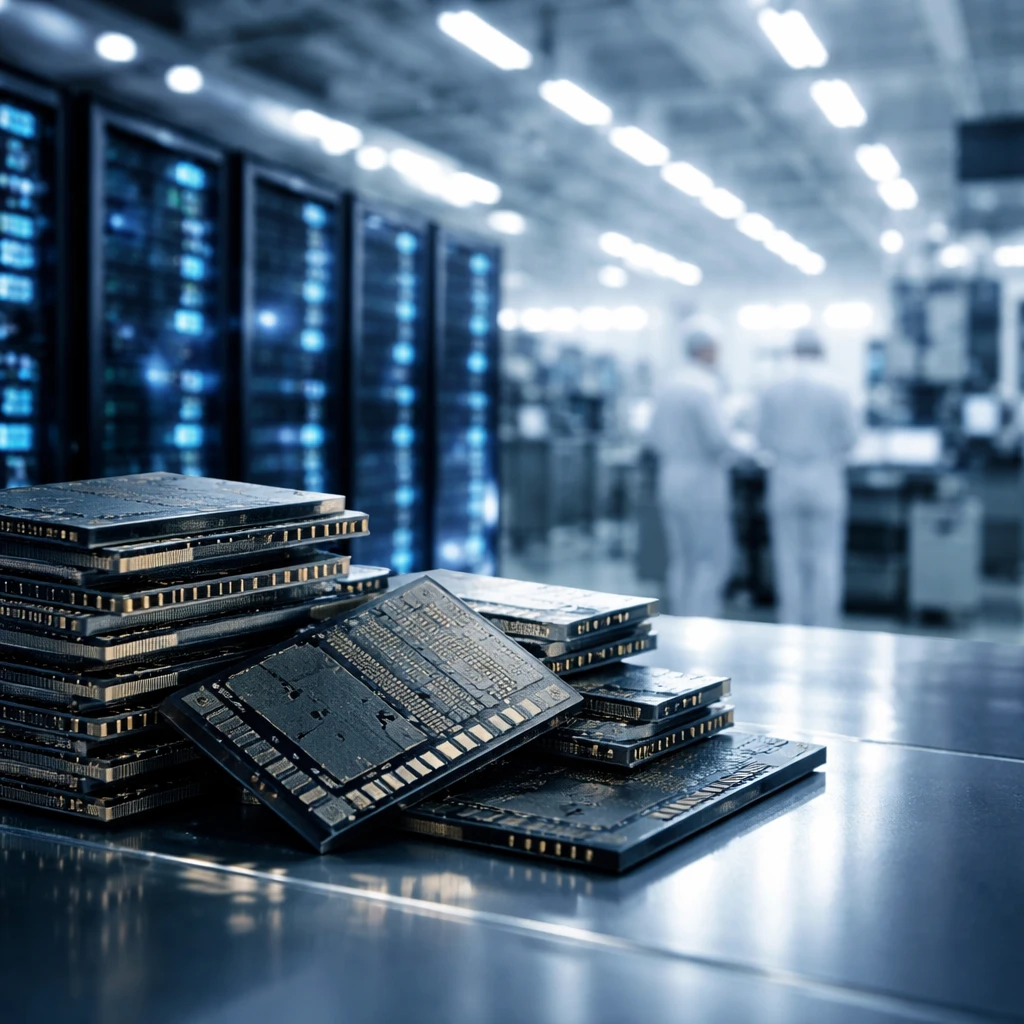
Shares of Samsung Electronics rose 3.63% on Tuesday in South Korea, a move that analysts say reflects the combination of surging memory prices and persistent AI-related demand that could push the chipmaker's market capitalization toward the $1 trillion mark.
Several large brokerages have updated forecasts and price targets in recent sessions, citing a more powerful earnings outlook for the firm driven by pricing strength in memory and the potential for margin expansion. Morgan Stanley emphasized that Samsung's trajectory toward a trillion-dollar valuation rests on improved earnings power, sustained pricing in memory and higher margins.
"Samsung's trillion-dollar era is driven by fundamentals, not just animal spirit," a Morgan Stanley analyst said. The positive sentiment around Samsung coincided with broad strength in the South Korean market: the benchmark KOSPI closed up 2.11% at a record 5,969.64.
Memory peers also rallied, with SK Hynix climbing 5.68% as investors rotated into companies exposed to the memory cycle. Samsung's stock has gained 179% over the past six months, reflecting investor enthusiasm for the sector's prospects.
Morgan Stanley lifted its price target on Samsung to 248,000 won from 210,000 won. The firm described a modelling scenario it considers achievable in an AI-driven environment: a sustainable return on equity of 13%, long-term revenue growth of 11% and operating margins of 35% over cycles. Those metrics underpin the brokerage's view of stronger earnings power and durable pricing strength in memory.
Macquarie presented a more bullish price target of 340,000 won, implying roughly 80% upside from current levels. The bank argued that memory has become a chokepoint in the AI inference era. It pointed to physical capacity constraints and long lead times for new fabs as structural factors that are reinforcing suppliers' pricing power, noting that customers are prioritizing securing memory to support AI infrastructure.
Macquarie expects DRAM and NAND prices to remain strong for at least two more years and forecasted a tenfold rise in net profit between 2025 and 2028, with memory accounting for all profit growth during that span. "Samsung Electronics is best positioned to capture this multi-year strong memory upcycle. Its product mix is geared to commodity memory, especially legacy and low-density chip," Macquarie analysts said. They added that "only SEC is able to commission new fabs seamlessly in the next 3 years, P4 now and P5 from 2028."
Citi also raised its price target to 280,000 won from 240,000 won. The bank projected significant increases in average selling prices for memory, estimating 2026 global DRAM and NAND average selling prices to rise 171% and 127% year over year, respectively. Citi now expects Samsung's 2026 operating profit to reach 251 trillion won, a substantial upward revision, driven by tight supply conditions and strong AI server demand.
Market implications
Analysts' revisions and the recent price action point to a market narrative where constrained supply and elevated AI-driven demand for memory combine to boost pricing power and margins for major suppliers. For investors and strategists, the developments affect semiconductor equities, AI infrastructure suppliers and broader technology markets that depend on memory availability and cost.