
Stock Markets February 12, 2026

Samsung Begins Commercial Shipments of HBM4 Memory Chips

South Korean firm starts mass shipments of next-generation high-bandwidth memory as it moves to regain market momentum

By Marcus Reed
Samsung Begins Commercial Shipments of HBM4 Memory Chips

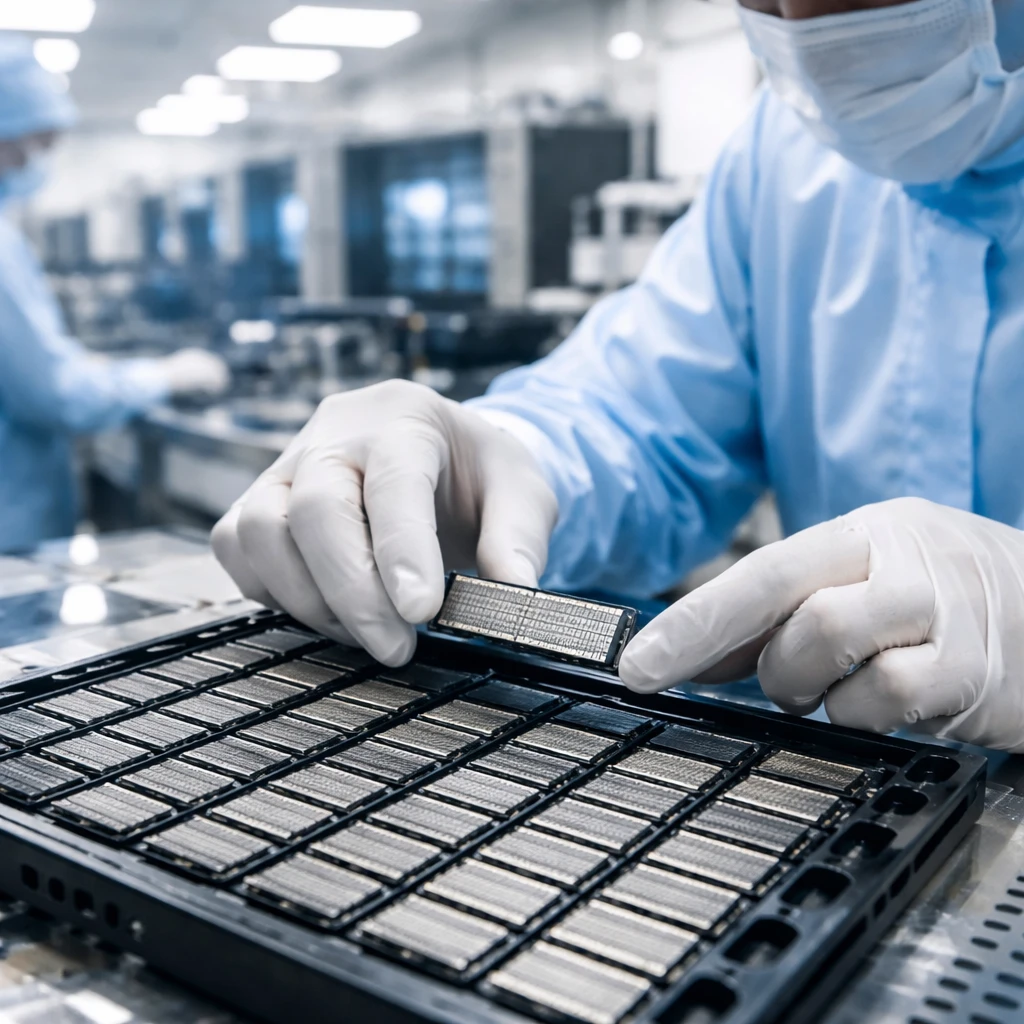
Samsung Electronics has started commercial shipments of its HBM4 high-bandwidth memory, becoming the first company to mass produce and ship this generation of memory. The company aims to reclaim market leadership after recent setbacks, is expanding capacity and expects substantial revenue growth from its HBM business by 2026. Competitors are also preparing or already producing HBM4, and broader demand from the AI chip market is driving suppliers to accelerate production.

Key Points

  • Samsung has begun mass shipments of HBM4, making it the first company to do so.
  • The company aims to reclaim market position after trailing competitors and is expanding HBM4 capacity ahead of projected revenue growth in 2026.
  • Competitors including SK Hynix and Micron are also advancing HBM4 development and shipments amid strong demand tied to AI chips.

Samsung Electronics has commenced shipments of its newest high-bandwidth memory product, HBM4, marking the company as the first worldwide to mass produce and distribute this latest generation of high-performance memory.

The South Korean technology firm announced its intention to push for a leading position in the HBM4 market after lagging behind rivals in recent quarters. The company did not disclose which customers have placed orders for the HBM4 modules, noting only that these products serve as a key memory component for artificial-intelligence chips.

As the world’s largest memory-chip manufacturer, Samsung faces competition mainly from SK Hynix and Micron Technology. The company has been pursuing a role as a principal HBM4 supplier to Nvidia, while concurrently boosting its own production footprint for HBM4 devices.

SK Hynix has said it finished development of its own HBM4 offerings and is preparing to ship them, and it has been a dominant supplier for earlier versions of high-bandwidth memory. The race among memory vendors is unfolding amid rapid expansion in the global AI chip market, which is intensifying pressure on HBM suppliers to scale output and accelerate innovation.

Samsung projects that revenue from its HBM business will more than triple in 2026 and is taking proactive steps to enlarge HBM4 production capacity. In addition to current shipments, the company plans to deliver an upgraded HBM4 sample product, named HBM4E, in the second half of the year.

Details about customers, precise production volumes, pricing, and the timing of broader commercial rollouts were not provided in the company announcement. Similarly, no additional operational or contractual information was disclosed regarding Samsung’s relationship with target customers for HBM4 modules.


Sector impact - The development primarily affects the semiconductor sector, particularly memory-chip suppliers and AI-hardware makers that rely on high-bandwidth memory. Changes in HBM supply and capacity can also influence downstream markets for AI accelerators and data-center hardware.

Risks

  • Samsung has not disclosed customers, production volumes, or pricing - uncertainty remains about immediate market uptake and contract scale (impacts semiconductor suppliers and AI hardware buyers).
  • Competing suppliers like SK Hynix, which dominated earlier HBM generations and is preparing its own HBM4 shipments, may limit Samsung’s ability to capture market share (impacts memory-chip market competition).
  • Rapid demand growth in the AI chip market is pressuring suppliers to accelerate production - execution and capacity expansion risks could affect supply stability (impacts data-center and AI accelerator supply chains).

More from Stock Markets

Nvidia Results and Software Earnings to Test AI-Driven Market Sentiment Feb 22, 2026 Analysts Shift AI Bets: Nvidia, Amazon, Dell, Analog Devices, Shopify See Upgrades and Bullish Casework Feb 22, 2026 Investors Trim Positions in EssilorLuxottica Amid Smart-Glasses Threat Feb 22, 2026 European Equities Split Between Defense, Financials Rally and Consumer, Healthcare Slump Feb 22, 2026 Stifel Warns Enterprise Software May Face Prolonged Realignment, Drawing Lessons from eCommerce Shift Feb 22, 2026