
Stock Markets February 10, 2026

Ryanair and CFM Agree Material Services MoU as Airline Prepares In-House Engine Maintenance

Deal sets stage for Ryanair to take responsibility for over 2,000 CFM engines from 2029, with large shop investments and multi-billion-dollar spare parts demand

By Derek Hwang RYAOF
Ryanair and CFM Agree Material Services MoU as Airline Prepares In-House Engine Maintenance
RYAOF

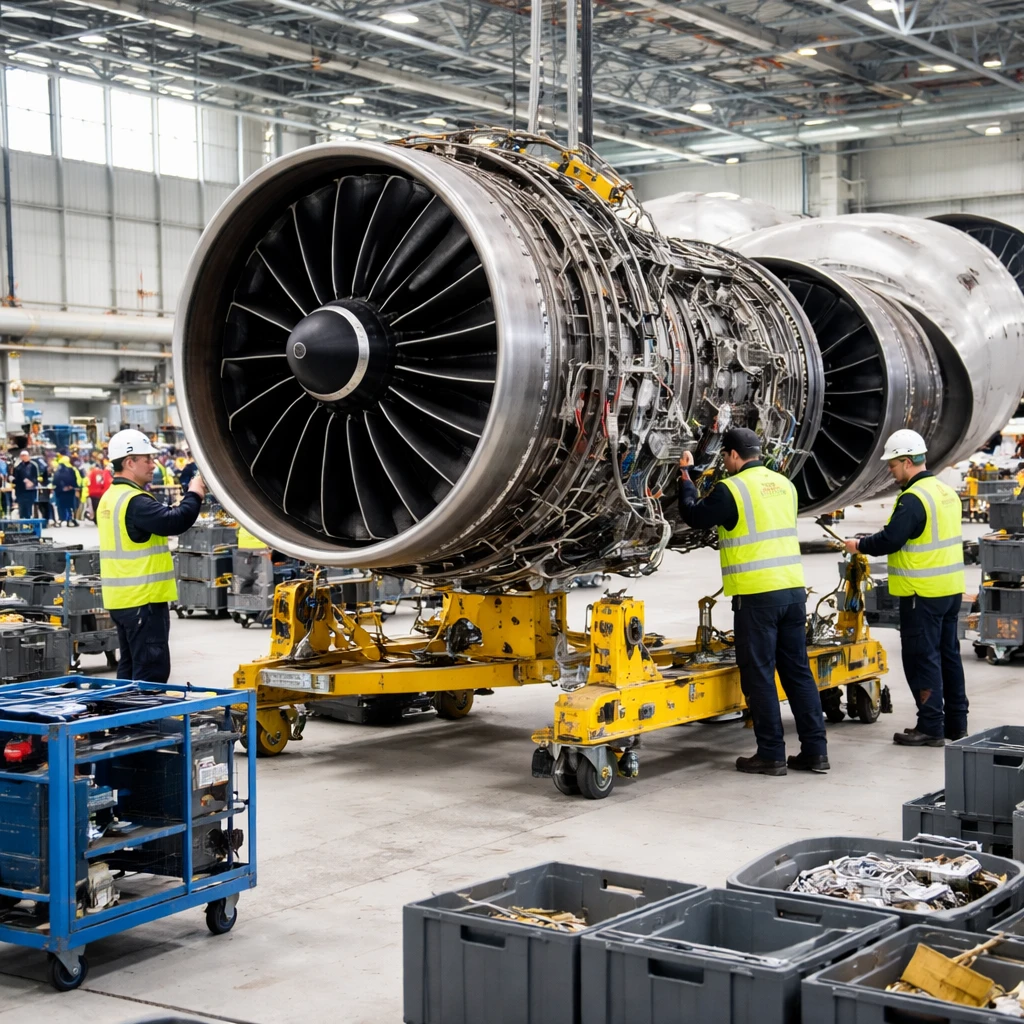
Ryanair has signed a memorandum of understanding with CFM for an engine material services arrangement that will underpin the airline's plan to perform in-house maintenance on more than 2,000 CFM engines beginning in 2029. The move involves opening two new engine shops — the first in late 2028 and a second between 2030 and 2031 — each carrying capital costs estimated at €400-500 million. The agreement is expected to drive peak spare parts purchases above $1 billion annually in the early 2030s. Ryanair's current mid-term capital expenditure guidance does not include spending for the new shops or the CFM arrangement.

Key Points

  • Ryanair signed a memorandum of understanding with CFM for an engine material services agreement covering maintenance for more than 2,000 CFM engines starting in 2029 - impacts airline operations and aerospace maintenance sectors.
  • The airline plans to open two engine shops: first in late 2028 and a second between 2030 and 2031, with each facility requiring estimated capital investment of c400-500 million - affects capital expenditure planning and aerospace infrastructure investment.
  • The CFM deal is expected to drive peak spare parts purchases exceeding $1 billion annually in the early part of the next decade - significant procurement demand for the aerospace supply chain.

Ryanair has formalized a memorandum of understanding with CFM for an engine material services agreement that will support the airline's maintenance program for more than 2,000 CFM engines from 2029 onward. The MoU outlines a shift in how Ryanair intends to manage engine upkeep, moving away from its existing power-by-the-hour model toward taking maintenance activities in-house.

Under the plan, Ryanair intends to establish two dedicated engine maintenance shops. The company expects the first facility to begin operations in late 2028, with the second facility scheduled to come online sometime between 2030 and 2031. Each proposed shop carries a sizable capital requirement, with expenditures estimated in the range of c400-500 million per site.

The reported MoU also projects a substantial increase in spare parts purchases associated with the in-house program. In the early part of the next decade, peak annual spending on spare parts tied to the CFM engines is expected to exceed $1 billion. That level of procurement accompanies the transition from an outsourced, power-by-the-hour approach to Ryanair-managed maintenance operations.

Importantly, Ryanair's existing mid-term capital expenditure guidance does not account for the investments required to open the two engine shops, nor does it factor in the financial implications of the CFM agreement. That omission means the company will need to incorporate these new capital demands into its planning and disclosures as the program progresses.

The timeline and cost estimates published with the MoU give a clear sequence of near-term and medium-term milestones:

  • Operations for the first engine shop targeted for late 2028.
  • Second engine shop planned between 2030 and 2031.
  • Estimated capital expenditure of c400-500 million per shop.
  • Projected peak spare parts purchases exceeding $1 billion annually in the early 2030s.

The agreement represents a substantial operational change for Ryanair and a material procurement commitment tied to its fleet's CFM engines. Details in the announcement limit the disclosure to the schedule, estimated capital costs, and projected spare parts spend; the company's mid-term capex guidance has not been updated to reflect these items.


Summary: Ryanair has signed an MoU with CFM to support in-house maintenance for over 2,000 CFM engines from 2029, plans to open two engine shops with estimated costs of c400-500 million each, and expects peak spare parts purchases to top $1 billion annually in the early part of the next decade. The company's current mid-term capex guidance does not include these initiatives.

Risks

  • Estimated capital expenditures for each engine shop (c400-500 million) are not included in Ryanair's current mid-term capex guidance - risk to corporate financial planning and budgetary projections in the airline sector.
  • Timing uncertainty around the two shop openings (first in late 2028, second between 2030 and 2031) could affect the rollout and readiness of the in-house maintenance program - impacts operations and project delivery in aerospace maintenance.
  • Projected peak spare parts purchases exceeding $1 billion annually create procurement and supply chain exposure for suppliers and Ryanair - potential market and sourcing risks within aerospace manufacturing and parts distribution.

More from Stock Markets

Rolls-Royce Poised to Announce Up to £1.5 Billion Share Buyback Alongside Annual Results Feb 22, 2026 DAE Capital Nears Purchase of Macquarie AirFinance, Sources Say Feb 22, 2026 S&P 500 Shows Signs of Tightening Range; Strategist Sees Potential for a Big Move Feb 22, 2026 Supreme Court to Clarify Reach of Helms-Burton Act in Multi-Billion Dollar Cuba Claims Feb 22, 2026 Switzerland Pulling Ahead in Early Economic Gains from AI Feb 22, 2026