
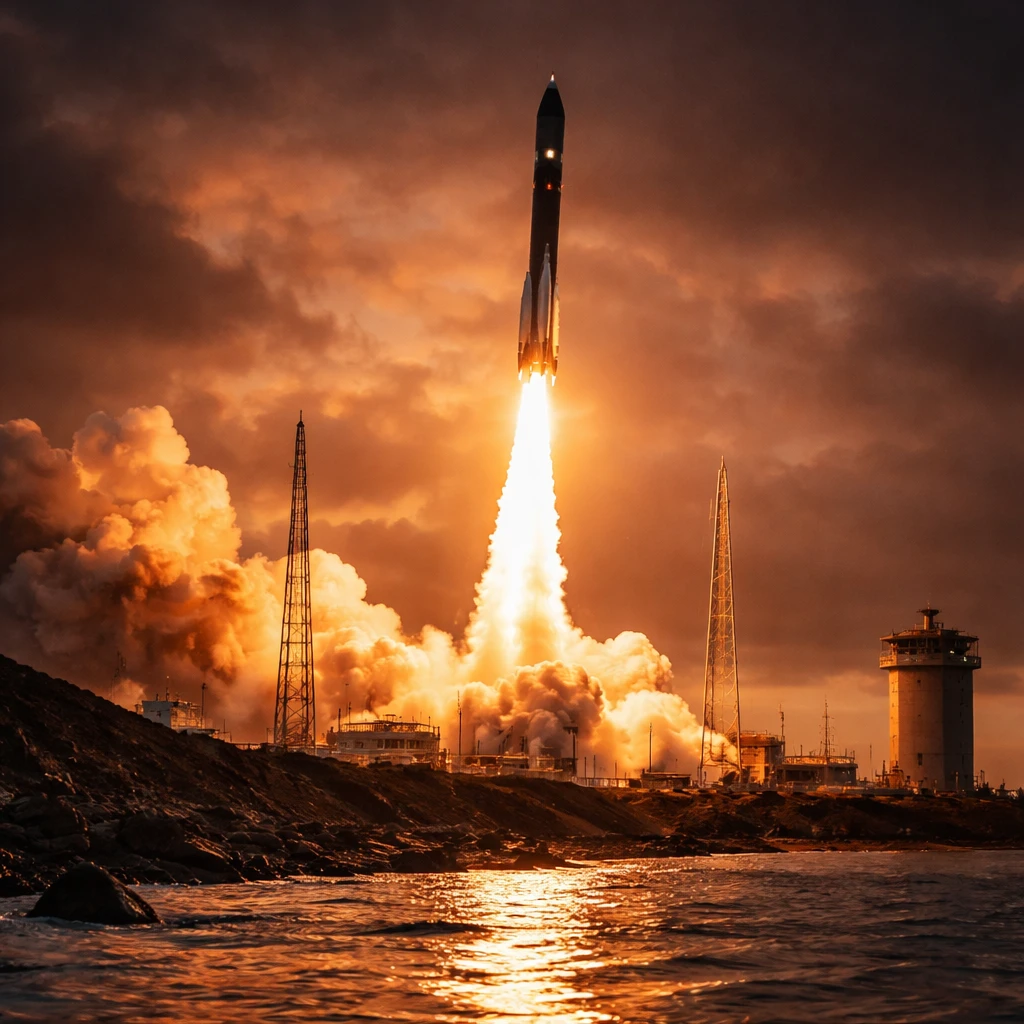
Shares of Rocket Lab Corporation (NASDAQ:RKLB) moved higher in after-hours trading Wednesday, up roughly 2%, following the company's disclosure of a $190 million contract to conduct 20 hypersonic test flights and the initiation of analyst coverage with a positive rating.
The agreement represents Rocket Lab's largest single launch commitment to date. It adds 20 missions to the company manifest, bringing total launches in backlog to more than 70 and lifting Rocket Lab's combined backlog across launch services and space systems to above $2 billion.
Under the MACH-TB 2.0 Task Area 1 program, led by Kratos Defense & Security Solutions, Inc (NASDAQ:KTOS), Rocket Lab will perform the 20 hypersonic test flights using its HASTE launch vehicle. The work is part of the Test Resource Management Center Multi-Service Advanced Capability Hypersonic Test Bed program, and the flights are scheduled to take place over a four-year window.
Company materials indicate that the first of these 20 missions is expected to occur within months of the contract signing. Rocket Lab also reports it has preserved a 100% mission success rate across all HASTE launches since 2023.
The addition of the 20 HASTE missions increases Rocket Lab's first quarter 2026 launch sales to 28, a level that nearly equals the firm's total launches for the full year 2025. The company now carries more than 70 launches on its manifest.
Clear Street analyst Greg Pendy initiated coverage on Rocket Lab with a Buy rating and set an $88 price target. In his commentary, Pendy described RKLB as not merely a launch provider but as operating a vertically integrated model that creates a competitive platform. He wrote, "RKLB is not merely a launch provider; its unique, vertically integrated model creates a powerful competitive platform that, in some areas, rivals and in certain respects surpasses the breadth of industry leader SpaceX’s (private) offerings, while positioning the company for strong top line growth opportunities over the next five years."
Pendy highlighted three specific growth drivers in his initiation note: the reusable Neutron rocket, which is targeting fourth quarter 2026; Electron's market position coupled with an expected scaling of launch cadence to 52 missions annually by 2030; and an expansion of prime contracts within the Space Systems segment.
Context and market reaction
The $190 million award and the analyst initiation together helped push after-hours trading higher for RKLB shares. The contract is structured as 20 missions over four years under a military-led hypersonic test bed program, placing a substantial firm order on Rocket Lab's launch manifest and financial backlog.
What remains to be watched
Investors and industry observers will be tracking the timing and execution of the newly awarded missions, the continued performance of HASTE flights, and progress on the development milestones cited by the analyst, including Neutron and Electron cadence targets.