
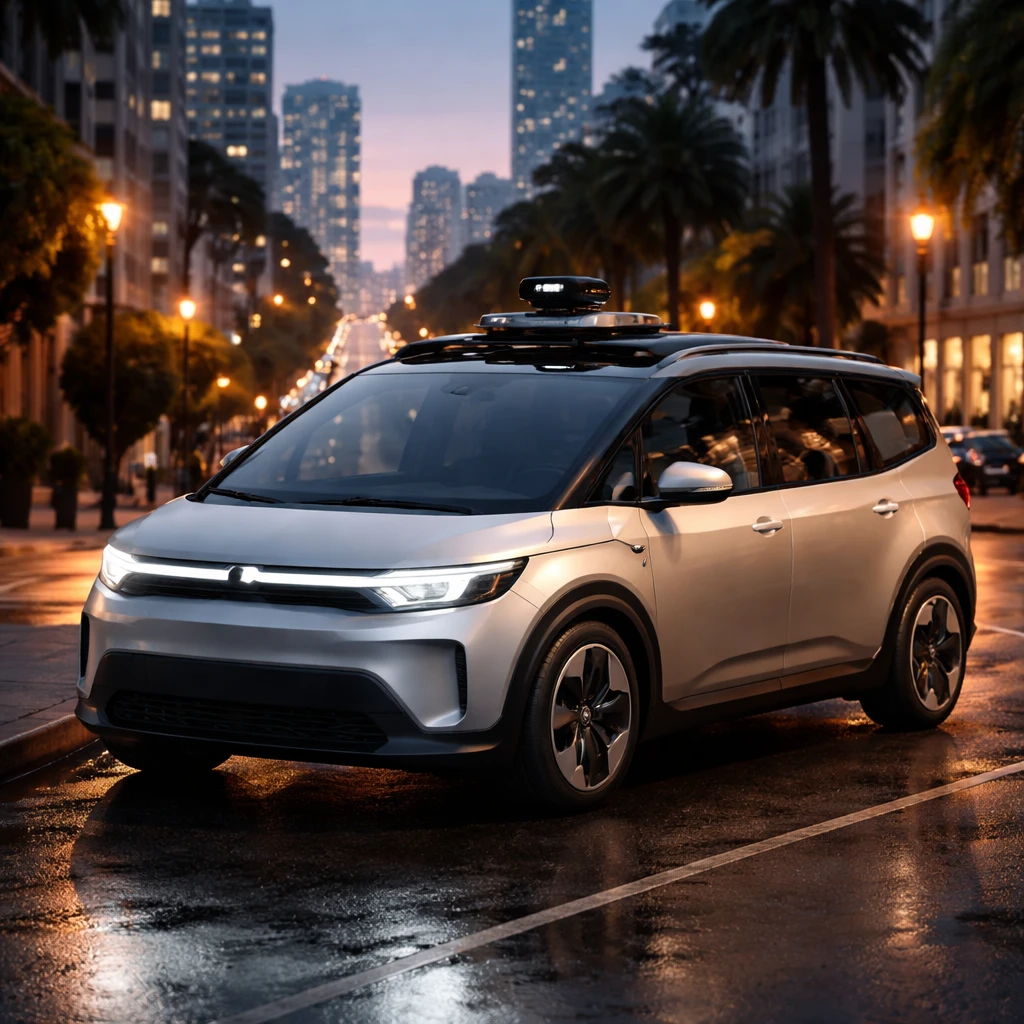
Rivian Automotive saw its stock price climb sharply after Uber Technologies disclosed a strategic investment and procurement framework tied to Rivian's autonomous R2 vehicle. Under the terms announced, Uber or its fleet partners may purchase 10,000 fully autonomous R2 robotaxis initially, with an option to acquire as many as 40,000 additional units beginning in 2030. The total potential investment from Uber is capped at $1.25 billion through 2031.
An initial tranche of $300 million was committed at signing, subject to regulatory approval. Further funding and vehicle purchases are contingent on Rivian meeting specified autonomous performance milestones by set dates, according to the companies' outline of the partnership.
Deployment timeline and geography
Commercial deployments are expected to begin in two U.S. cities - San Francisco and Miami - in 2028. The partnership is structured to expand thereafter, targeting a presence in 25 cities across the United States, Canada, and Europe by the end of 2031. If Rivian hits all the stipulated milestones, the companies said they aim to have thousands of unsupervised R2 robotaxis operating across those markets by the close of 2031.
Exclusivity and platform integration
The autonomous R2 robotaxis will be available exclusively through the Uber platform, consolidating ride-hail demand for the vehicles and channeling passenger bookings through Uber’s network.
Rivian’s autonomy technology
Rivian has outlined the technical foundation for its R2 robotaxi. In December 2025 the company announced a third-generation autonomy platform that features 11 cameras, 5 radars, and a single LiDAR sensor. That stack is paired with two of Rivian’s in-house RAP1 chips, which the company says deliver 1600 TOPS of AI compute performance. Rivian plans to introduce the platform in the R2 vehicle in late 2026.
Rivian’s Founder and CEO, RJ Scaringe, commented on the tie-up, saying: "We couldn’t be more excited about this partnership with Uber — it will help accelerate our path to level 4 autonomy to create one of the safest and most convenient autonomous platforms in the world. The scale of Rivian’s growing data flywheel coupled with RAP1, our state of the art in-house inference platform, and our multi-modal perception platform make us incredibly excited for the rapid advancement of Rivian autonomy over the next couple of years."
Market reaction
Following the announcement, Rivian shares rose about 10% in morning trading. The move reflects investor enthusiasm for the potential vehicle orders and funding tied to the partnership, along with the strategic alignment between a major ride-hailing network and an EV maker developing autonomous capabilities.
What remains to be determined
While the agreement lays out purchase commitments and an investment framework, much of the funding and the scale of deployments depend on Rivian meeting technology and regulatory benchmarks. The initial $300 million is subject to regulatory approval, and subsequent investments hinge on the company achieving specified autonomous performance milestones within designated timelines.