
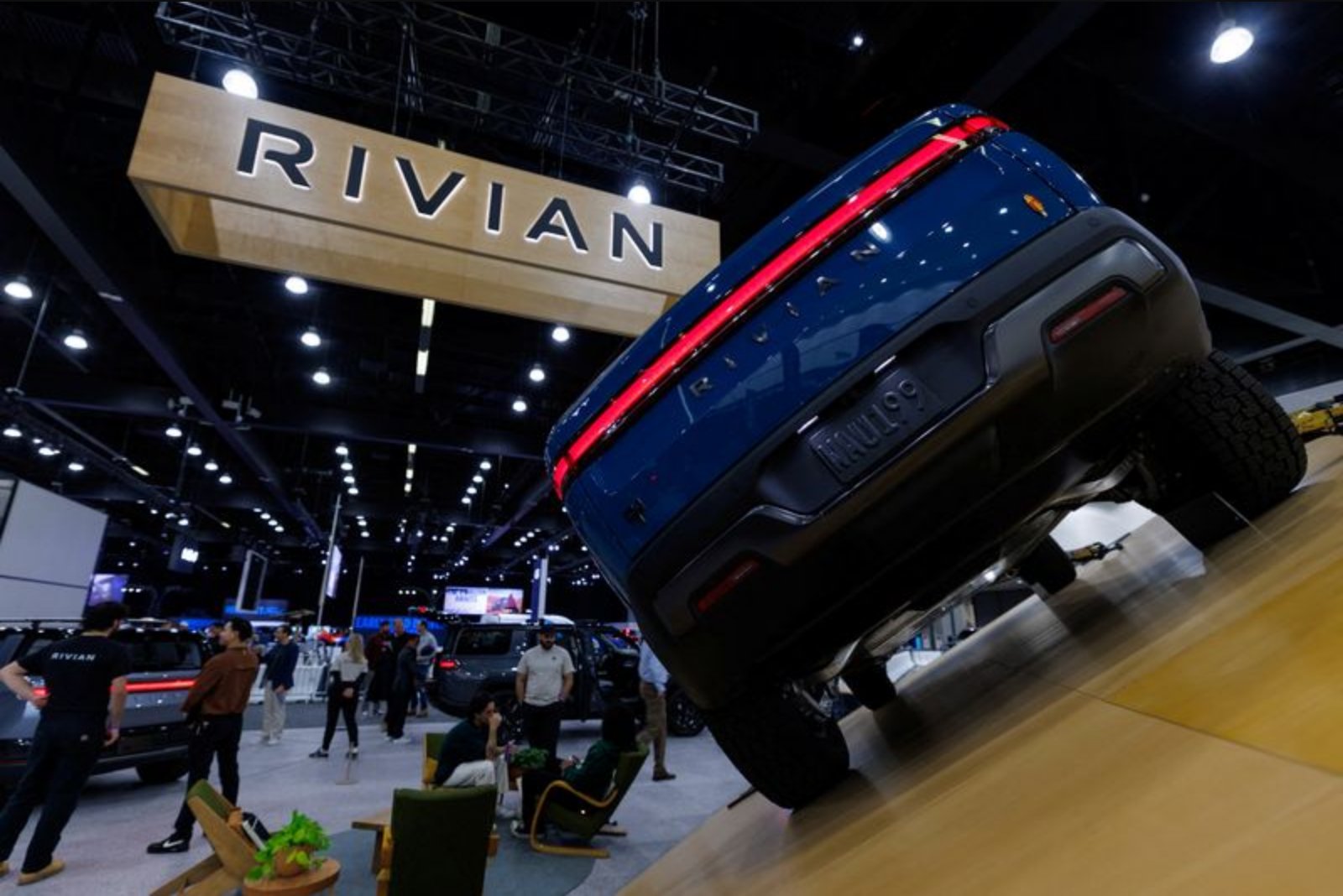
Rivian Automotive said it expects deliveries to rise 53% in 2026 as the electric vehicle maker readies a lower-cost R2 SUV to enter the market. The company views the R2 - priced at roughly $45,000 and positioned to compete with Tesla's Model Y - as the central driver of next-year volume growth amid softer EV demand following the expiration of federal purchase tax credits.
Rivian's CEO RJ Scaringe told Reuters that volumes for existing R1 SUVs and pickup trucks, along with its delivery vans, will be largely flat in 2026. "The growth is really, of course, what we see in R2," he said. Management has scheduled the R2 launch for the second quarter.
At the same time, Rivian cautioned that preparing for the R2 introduction, together with investments to broaden its in-house autonomous driving capabilities, will be capital-intensive. The company now projects capital expenditures to nearly double to a range between $1.95 billion and $2.05 billion - above the $1.92 billion analysts were expecting, according to data compiled by LSEG.
Rivian also provided guidance on adjusted earnings before interest, taxes, depreciation and amortization, saying adjusted EBITDA is expected to be between negative $2.1 billion and negative $1.8 billion. That guidance compares with analyst estimates of a negative $1.81 billion.
For the current year, Rivian anticipates delivering between 62,000 and 67,000 vehicles, largely in line with consensus expectations. Visible Alpha data show estimates centered on 64,130 vehicles for 2026. Wall Street assumptions on the R2's contribution average about 13,400 units for 2026 - roughly one-fifth of the total delivery estimate for the year - while most of the year's deliveries are still expected to come from older, higher-priced R1T and R1S models.
Rivian's reported deliveries for 2025 totaled 42,247 units, down from 51,579 units a year earlier and slightly below Street estimates. The fourth quarter was the company's first full reporting period after the $7,500 federal tax credit for EV purchases expired at the end of September, an event that pushed up consumer prices and contributed to a slowdown in EV deliveries for Rivian and other manufacturers, including Tesla.
On the top line, Rivian posted fourth-quarter revenue of $1.29 billion, exceeding analysts' average forecast of $1.26 billion. Cash and cash equivalents were $3.58 billion at the end of December, down from $4.44 billion at the end of September.
Context and implications
- Product mix and pricing - The company views the lower-priced R2 as critical to expanding its addressable market after demand softened following the loss of federal tax incentives. Analysts expect R1 models will still account for the bulk of deliveries in 2026.
- Capital intensity - The R2 rollout and work on proprietary autonomous driving technology are driving materially higher capital spending, which management says will pressure near-term adjusted EBITDA.
- Balance sheet and liquidity - Cash reserves declined between September and December, and the company provided guidance that implies continued negative adjusted EBITDA in the near term, underscoring financing and cash-flow sensitivity to execution and timing of R2 ramp.
What to watch next
- Progress toward the R2 launch in the second quarter, and initial production and delivery rates for the model.
- Execution on in-house autonomous driving development and the associated cost trajectory.
- Quarterly updates on cash balances and any adjustments to capital expenditure plans.