
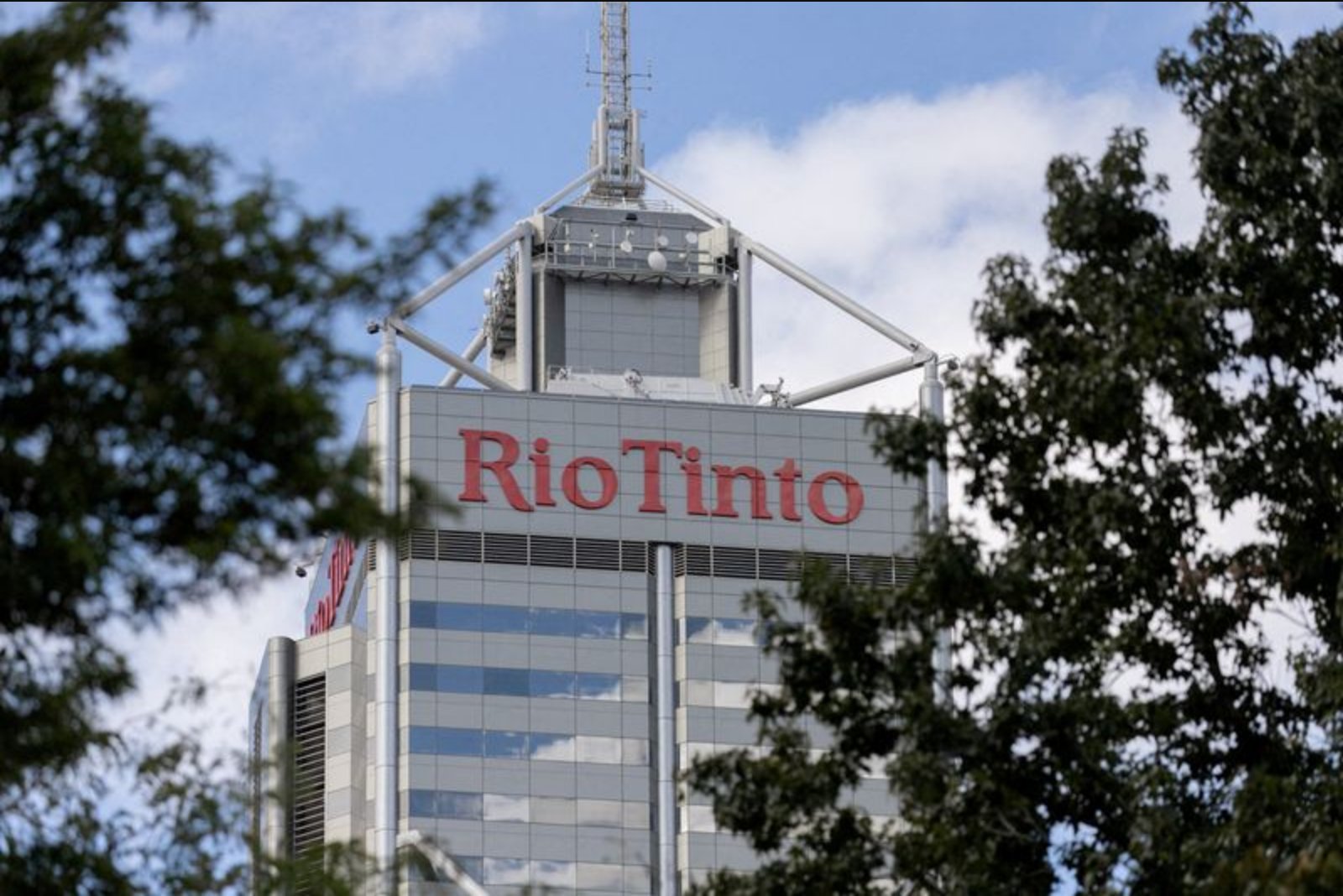
Rio Tinto reported flat annual underlying earnings on Thursday, as a weaker iron ore performance offset gains from its copper business. For the year to December 31 the company posted underlying earnings of $10.87 billion, unchanged from the year before and below the Visible Alpha consensus of $11.03 billion.
The company declared a final dividend of 254 U.S. cents per share, which implies a payout ratio of roughly 60% of underlying earnings - up from a final dividend of 225 U.S. cents in 2024. Rio Tinto’s shares in London were trading lower, down 3.4% by 0909 GMT, slightly underperforming its peers.
Copper was the standout within the results, with the division delivering stronger realised prices and higher volumes that helped to offset weaker iron ore returns. Average realised prices in the copper division for 2025 rose 17% from a year earlier, while copper output increased by 11% from 2024. Management said the increase in production was supported by a ramp-up at the Oyu Tolgoi mine in Mongolia.
The shift in earnings composition is notable. Iron ore now accounts for about 60% of group earnings, down from roughly 70% a year earlier, while copper earnings doubled on the year to represent around 30% of the group total. Aluminium and lithium make up the remainder of the company’s earnings mix.
Iron ore profitability was squeezed by higher unit costs from the company’s Pilbara operations in Western Australia. Annual unit costs for Pilbara output were about $0.50 per metric ton higher than in 2024, a rise the company attributed to inflationary pressures and weather-related disruptions. Pilbara unit costs are forecast to increase further, to between $23.50 and $25 per ton this year.
The results and commentary underline a broader sector focus on copper as demand grows for electrification and data-centre infrastructure. Rio Tinto recently ended merger discussions with Glencore after failing to agree valuation and ownership terms on a deal that would have created the world’s largest listed mining company and materially increased copper exposure.
Rival BHP reported that copper overtook iron ore in its earnings for the first time earlier in the week, a development that highlights the changing composition of revenue streams across major miners.
Market and investor attention has also turned to monetisation of assets. Rio Tinto said it was gauging market interest for the sale of its titanium and borates division and exploring ways to monetise portions of its existing infrastructure across all divisions. The company has previously indicated plans to sell stakes in infrastructure and other assets as part of capital reallocation initiatives.
Andy Forster of Argo Investments in Sydney described the results as, "A good result, perhaps as not as impressive as BHP, particularly with capital liberation," referencing Rio’s plans to unlock capital through asset sales.
Analysts at Jefferies offered a view on how management might deploy proceeds, saying, "Without M&A, we expect freed up cash to be used to strengthen Rio’s balance sheet and maintain returns within its 40-60% dividend payout range."
Other major miners have similarly signalled intentions to tap existing assets to raise capital for reallocation and shareholder returns. For example, a recent deal was announced by a peer to provide silver from a Peruvian mine to a streaming company in exchange for an upfront payment.
In summary, Rio Tinto’s annual results reflect a company in transition - iron ore earnings have declined as a share of the group while copper has become a larger contributor, prompting strategic reviews of asset portfolios and capital deployment as management balances cost pressures, commodity price dynamics and investor returns.