
Stock Markets March 2, 2026

Rio Tinto Advances Quebec Gallium Project with C$18.95 Million Canadian Grant

Pilot plant at Complexe Jonquière to test primary gallium extraction, with operations targeted for 2027

By Sofia Navarro RIO
Rio Tinto Advances Quebec Gallium Project with C$18.95 Million Canadian Grant
RIO

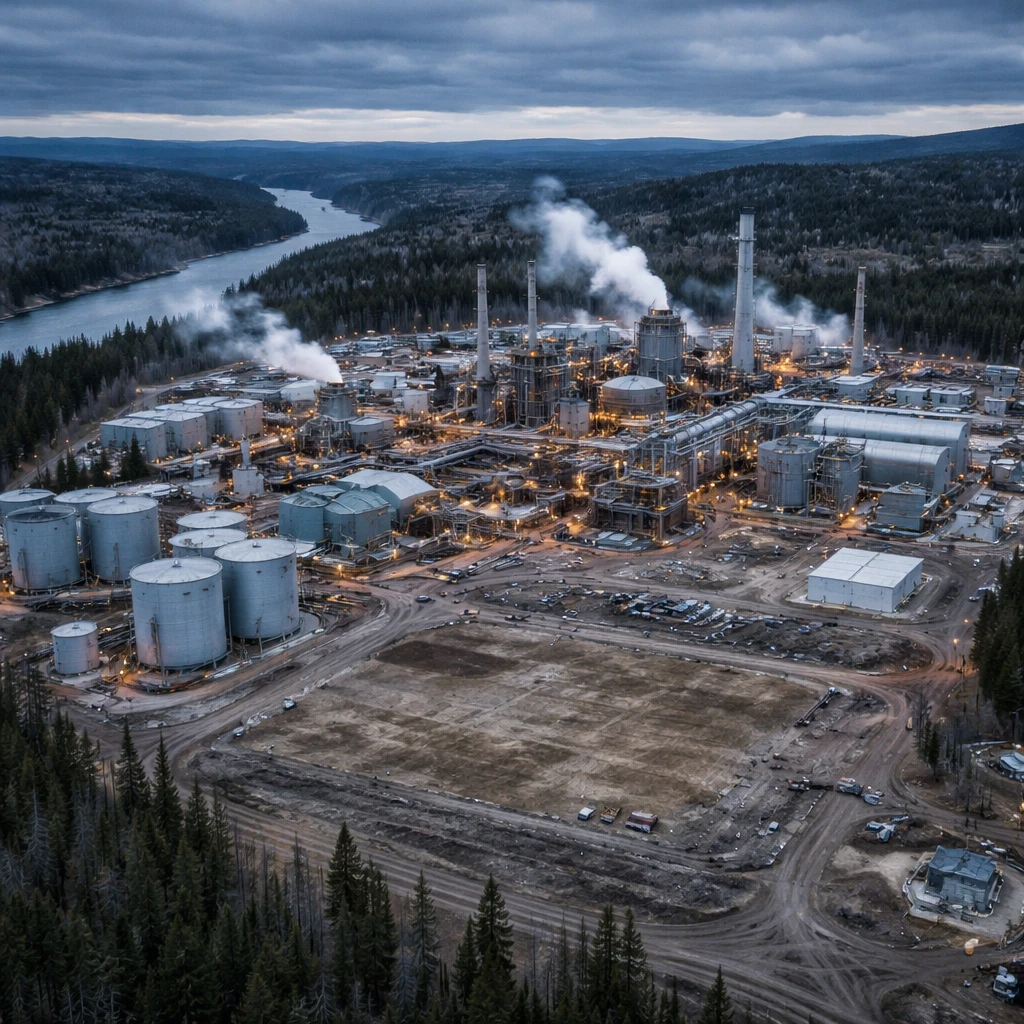
Rio Tinto will progress a research and development program to extract primary gallium from its alumina refining operations in Quebec after receiving conditional non-repayable funding of up to C$18.95 million from the Government of Canada. The federal contribution, approved under Natural Resources Canada’s Global Partnerships Initiative, supplements C$7 million already pledged by the Government of Quebec. Rio plans a pilot plant at Complexe Jonquière in Saguenay, with commercial-scale potential estimated at up to 40 tonnes per year.

Key Points

  • Federal government of Canada approved up to C$18.95 million in non-repayable conditional funding under Natural Resources Canada’s Global Partnerships Initiative; this complements C$7 million from the Government of Quebec.
  • A pilot plant will be constructed at Rio Tinto’s Complexe Jonquière in Saguenay to validate gallium extraction technology in an industrial setting, with operations expected to start in 2027; a demonstration plant with up to four tonnes per year is also planned.
  • If expanded to commercial scale, a plant could produce up to 40 tonnes per year - about 5% of global primary gallium production - impacting mining and critical minerals supply chains and regional industrial supply considerations.

Rio Tinto has secured conditional federal support to move forward with an R&D project aimed at recovering primary gallium from alumina refining activities in Quebec. The Government of Canada has approved a contribution of up to C$18.95 million under Natural Resources Canada’s Global Partnerships Initiative. This funding is non-repayable and will be combined with C$7 million previously committed by the Government of Quebec.

The company intends to build a pilot facility at its Complexe Jonquière in Saguenay to demonstrate the extraction technology in an industrial environment. Rio Tinto expects the pilot to begin operations in 2027, using the facility to validate processes before any larger-scale deployment.

Earlier this year, Rio reported it had produced its first batch of gallium in collaboration with Indium Corporation, with the milestone achieved in May 2025. Alongside the pilot project, Rio has plans for a demonstration plant at the same site that would have a production capacity of up to four tonnes per year.

Global primary gallium output currently exceeds 700 metric tonnes annually and is sourced entirely from locations outside North America. Rio said a potential future commercial-scale plant in Quebec could produce as much as 40 tonnes per year, which the company noted would represent roughly 5% of current global primary production and contribute to strengthening regional supply chains for this critical mineral.

The federal contribution is conditional and intended to support technology validation and scale-up activity at the Saguenay complex. The funding mechanism is structured as a non-repayable contribution under a federal program, supplementing provincial support to advance the project through the R&D and demonstration phases.

As written, the plan covers a staged approach: a pilot plant to validate extraction methods, a demonstration plant with up to four tonnes per year capacity, and the possibility of later commercial expansion to a much larger output. The timeline projects pilot operations beginning in 2027, while further expansion would depend on outcomes from the validation and demonstration stages.


Contextual note - The information above reflects the company statements on project funding, planned facilities, recent production milestones and potential future capacity. Details such as the conditional nature of the federal funding, the existing provincial contribution and the staged development pathway are included to outline both the near-term activities and longer-term potential without presuming outcomes beyond the material provided.

Risks

  • The federal funding is conditional - project advancement depends on meeting the conditions tied to the contribution, which could affect timelines or scope (impacts mining and government-funded industrial projects).
  • Technical validation at the pilot and demonstration stages is required before commercial-scale production can be realized; unsuccessful validation could limit scale-up (impacts mining, manufacturing of electronics dependent on gallium).
  • Global production is currently concentrated outside North America; translating pilot and demonstration success into significant regional supply will require further investment and successful commercial deployment (impacts critical minerals supply chains and downstream industries).

More from Stock Markets

U.S. Futures Slip as Middle East Tensions Drive Volatility and Oil Concerns Mar 2, 2026 Shareholders File Class Action, Allege Apollo Hid Extensive Epstein Ties Mar 2, 2026 Fitch Moves Paramount Into Junk Territory, Flags Warner Bros Acquisition as Key Uncertainty Mar 2, 2026 Dollar Reasserts Safe-Haven Role as Iran Strikes Prompt Broad FX Rally Mar 2, 2026 Markets Dip After Report That U.S. May Cap AI Chip Sales to Chinese Firms Mar 2, 2026