
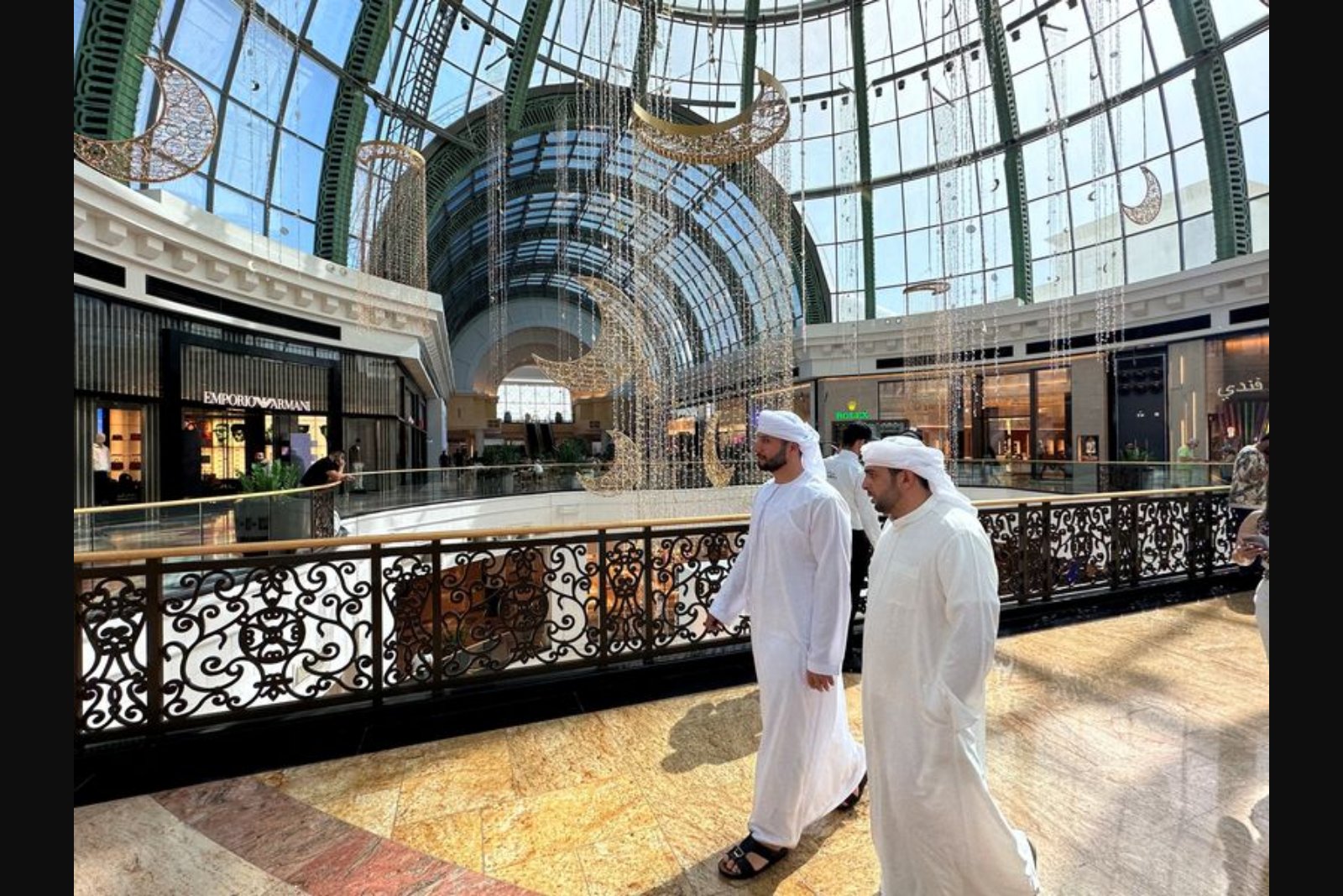
Retail activity across Dubai and other prominent Middle Eastern shopping destinations has sharply contracted as the regional conflict intensified, with many outlets either closed or operating with only a small, voluntary workforce. The situation is unfolding as a U.S.-Israeli air campaign against Iran broadened on Monday with no clear end in view, and Tehran responded by firing missiles and drones at Gulf states following a weekend bombing that killed Iran’s supreme leader and reportedly killed scores of Iranian civilians, including a strike on a girls’ primary school.
Chalhoub Group, which manages roughly 900 storefronts in the region for labels ranging from Versace and Jimmy Choo to Sephora, reported that its shops in Bahrain were closed. In other markets where Chalhoub operates - including the United Arab Emirates, Saudi Arabia and Jordan - stores remained open but staff attendance was voluntary. Lynn al Khatib, the company’s Vice President of Communications, said the company was running with a reduced team made up of employees who volunteered and felt comfortable coming in, and that senior managers personally visited Dubai Mall and Mall of the Emirates on Monday morning to check on personnel.
Italy-based luxury owner Kering said it had temporarily closed outlets in the UAE, Kuwait, Bahrain and Qatar and suspended travel to the Middle East. Broader market reactions were visible on stock exchanges, where shares of luxury groups such as LVMH, Hermes and Richemont fell by between 4% and 6.5% on Monday as investors reassessed the potential business impact of the conflict.
Analysts note the Middle East still comprises a relatively small slice of global luxury spending - estimated between 5% and 10% by RBC analyst Piral Dadhania - yet the region had been a standout performer for the sector last year, according to Bain. That strength made the area an important growth engine even as sales of high-end handbags cooled elsewhere.
Now, the abrupt halt to tourist arrivals caused by airport closures, together with missile strikes - including an attack that damaged Dubai’s Fairmont Palm hotel - could deter travellers if hostilities continue. Victor Dijon, a senior partner at consultancy Kearney, illustrated the scale of the risk to the travel-retail channel by pointing to a market estimated at $5 to $6 billion; a month-long shutdown, he said, would put hundreds of millions of dollars of revenue at risk. He also highlighted a secondary effect: restricted travel by Middle Eastern shoppers to fashion capitals such as Paris and Milan could weaken sales in Europe.
Luxury companies had recently stepped up investments in the region, launching flagship stores, exhibitions and brand activations. Cartier staged a high-jewellery exhibition in Dubai’s Keturah Park only days before the outbreak of the current hostilities. Luxury conglomerate LVMH also showcased Louis Vuitton at an exhibition at the Jumeirah Marsa Al Arab hotel last month, while beauty retailer Sephora introduced its first Saudi beauty brand.
LVMH does not publish region-specific sales figures regularly, but in January its Chief Financial Officer Cecile Cabanis described the Middle East as "displaying significant growth." Requests for comment on the unfolding impact from LVMH, Cartier and Richemont went unanswered.
The region has also been drawing expansion plans from mainstream retail chains. Primark announced in January plans to open three stores in Dubai in March, April and May, followed by additional openings in Bahrain and Qatar later in the year. A spokesperson for Primark’s owner, Associated British Foods, noted that the retailer was due to open its first Dubai store at the end of March but described the environment as fast-moving and under close monitoring.
Other global retail names have already curtailed operations. Apple’s Dubai stores were listed on the company website as closed until Thursday morning, and Swedish fast-fashion chain H&M reported closures of its stores in Bahrain and Israel. Consumer goods group Reckitt instructed all employees in the Middle East to work from home, temporarily shut its Bahrain manufacturing facility and suspended all business travel to the region until further notice.
The immediate corporate response highlights several pressure points: a drop in footfall at high-end shopping centres and travel-retail locations, precautionary shutdowns of manufacturing facilities, and suspended corporate travel. Taken together, these actions represent both direct revenue losses from closed shops and indirect effects through damaged tourism flows and displaced consumer spending.
For now, companies are managing on-the-ground safety and staffing, keeping senior leaders in contact with local teams and pausing expansion-related travel. How long these market disruptions persist will determine the depth of the financial consequences for retailers, hoteliers, and manufacturers with exposure to the Gulf region.
Summary
Escalation of conflict in the Middle East has led numerous international retailers and luxury brands to close stores, reduce staff, or suspend travel to the region. The moves come amid missile and drone strikes, damage to hotel property and halted airport operations, putting travel-retail revenues and luxury sales at risk and prompting a sell-off in luxury stocks.
Key points
- Wide-scale store closures and voluntary staffing have been reported across Gulf markets, including closed Chalhoub Group stores in Bahrain and temporary closures announced by Kering.
- Luxury stocks, including LVMH, Hermes and Richemont, fell between 4% and 6.5% on Monday as investors priced in regional disruption.
- Travel-retail disruption from shuttered airports and damaged hotels endangers an estimated $5 to $6 billion market, with consultants warning of hundreds of millions in potential lost revenues if closures persist.
Risks and uncertainties
- Prolonged hostilities could keep airports closed and deter tourists, directly reducing sales in travel retail and hurting luxury boutiques that rely on tourist spending.
- Store closures and voluntary staffing reduce retail operating hours and sales capacity, creating immediate revenue loss and operational strain for both luxury and mass-market retailers.
- Manufacturing and supply-side disruption is already evident with at least one temporary factory closure, introducing risks to product availability and continuity for consumer goods firms operating in the region.