
Stifel has upgraded Restaurant Brands International from Hold to Buy and established a $90 price objective, arguing the company is entering a period of higher visibility on growth as it simplifies its operating footprint and pursues an 8% annual adjusted operating income growth target.
Management is executing a multi-year shift toward a predominantly franchised business, aiming to operate with a 99% franchised model by 2028. As part of that transition, the company will wind down its Restaurant Holdings segment by the end of 2027. The plan includes refranchising the bulk of company-owned Burger King U.S. locations, trimming the current count of roughly 1,000 corporate units to about 300 over time - a move intended to reduce operational complexity.
Separately, Restaurant Brands has completed a sale of Burger King China to private equity firm CPE. The buyer has committed $350 million in primary capital to support expansion of the Burger King footprint in China to 2,500 restaurants over a five-year period.
Company leadership signaled that mergers and acquisitions are not a priority while management focuses on executing its long-term plan. The growth aspiration cited by management is more than 8% adjusted operating income growth, which the company says is expected to be driven by at least 3% same-restaurant sales growth combined with net restaurant growth accelerating to more than 5%.
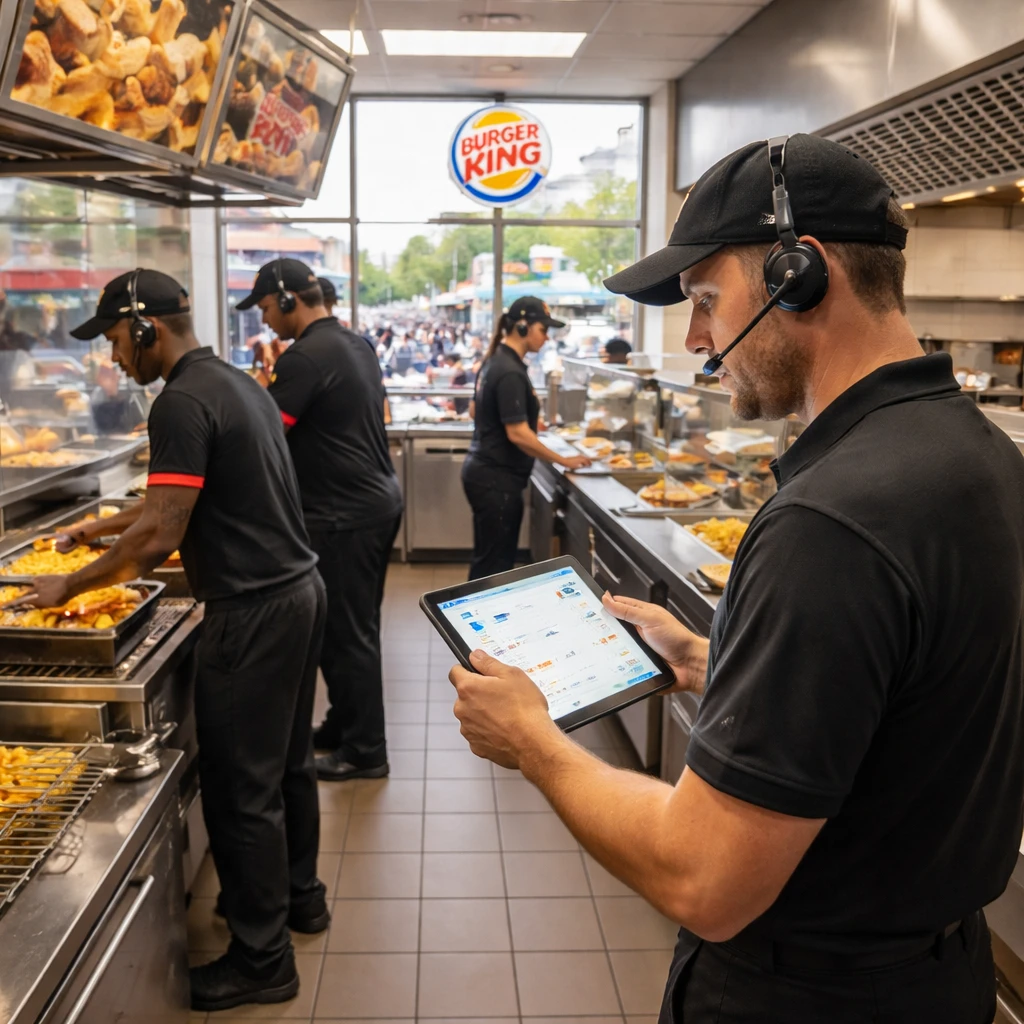
Stifel highlighted Burger King U.S. as being at an inflection point, pointing to operational initiatives designed to improve store-level economics and guest experience. One key tool is BK Assist, an AI-driven coaching and operational support system that connects to headsets worn by crew. BK Assist is currently in 500 restaurants and the company expects deployment to all 7,000 U.S. Burger King units by the end of 2026. According to the company, test locations have produced incremental EBITDA improvements in the range of $3,000 to $8,000 per store.
The brokerage also pointed to efforts aimed at reclaiming family-oriented traffic through promotional activity and brand collaborations, along with continued development internationally and at Tim Hortons.
Finally, Stifel noted that Restaurant Brands’ capital allocation plan and a focus on deleveraging should bolster the company’s valuation multiple as execution of the operating plan progresses.
Clear summary: Stifel upgraded Restaurant Brands to Buy with a $90 target, as management moves to simplify operations by refranchising most U.S. Burger King stores, winding down Restaurant Holdings by end-2027, transitioning toward a 99% franchised model by 2028, expanding Burger King China via a $350 million CPE commitment, and deploying BK Assist across U.S. stores to drive EBITDA and same-store sales growth.