
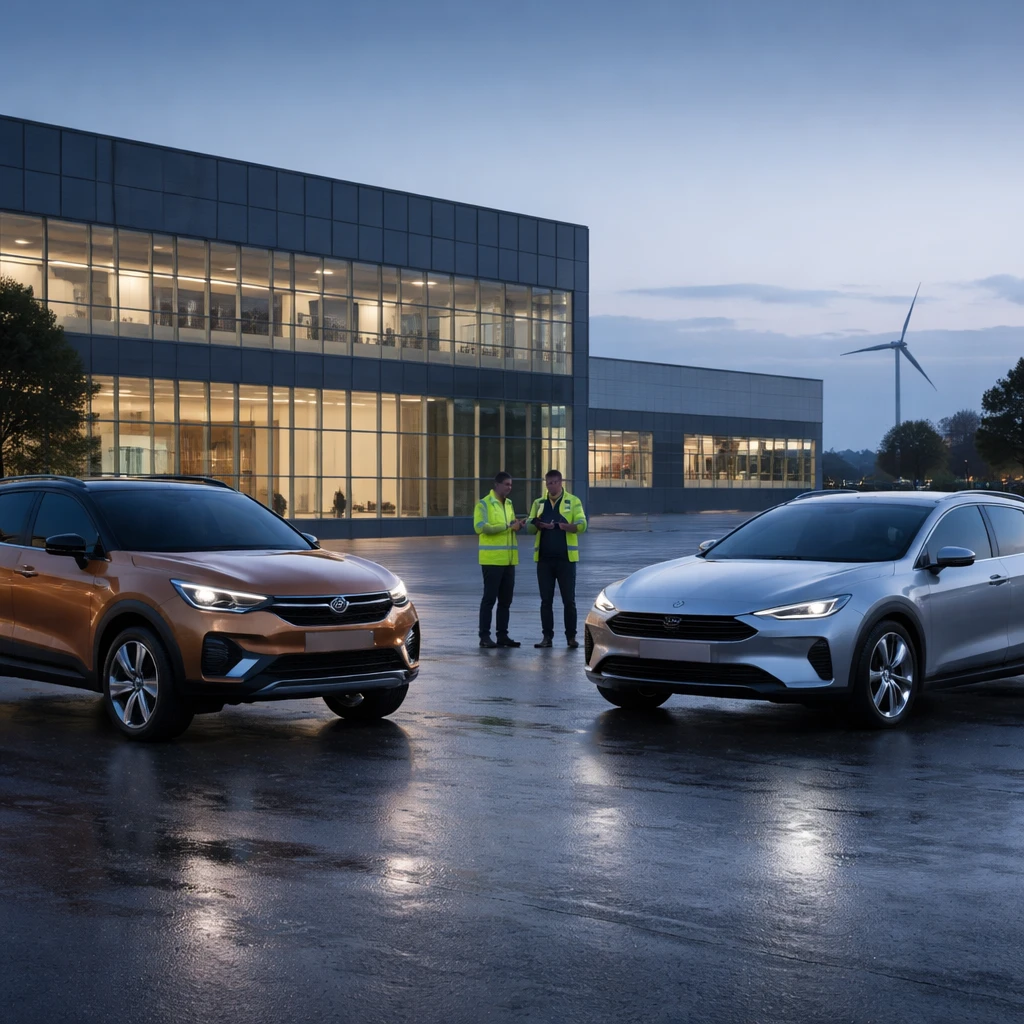
Renault has announced a target to sell in excess of 2 million Renault-branded vehicles per year by 2030, a substantial step up from its projected 2025 volume. The French carmaker framed the objective as part of a strategy to diversify geographically and respond to intensifying competition in its traditional markets.
Growth and geographic shift
The company said it plans to lift Renault-brand sales by roughly 23% from the 1.63 million vehicles it expects to sell in 2025. A central element of the plan is a pronounced shift in where those cars will be sold - Renault expects about half of its Renault-branded vehicles to be sold outside Europe by the end of the decade, compared with 38% sold abroad in the most recent year reported.
Model pipeline and timing
To underpin its volume ambitions, Renault intends to bring 36 new models to market by 2030. Over the next five years the company will introduce 22 vehicles in Europe, of which 16 will be fully electric. The remaining 14 models are targeted at Renault’s international markets outside Europe.
Leadership and strategic emphasis
The plan represents Renault’s first strategic update since Francois Provost became chief executive last year, succeeding Luca de Meo. Provost stated Renault’s long-term intent and global aspirations, saying: "We will show that we are here for the long term and we will become the benchmark for the European automotive industry on the global stage."
Electrification and hybrid approach
Despite demand for electric vehicles in Europe tracking below earlier expectations, Renault reaffirmed its commitment to electrification. The automaker expects that fully electric vehicles will make up about 44% of its planned model portfolio by the end of the decade.
At the same time, Renault will continue to invest in hybrid powertrains. Working through its Horse Powertrain joint venture with China’s Geely, the company plans to develop a smaller gasoline engine intended for hybrid applications. Renault presented hybrids as a tool to bridge periods of softer EV demand while maintaining overall electrification progress.
Product development and partnerships
Renault said it will rely mainly on in-house technology for products designed for the European market, while partnering with other companies such as Geely to expand in regions like South America and South Korea. The automaker currently reports no presence in the United States or China.
Looking ahead, Renault is developing a new electric vehicle platform due in 2028. That platform will offer a range-extender option that uses a small gasoline engine to increase driving range to as much as 1,400 kilometers.
New model reveals
On Tuesday the company planned to reveal two new models at its research and development center outside Paris: the Bridger, described as a compact SUV aimed at the Indian market, and the Dacia Striker, a crossover estate positioned to compete with Volkswagen Group’s Skoda Octavia.
Renault’s announcement combines a mix of product launches, platform work and geographic rebalancing to chase higher volumes through the end of the decade. The company’s stated approach pairs continued emphasis on battery-electric vehicles with pragmatic hybrid development via partnerships, while explicitly targeting stronger performance outside its European heartland.