
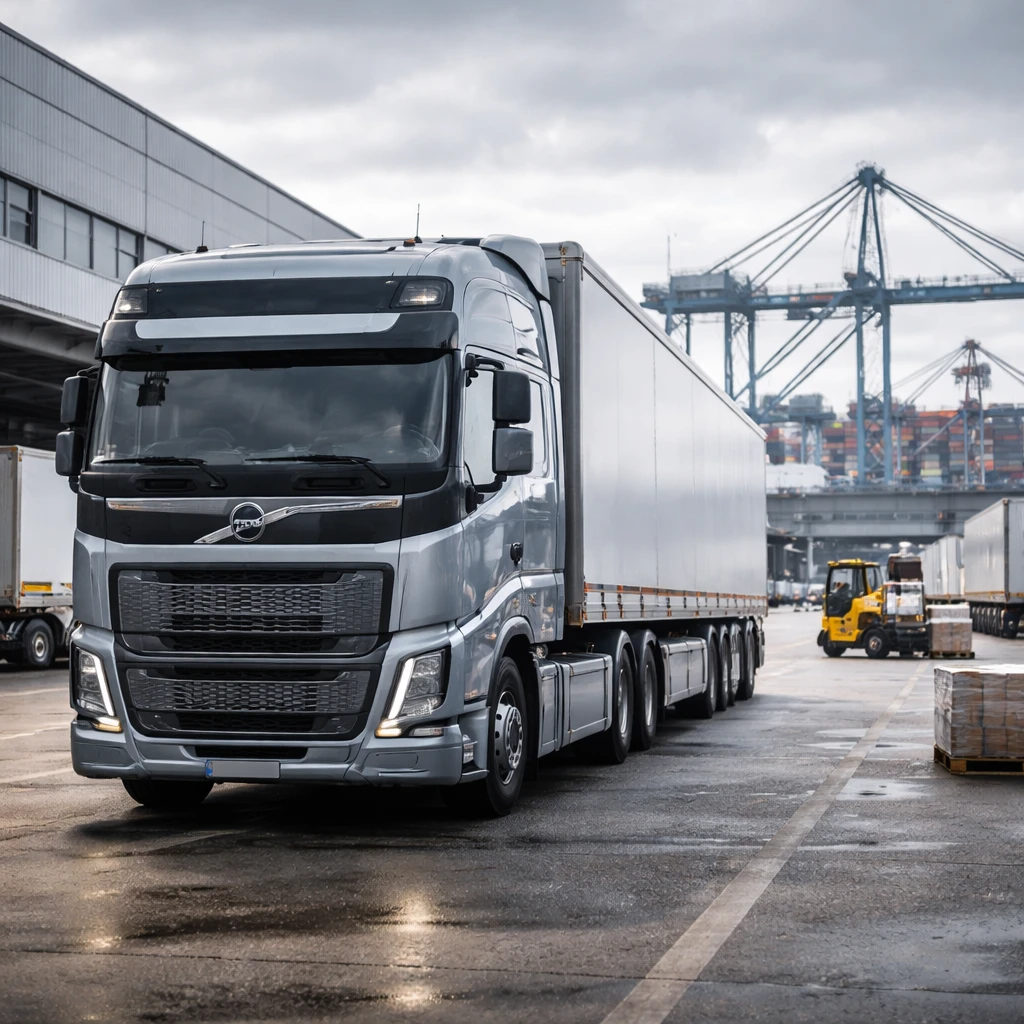
RBC Capital Markets lowered its recommendation on Volvo AB to "sector perform" from "outperform" on Friday, 2026, arguing that recent share-price strength has pushed the stock's valuation above levels the firm views as attractive. The Stockholm-based truck and construction equipment group had risen roughly 32% over the preceding three months, a rebound that prompted RBC to recalibrate its stance even as it modestly increased short-term financial projections.
Shares of Volvo were trading at SEK348.20 following the note, with RBC raising its price target to SEK360.00 from SEK350.00. Despite the bump to the target, the downgrade reflected the brokerage's view that stocks with heavier North American exposure may offer more upside now that early signs point to an inflection in that market.
Forecast adjustments and valuation
RBC lifted its adjusted diluted earnings-per-share forecasts for Volvo by 3% for both 2026 and 2027, to SEK22.22 and SEK25.39, respectively. The analysts noted that Volvo currently trades at about 16x 2026E price-to-earnings, materially above the company's historical average of 12.5x over the past decade - a differential the brokerage sees as important when weighing near-term return potential.
"At this point in the cycle, we prefer names with more North American exposure as the market there inflects," the note said, underlining that relative exposure to the U.S. truck market is shaping RBC's top choices among global OEMs.
Geographic mix and comparative exposures
RBC's analysis highlights clear differences in regional sales mix among major truck-makers. Volvo derived 28% of its Trucks business sales from North America in 2025, according to the brokerage's figures, compared with 47% for Daimler Truck and 60% for PACCAR. By contrast, 49% of Volvo Trucks' sales came from the European market in 2025, a region the analysts described as comparatively stable.
Those mix differences underpinned RBC's view that an improving North American cycle could favor Daimler Truck and PACCAR for potential EPS upgrades if freight and equipment demand follow the emerging momentum the brokerage sees in that market.
Operational resilience and early cycle signs
RBC acknowledged Volvo's defensive characteristics through the weak parts of the cycle. The firm's Industrial Business posted an adjusted EBIT decline of only 14% year-over-year in the second half of 2025, markedly less severe than the 48% drop reported for PACCAR's comparable business and the 38% decline at Daimler Truck, per RBC's figures.
At the same time, RBC pointed to improving signals in North America. Class 8 order activity picked up in late 2025 amid greater clarity on tariffs and EPA policy, and the brokerage expects freight rates to firm as excess capacity exits the market. Hauler margins were still low - 3.7% in the fourth quarter of 2025 - but RBC expects freight-rate improvements to support hauler profitability and, with a lag, equipment orders.
"We do not foresee a rapid NA recovery in the near term, but we think conservative consensus expectations for NA units in 2027 could be lifted as cyclical momentum builds," the analysts wrote. They added that, in such a scenario, Daimler Truck and PACCAR should, all else equal, have greater potential for EPS upgrades.
Updated Industrial business and unit forecasts
RBC raised its 2026 Industrial business sales forecast for Volvo to SEK462.77 billion from SEK460.83 billion - a 1.1% increase from 2025 levels by the brokerage's calculation. Adjusted EBIT for the Industrial business was projected at SEK51.79 billion, up from the prior SEK50.12 billion estimate, translating to an 11.2% margin.
For 2027, RBC expects Industrial sales of SEK501.003 billion with adjusted EBIT of SEK60.469 billion, implying a 12.1% margin. Trucks unit sales are forecast at 211,783 units for 2026 and 227,538 units for 2027. Construction Equipment unit sales are projected at 35,500 units in 2026 and 37,275 units in 2027, a 7.1% increase from the brokerage's previous estimate.
Balance sheet and shareholder returns
Volvo's Industrial net cash position remained solid, measured at SEK46.345 billion at year-end 2025. RBC projects this net cash to rise to SEK59.123 billion by the end of 2026 and to SEK73.676 billion by the end of 2027. The company is expected to pay a dividend of SEK16 per share for 2026, implying a 4.6% yield, up from a SEK13 payout in 2025.
Implications for investors
RBC's note combines modest upward revisions to Volvo's near-term financials with a more cautious stance on the company's relative upside given its geographic exposure and the elevated valuation multiple. The brokerage's shift to prefer U.S.-heavy peers rests on the view that a North American cyclical upswing would be more directly beneficial to companies with larger North American truck sales.
Investors focused on industrials, truck OEMs, freight-sensitive suppliers and related capital-goods suppliers should weigh Volvo's defensive performance through 2025 against the brokerage's case that dollar-weighted North American exposure could drive differentiated upside as the truck cycle normalizes.