
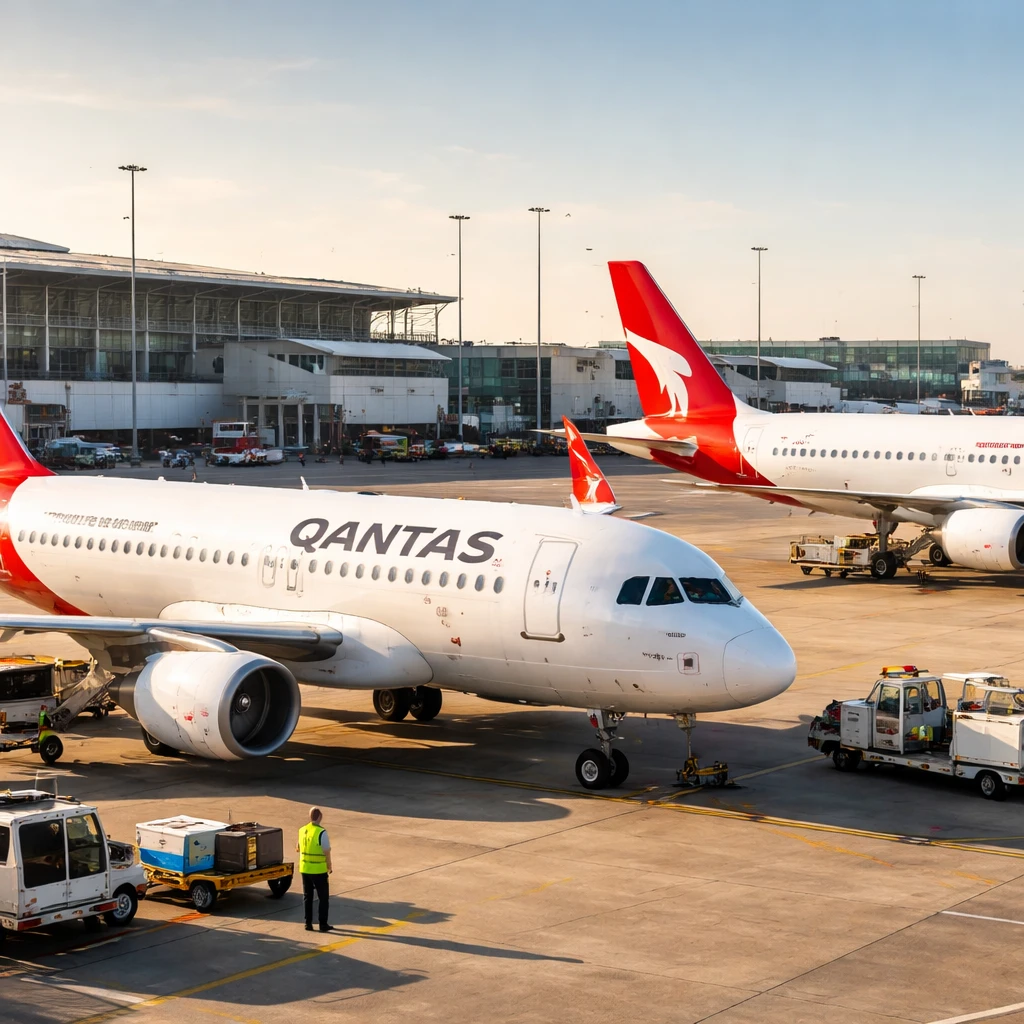
Qantas Airways reported an increase in underlying profit for the first half of its financial year, citing steady travel demand across domestic markets, better operational performance and the impact of newer aircraft joining the fleet.
For the six months ended Dec. 31, the carrier recorded an underlying profit before tax of A$1.46 billion, A$71 million higher than the same period a year earlier. Statutory profit after tax rose to A$925 million.
Domestic operations were a primary driver of the improvement. Group domestic underlying EBIT rose 14% to A$1.05 billion as business travel and premium leisure segments remained firm. Low-cost unit Jetstar reported particularly strong momentum in its domestic division, where underlying EBIT climbed 38%. That gain was attributed to robust leisure demand and the ramp-up of A320neo and A321LR aircraft into Jetstar's domestic network.
By contrast, international operations showed pressure on margins. International underlying EBIT - excluding Jetstar Asia and Jetstar Japan - declined 6% to A$463 million. Management attributed the fall to higher engineering, wage and other industry costs, even though international capacity and revenue both increased by 5% over the period.
On returns to shareholders, the board declared a fully franked interim dividend of 19.8 cents per share and unveiled plans for an on-market share buyback of up to A$150 million.
Operational and fleet notes
The company highlighted contributions from newer aircraft entering the fleet as a supporting factor for improved results and operational performance. Jetstar's domestic gains were explicitly linked to the scaling up of A320neo and A321LR types, which underpinned stronger leisure-demand economics in that business.
While capacity and revenue growth were recorded in international services, the combination of increased engineering and labour-related costs coincided with a decline in international underlying EBIT, indicating margin headwinds in that segment.
Outlook-related context
The reported figures and capital return actions reflect a mix of solid domestic recovery, continued fleet renewal benefits and cost pressures in international markets. The dividend and buyback signal confidence in cash generation for the period reported.