
Stock Markets March 13, 2026

Putin Orders Review of Critical Infrastructure Safeguards After Surge in Ukrainian Strikes

Kremlin meeting asks senior ministers to outline protection steps as attacks hit military, energy and industrial sites

By Caleb Monroe
Putin Orders Review of Critical Infrastructure Safeguards After Surge in Ukrainian Strikes

President Vladimir Putin convened his Security Council to press for measures to protect Russia's critical infrastructure following a series of intensified Ukrainian strikes that damaged military production facilities, energy and transport assets, and industrial sites. The Kremlin said Putin requested briefings from senior ministers up front; details of the rest of the session were not released. The strikes have also prompted widespread mobile internet slowdowns and outages in major cities.

Key Points

  • Putin asked senior ministers to report on measures to protect critical infrastructure after a series of strikes damaged military, industrial and energy facilities - sectors impacted include defence, energy, and industrial manufacturing.
  • Ukraine said it used British Storm Shadow missiles to hit a semiconductor and microchip-producing factory in Bryansk, an attack that killed six people and raised questions about the site's continued operation within missile range - this affects defence-related supply chains.
  • Other recent incidents include a drone strike on an Akron-owned chemical plant reducing around 5% of Russia's fertiliser output, an attempted attack on a Gazprom-operated TurkStream pumping station that was reportedly foiled, and suspension of loadings at the Sheskharis oil terminal after a drone strike - these events impact fertiliser, gas exports, and oil logistics.

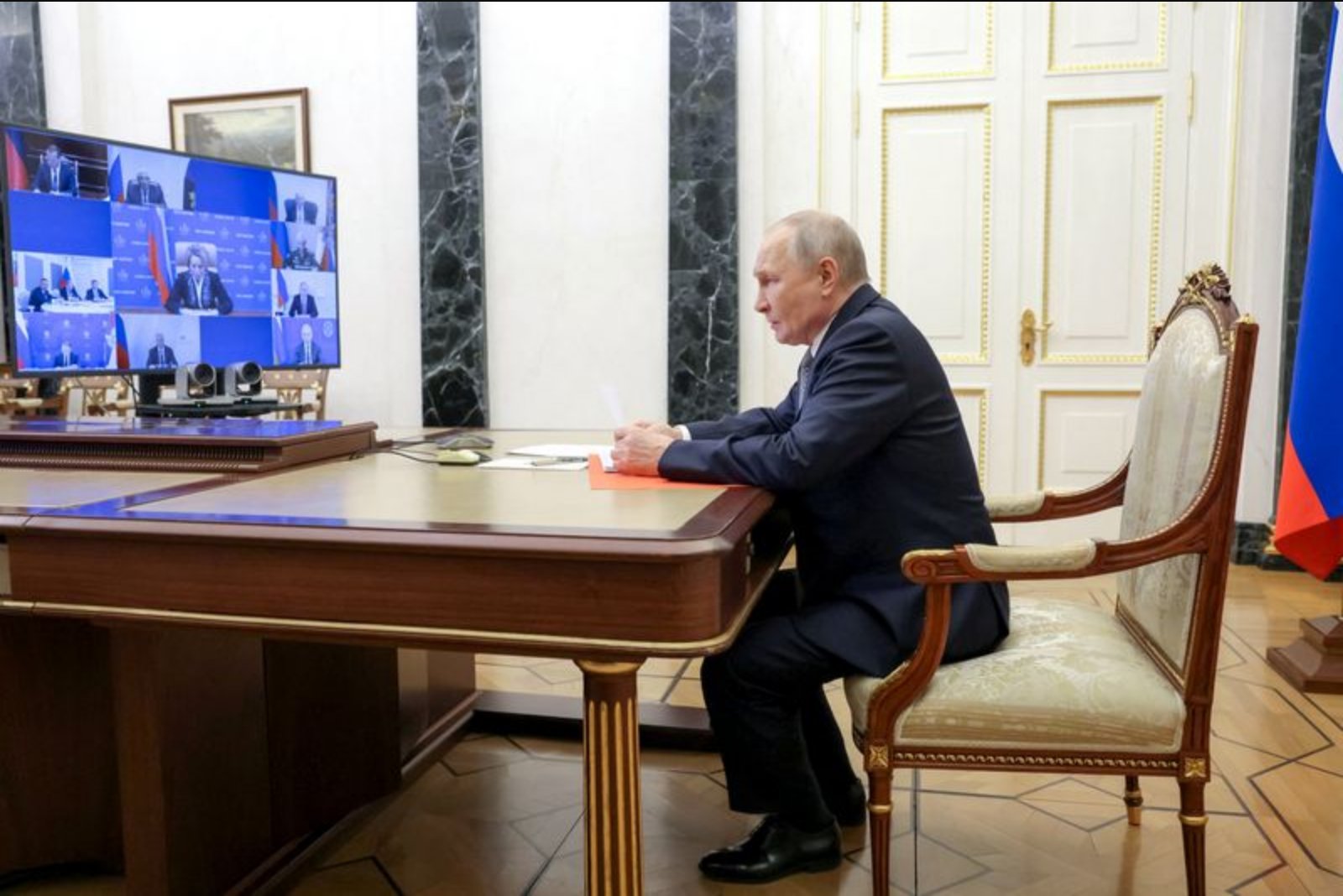
President Vladimir Putin raised questions about how to better protect Russia's key infrastructure during an opening session of his Security Council, the Kremlin said on Friday, following a recent escalation in attacks attributed to Ukrainian forces.

In his opening remarks, Putin asked Deputy Prime Minister Alexander Novak, Transport Minister Vitaly Savelyev and Construction Minister Irek Faizullin to provide reports on proposed protective measures. The Kremlin did not make the remainder of the meeting public.

The request for immediate reports comes after several significant strikes in recent weeks. Ukraine said on March 10 that it used British Storm Shadow missiles to strike a plant in the city of Bryansk that produced semiconductor devices and integrated microchips used in missiles. Bryansk lies just over 100 km (60 miles) from the Ukrainian border. The attack killed six people.

Following the Bryansk strike, some Russian war bloggers questioned why a facility described as vital to battlefield needs had not been evacuated or otherwise moved out of range over the past four years of conflict, given it remained within reach of Ukrainian missiles.

Earlier, on February 25, Ukrainian drones struck a chemical plant owned by fertiliser producer Akron in Dorogobuzh. The company said the incident reduced about 5% of Russia's fertiliser output. That disruption occurred shortly before what the article describes as a supply crunch linked to U.S.-Israeli attacks on Iran.

Russia's defence ministry reported on Thursday that Ukraine had attempted to attack a pumping station run by Gazprom that supports exports of natural gas to European customers via the TurkStream subsea pipeline, but that the attack was foiled.

On March 2, Sheskharis, a major oil terminal on Russia's Black Sea coast, suspended loadings after a Ukrainian drone strike that injured five people, damaged about 20 buildings and set a fuel terminal on fire.

In response to the stepped-up attacks, Russian authorities have limited or cut mobile internet access in Moscow and several other major cities, saying the moves are security measures. Although mobile outages have occurred across Russia during the war, officials said Moscow has not seen restrictions on this scale since the conflict began. The slowdowns and shutdowns affected services used by millions of people, including map applications and taxi-hailing services.

Is AKRN a bargain right now? The fastest way to find out is with our Fair Value calculator. We use a mix of 17 proven industry valuation models for maximum accuracy. Get the bottom line for AKRN plus thousands of other stocks and find your next hidden gem with massive upside. See Undervalued Stocks

Risks

  • Further strikes on energy infrastructure could disrupt gas exports to European customers, impacting the energy sector and related markets.
  • Damage to fertiliser production and chemical plants may tighten supply in the agricultural inputs sector, influencing fertiliser availability and pricing.
  • Extended or expanded mobile internet outages in major cities can hinder consumer-facing digital services such as navigation and ride-hailing, affecting the technology and transportation sectors.

More from Stock Markets

JPMorgan Sees Linde Well-Equipped to Handle Inflation and Tighter Helium Supply Mar 13, 2026 PayPay Shares Rally on Nasdaq as ARK Invest Discloses Stake Mar 13, 2026 Istanbul Stocks Slip as Banking, Leasing & Factoring and Telecoms Lag; BIST 100 Drops 1.45% Mar 13, 2026 Morgan Stanley Sees Infrastructure-Focused Software Gaining as AI Shifts Demand Mar 13, 2026 Amazon and Cerebras Pair Chips to Power Faster AI Inference on AWS Mar 13, 2026