
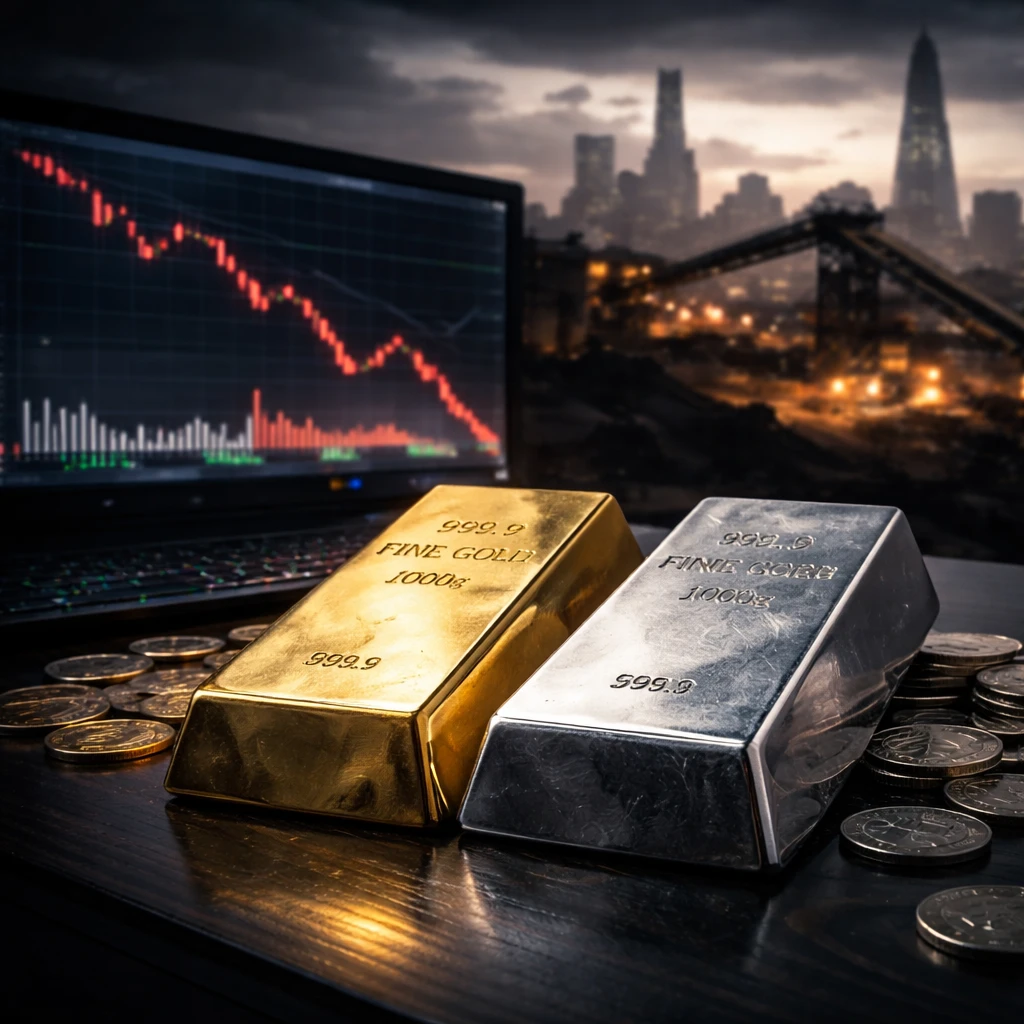
Gold and silver retreated sharply on Thursday as investors reacted to stronger-than-expected U.S. producer price data and a Federal Reserve message that lowered the likelihood of near-term rate cuts. At 07:35 ET (11:35 GMT), gold futures were trading at $4,686.49 an ounce, slipping beneath the $5,000 level that had largely held over the prior six weeks. Silver changed hands at $71.40 an ounce.
The Fed left interest rates unchanged and conveyed uncertainty about the inflation trajectory, with CME FedWatch indicators showing markets currently price in no rate cut before September. Above-forecast U.S. producer prices for February reinforced that stance and contributed to higher real yields and a stronger dollar.
Analysts at OCBC noted that those rising real yields and the firmer greenback were counteracting safe-haven demand linked to the escalation of tensions in the Middle East. Geopolitical developments included Iran’s closure of the Strait of Hormuz and Israeli strikes on the South Pars gas field, described as the world’s largest. Those actions have prompted retaliatory attacks on energy infrastructure across the region, lifting oil and gas prices and supporting expectations of sustained upward pressure on inflation.
The slide in precious metals translated into notable weakness across London-listed mining stocks. On the FTSE 350, Fresnillo Plc fell 8.3% and Endeavour Mining Plc dropped 7.3%. Mid-cap miners logged the steepest declines: Atalaya Mining Plc was down 12.5%, Pan African Resources Plc shed 9.2% and Hochschild Mining Plc lost 7.2%. Diversified mining majors Anglo American Plc, Rio Tinto Plc and Glencore Plc recorded falls ranging from 3.2% to 7.4%.
These losses extended a rapid reversal from record values earlier in the year. Gold has now fallen 12.3% from its all-time high of $5,354.80 reached on Jan. 29. Silver has plunged 38.3% from its record of $115.15 hit on Jan. 26, and is 23.9% lower than a nearer-term peak of $93.29 seen on Feb. 27. The gold-to-silver ratio widened to 66.1 from 56.3 at silver’s Feb. 27 peak.
Despite the recent pullback, both metals remain far above their earlier base levels. Since the start of 2024, gold has climbed 126.5% from $2,073.40. Silver has gained 191.9% from $24.33 at the start of 2023.
The confluence of stronger-than-expected inflation signals and central bank caution on rate cuts, together with elevated energy prices driven by Middle East tensions, has reshaped investor positioning in precious metals and resource equities. Market participants will be watching incoming economic data and central bank communications closely for further direction.