
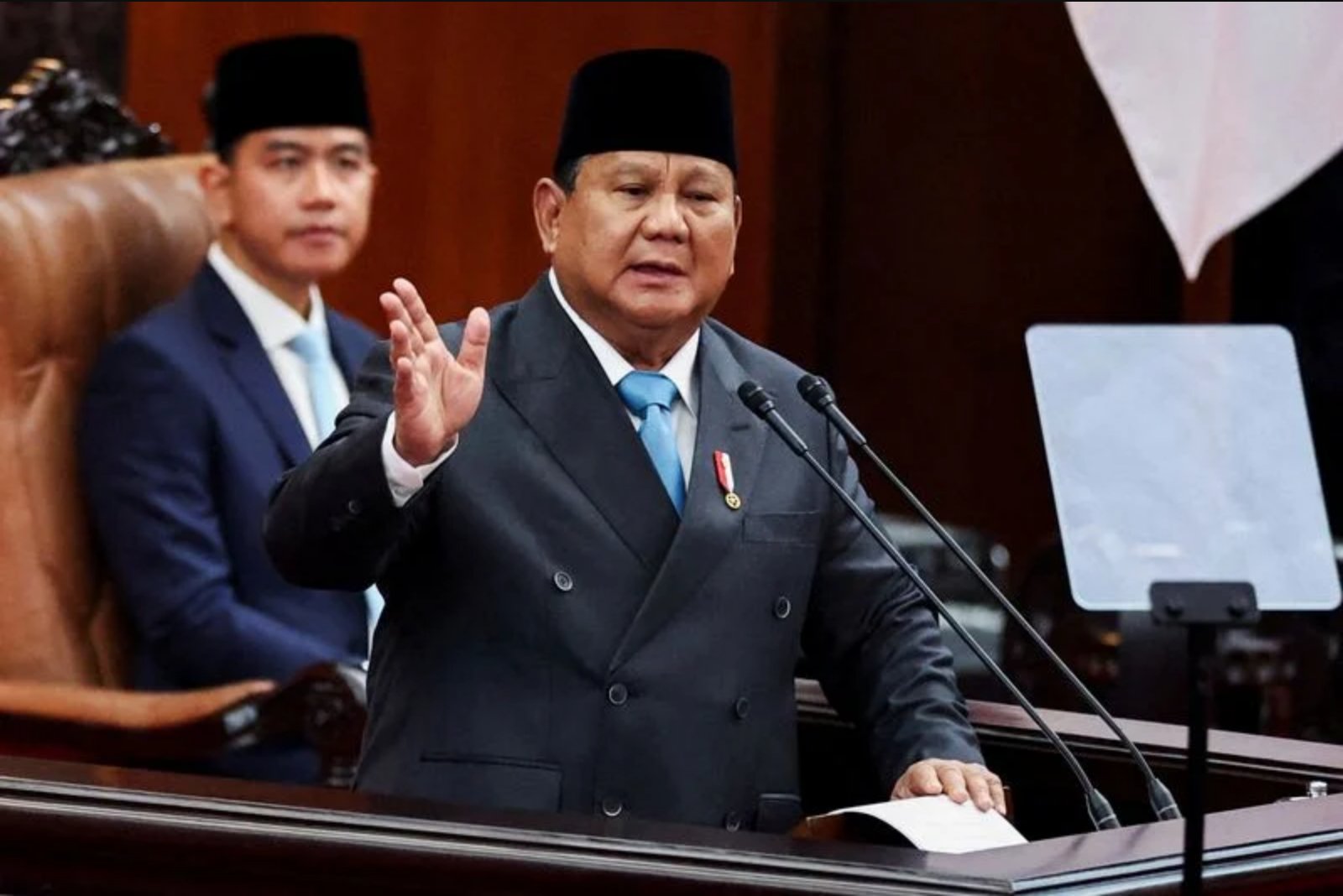
Indonesia’s economic narrative has shifted rapidly from emerging market exemplar to a market under siege as investor confidence unravels amid policy shifts and a plunging currency. President Prabowo Subianto’s administration has pursued a visibly populist agenda since taking office in 2024, including promises of free meals for millions of school children and a departure from long-standing fiscal restraint to prioritise rapid growth. Those policy choices, coupled with recent centralised moves on commodity exports and new mandates for monetary authorities, have rattled foreign investors and coincided with a pronounced deterioration in market indicators.
At the centre of the stress is the rupiah. The currency has fallen more than 8% this year to around 18,190 per U.S. dollar, marking record lows and registering its steepest three-week drop since 2020. Market participants describe the currency as both a symptom and a driver of mounting problems - its slide is eroding real returns for foreign holders and creating a self-reinforcing loop that raises inflationary pressures, tightens financial conditions and risks weighing on growth.
"Indonesia is suffering from a genuine confidence crisis, with serious governance red flags that overshadow any valuation argument," said Tan Altundag, investment manager for emerging equities at Pictet Asset Management, which has significantly reduced its exposure to Indonesian equities.
The rupiah has weakened despite monetary authorities raising rates by 50 basis points in May and efforts to defend the currency with dwindling foreign exchange reserves. The central bank’s reserves have fallen by about $12 billion this year, leaving fewer buffers to stabilise the currency and increasing the likelihood that depreciation pressures will persist.
Foreign portfolio flows reveal the extent of the retreat. Net foreign selling of equities reached $3.2 billion through the end of May - the largest outflow since 2009 - while foreign holdings of Indonesian government bonds have plunged from levels near 40% before the COVID-19 pandemic to roughly 12.6% at present. Analysts warn that persistent outflows in both equity and bond markets would continue to exert pressure on the rupiah, domestic liquidity and asset prices, potentially slowing infrastructure and growth plans.
"It’s true, there is a doom-loop forming," said John Woods, Asia chief investment officer at Lombard Odier. "Persistent outflows, with foreign holdings in bonds and stocks at multi-year lows, would continue to pressure the rupiah, liquidity, and asset prices - prolonged outflows could slow infrastructure and growth plans."
Credit and equity ratings are under strain as market sentiment deteriorates. Credit default swaps now imply the possibility that Indonesia could lose its investment-grade rating. Rating agencies have taken notice: Moody’s and Fitch have shifted their outlooks to negative, and S&P has indicated that its rating will depend on the government’s ability to bolster fiscal buffers. Meanwhile, MSCI is reviewing trading and transparency issues in Indonesian equities and has warned that a downgrade to frontier market status could be considered, although some investors view that outcome as unlikely.
Compounding market unease are a set of unorthodox policy moves that investors see as raising governance and transparency risks. Among the most notable actions, the state has moved to concentrate commodity export activity under Danantara, a sovereign wealth fund established by the president that reports directly to him. New legislation, passed last week though not yet published in full, grants parliament broader powers to influence the central bank and adds "real sector growth" to its mandate - a change many analysts interpret as a potential threat to central bank independence. Earlier this year the president nominated his nephew to serve as a deputy governor of the central bank.
"The underlying concern is that the direction of policy is not great and is becoming less transparent," said Kieran Curtis, head of emerging markets local debt at Aberdeen in London. "It is too early to say there has been damage from that policy, but it is not as efficient as exports finding their own market."
External shocks have intensified the domestic policy challenge. The energy-price shock associated with the U.S.-Israeli war on Iran has raised fuel costs and, because of existing fuel subsidies, has placed additional pressure on the fiscal balance. Observers say that rather than retrenching, the government has doubled down on costly growth and welfare measures, increasing the strain on public finances.
Market participants note that reversing the negative spiral will likely require a material policy shift. "Yes, it is possible for countries to pull themselves out of a negative spiral where they have put themselves in that position to begin with," said Mark Ledger-Evans, Asia-focused emerging markets fixed income portfolio manager at Ninety One. "In Indonesia’s case, we believe it stems largely from the idea of pursuing growth rates which are not feasible, which then filters down into execution, and hence it’s not so easy to pull out of the negative spiral without a re-think of the ideas."
Sector-specific consequences are already becoming evident. The nickel industry - a major node in Indonesia’s commodity complex that was built up with substantial participation from Chinese firms - is showing signs of reorientation. Chinese companies that were instrumental in scaling the industry are reportedly exploring alternative locations in response to the policy environment. Investors who might consider returning to Indonesia would likely demand better pricing terms.
"Indonesia is no longer being priced as a reliably orthodox emerging market," said Hemant Mishr, chief investment officer at fund manager S CUBE Capital, "but as one carrying rising policy risk."
Analysts caution that the interplay between domestic policy choices and global shocks creates a difficult backdrop. Credit default swap pricing may amplify perceptions of downgrade risk, and the combined effect of capital flight, currency depreciation and tighter financial conditions could prove destabilising for both near-term liquidity and longer-term growth ambitions.
For markets and the real economy alike, the central questions now revolve around whether policymakers will signal a durable commitment to restoring orthodox macro frameworks and whether the central bank will maintain operational independence to anchor inflation expectations and stabilise the currency. Without such signals, investors warn that continued outflows and rising financing costs would make it harder to finance infrastructure and broader growth plans.
Summary
President Prabowo Subianto’s populist policy agenda and moves to centralise control over commodity exports, together with new mandates for the central bank, have unsettled international investors. The rupiah’s sharp depreciation - more than 8% this year to record lows - combined with heavy foreign portfolio outflows and negative rating outlooks, are creating a feedback loop that threatens liquidity, raises borrowing costs and undermines growth prospects. The nickel sector and other commodity-linked industries face particular repercussions as foreign partners reassess investments.
Key points
- Currency and markets: The rupiah has fallen over 8% this year to about 18,190 per U.S. dollar, contributing to Indonesia being among the worst-performing currencies and equity markets in 2026.
- Capital flight: Net foreign equity outflows reached $3.2 billion to end-May, the largest since 2009; foreign ownership of government bonds has declined to roughly 12.6% from nearly 40% pre-pandemic.
- Policy and governance: Centralisation of commodity exports under Danantara and legislative changes expanding parliament’s influence on the central bank are viewed as raising governance and transparency risks that could undermine market confidence.
Risks and uncertainties
- Ratings risk: Credit default swaps and negative outlooks from Moody’s and Fitch imply heightened downgrade risk which would raise borrowing costs and force selling by some investors.
- Market feedback loop: Continued foreign outflows could further weaken the rupiah, increase inflationary pressures, tighten financial conditions and slow infrastructure and growth projects.
- Sector reconfiguration: Commodity sectors, notably nickel, face investor pullback and potential relocation of foreign firms, affecting investment and export revenues.