
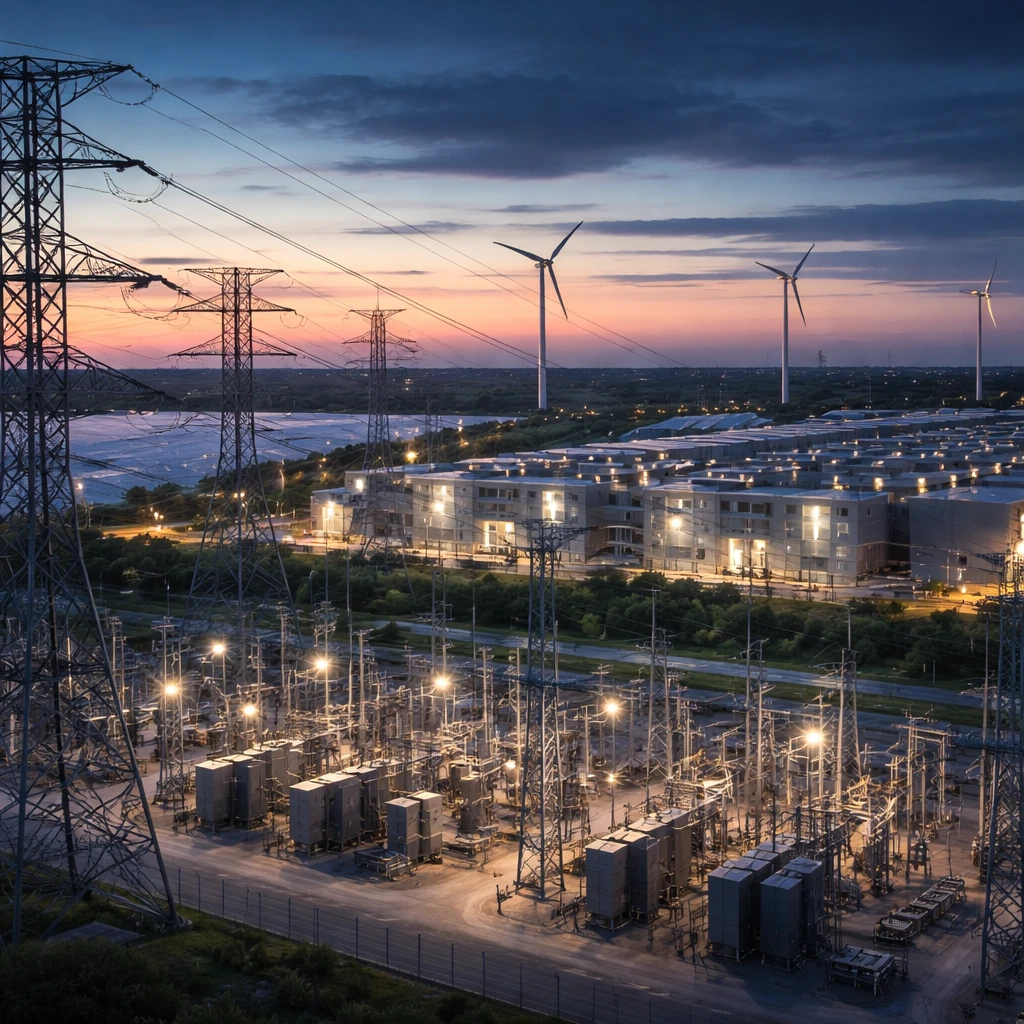
The mounting energy demands of AI training and inference are elevating utilities from defensive staples to strategic AI-enabling assets. Analysts estimate U.S. data-center power use could account for up to 12% of national electricity by 2030, creating sustained load growth and long-term power procurement needs for hyperscalers. Major cloud players - Microsoft, Google, Amazon and Meta - are securing decades-long power purchase agreements to lock in firm, low-carbon electricity for continuous operation.
Below is a concise snapshot of five companies that analysts highlight as best positioned to benefit from the AI-driven surge in electricity demand:
| Company | Price | Mkt Cap | 1Y Return | Rev Growth | P/E | Div Yield | Analyst Upside | Take |
|---|---|---|---|---|---|---|---|---|
| GE Vernova (GEV) | $1,020 | $272B | +84.6% | 10.3% | 28.8x | 0.2% | +26.9% | Grid picks & shovels play |
| NextEra Energy (NEE) | $89.54 | $187B | +20.3% | 10.3% | 22.8x | 2.8% | +12.4% | Renewables + dividend combo |
| Constellation Energy (CEG) | $274.77 | $98B | -21.1% | 23.4% | 25.8x | 0.6% | +33.1% | Nuclear re-rating in progress |
| Southern Co (SO) | $95.74 | $108B | +4.6% | 8.3% | 24.4x | 3.2% | +6.5% | Defensive nuclear + income |
| American Electric Power (AEP) | $133.98 | $72B | +26.9% | 11.3% | 19.8x | 2.9% | +9% | Most attractive valuation |
These names fall into three investment themes linked to how hyperscalers procure and rely on electricity:
- Grid infrastructure and equipment - GE Vernova occupies the core equipment layer for new plants and transmission interconnects. Its high return on equity signals strong pricing power for the transmission buildout that supports new data-center campuses. The stock has risen sharply over the past year, reflecting that positioning, though fair value analysis suggests the rally has pushed the share price materially above intrinsic estimates.
- Nuclear baseload - Constellation Energy provides always-on, carbon-free power that matches hyperscalers' needs for firm 24/7 supply. Its 23.4% revenue growth is notable for a utility, and analysts see meaningful price-target upside despite a recent pullback. Southern Co offers a more conservative route to nuclear exposure, combining regulated utility stability with a higher dividend yield.
- Renewables plus regulated distribution - NextEra stands out for scale in solar and wind development while also operating regulated utility franchises, positioning it as a primary counterparty for long-term PPAs. American Electric Power, meanwhile, offers a compelling valuation and serves regions with heavy data-center load growth, making it a direct beneficiary of increased electricity demand.
Company-by-company notes:
- GE Vernova (GEV) - Plays an essential role in every stage of new power capacity and grid interconnects. Reported metrics show an 83.2% ROE and a 1-year share-price gain of +84.6%, underlining the market's view of its indispensability in the transmission buildout. However, fair value estimates indicate the stock may be trading around 24% above intrinsic value, so entry timing is an important consideration.
- Constellation Energy (CEG) - Offers the clearest pure-play nuclear exposure with high revenue growth and the largest analyst upside in this group. The stock's 1-year decline of -21.1% presents a potential entry window, but nuclear licensing and regulatory timing remain execution variables that could impact cash flows.
- Southern Co (SO) - Provides exposure to nuclear through one of the newest U.S. nuclear facilities and pairs that with a 3.2% dividend yield and regulated earnings stability. Its more modest growth profile makes it a defensive choice among nuclear plays, though fair value estimates suggest the current price may be above intrinsic value.
- NextEra Energy (NEE) - Balances large-scale renewable development with regulated utility operations, a mix that positions it well for long-term PPAs with tech customers. At current pricing, some premium appears to be baked in for franchise quality.
- American Electric Power (AEP) - Trades at the group’s most attractive P/E multiple and has posted significant 12-month share appreciation. Its service footprint includes data-center-heavy areas such as parts of Texas and Ohio, which ties it directly to load growth from the AI buildout.
Framing the opportunity and the downside, the bull case centers on structural demand for reliable capacity and the limited existing supply able to meet hyperscalers' needs. The bear case cautions that rising interest rates could compress utility valuations, permitting and interconnection bottlenecks might slow new capacity installations, and AI capital expenditure cycles could cool, reducing incremental power demand.
Investors looking to express exposure to AI-driven electricity demand can choose among growth-oriented nuclear plays, equipment and grid-build beneficiaries, or a balanced renewable-plus-dividend approach depending on their preferences for upside, yield and valuation.