
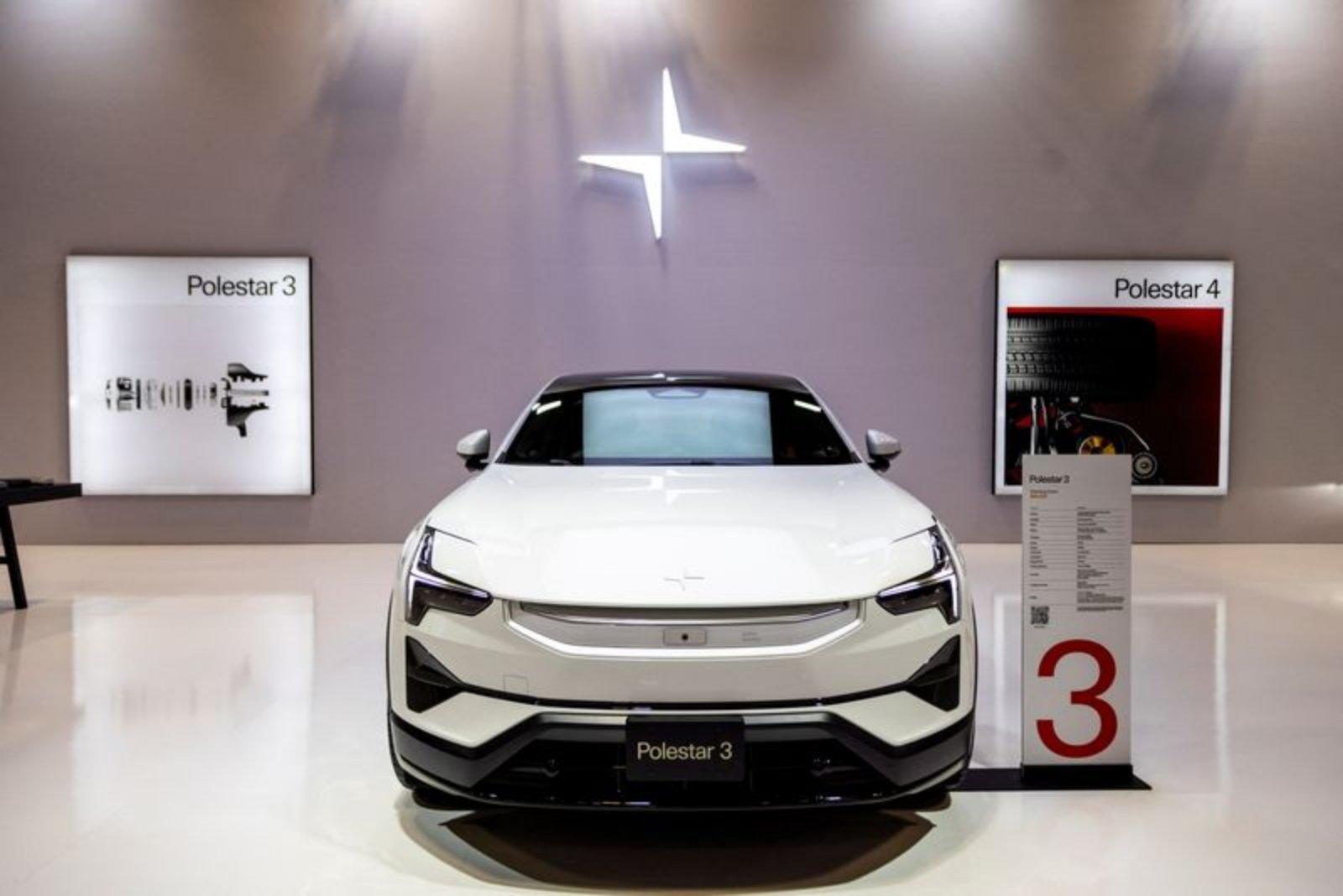
Polestar said it will introduce updated variants of its best-selling Polestar 2 and Polestar 4 models across the next 12 months as part of a move to conserve cash and drive European retail demand. The electric vehicle maker is choosing quicker, less costly mid-cycle refreshes rather than investing in entirely new architectures, according to its announcement on Wednesday.
The company attributed part of its recent performance to a Europe-focused reset and a shift toward a traditional dealer-led retail model, which helped lift Polestar’s 2025 retail sales to above 60,000 cars. Management framed the refreshed models as a bridge to maintain momentum while preserving liquidity.
Polestar said it expects low double-digit retail volume growth in 2026 and plans to increase its retail footprint by roughly 30% to support that target. Executives emphasised the need for stronger volumes to underpin the ambitions of majority owner Geely Holding Group, which has set a five-year plan to enter the global top five automakers and achieve more than 6.5 million vehicle sales annually by 2030, with about one-third of those sales coming from outside China.
Per Ansgar, CEO of Geely unit Geely Sweden Holding, told reporters that Polestar continues to gain from Geely’s technology and that the Chinese group will continue providing financial support. "We do this because we think that Polestar is a very strong brand," Ansgar said, adding that the company saw "good opportunities moving forward." The Chinese parent has previously provided support in the form of equity injections and bank-backed guarantees to ensure Polestar remains funded.
Polestar’s CEO Michael Lohscheller said refreshed models are expected to boost sales while the company maintains its premium positioning. "We want to be above 100,000 (annual sales) as quickly as we can," Lohscheller said. "But most important is establishing Polestar as a premium company."
On product timing, Polestar confirmed that the Polestar 5 grand tourer is scheduled to begin deliveries this summer. A new station-wagon/SUV variant of the Polestar 4, produced in Busan, South Korea, is slated to start shipping in the fourth quarter. The next iteration of the Chinese-made Polestar 2 is planned to launch early next year in Europe, but will not be introduced in the United States after being pulled from that market where it faced tariffs exceeding 100%.
Looking further ahead, Polestar’s next fully new model, the compact SUV Polestar 7, is targeted for a 2028 introduction and will be manufactured at Volvo Cars’ plant in Slovakia. Lohscheller said production at the Slovak factory should broaden the brand’s customer reach and, when combined with the upcoming portfolio, yield "much more volume and segment coverage." He added that he expects the model lineup to cover 60% of the European EV market.
Executives framed the combination of refreshed offerings, targeted launches and network expansion as a strategy to balance near-term cash discipline with the pursuit of higher volumes and sustained premium positioning. Geely’s continued financial backing, including prior equity and guarantee measures, remains a key support element while Polestar executes this phased product and retail strategy.