
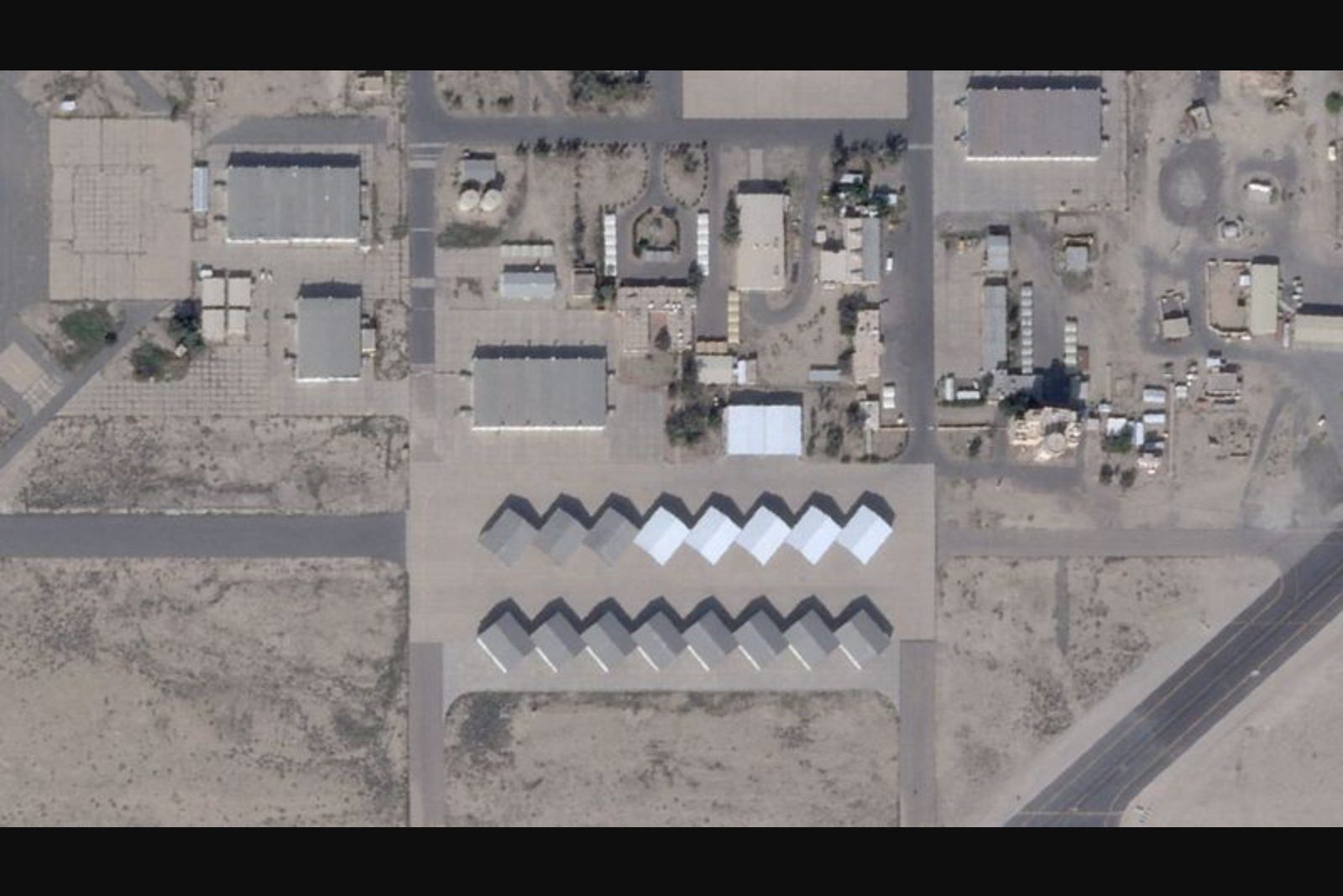
Planet Labs, a California-based operator of a large fleet of Earth-observing satellites, has widened a temporary delay on customer access to imagery covering the Middle East to 14 days, the company told customers on Monday. The company had imposed a four-day delay last week and said the new 14-day restriction is intended to reduce the risk that its images could be used by adversaries to plan attacks on the United States and allied forces.
In a statement provided to customers and shared with news outlets, a Planet spokesperson said the measure was temporary and enacted "in an effort to limit any uncontrolled distribution of the images that might result in their unintentional access and use as tactical leverage by adversarial actors." The spokesperson added: "This conflict is dynamic and in many ways unique to others, and thus Planet is taking robust steps to help ensure our images do not contribute in any way to attacks on allied and NATO personnel and civilians."
Some space specialists have warned that Iran could be using commercial satellite imagery, either directly or via other U.S. adversaries, to inform operations. The company action highlights the influence commercial space companies now exert on how information from orbit is shared and used during conflicts.
Space operations and modern warfare
Military forces increasingly rely on space-based assets for a wide range of functions - from target identification and weapon guidance to missile tracking and battlefield communications. Last week, U.S. officials said their space forces were among "the first movers" in the operation against Iran, illustrating how space capabilities are being integrated into military planning and execution.
A spokesperson for U.S. Space Command declined to provide details on the specific capabilities used. The command is responsible for supporting missile tracking, secure communications and employing Pentagon satellites as overwatch for U.S. and joint forces on the ground, according to the statement included in the reporting.
Once largely the exclusive domain of advanced national space programs, high-quality satellite imagery is increasingly available through commercial operators. That broader access has, in past conflicts, shifted the balance of information on the battlefield. Operators are now applying artificial intelligence to accelerate imagery analysis and to identify areas of operational interest more rapidly.
"This expert analysis used to be the preserve of high-end military analysts, not anymore," said Chris Moore, a defense industry consultant and retired air vice-marshal in the British military. "Ultimately it will create an all-seeing eye from space that will make the concealment of military forces and deception operations difficult to achieve."
The Planet action and the broader trends in commercial imagery and automated analysis illustrate tensions between open commercial data markets and national security concerns. Planet described its 14-day delay as a temporary, precautionary step intended to restrict unintended tactical use of its data, while space specialists and military spokespeople described how space-based capabilities have become central to contemporary operations.
Summary of developments
- Planet Labs extended a temporary access delay for Middle East images from four days to 14 days to reduce the risk of adversarial use.
- The company said the measure is intended to prevent uncontrolled distribution that could be leveraged tactically against U.S. and allied forces and civilians.
- Observers have suggested Iran could be accessing commercial imagery, including through other adversarial partners, though details were not specified.