
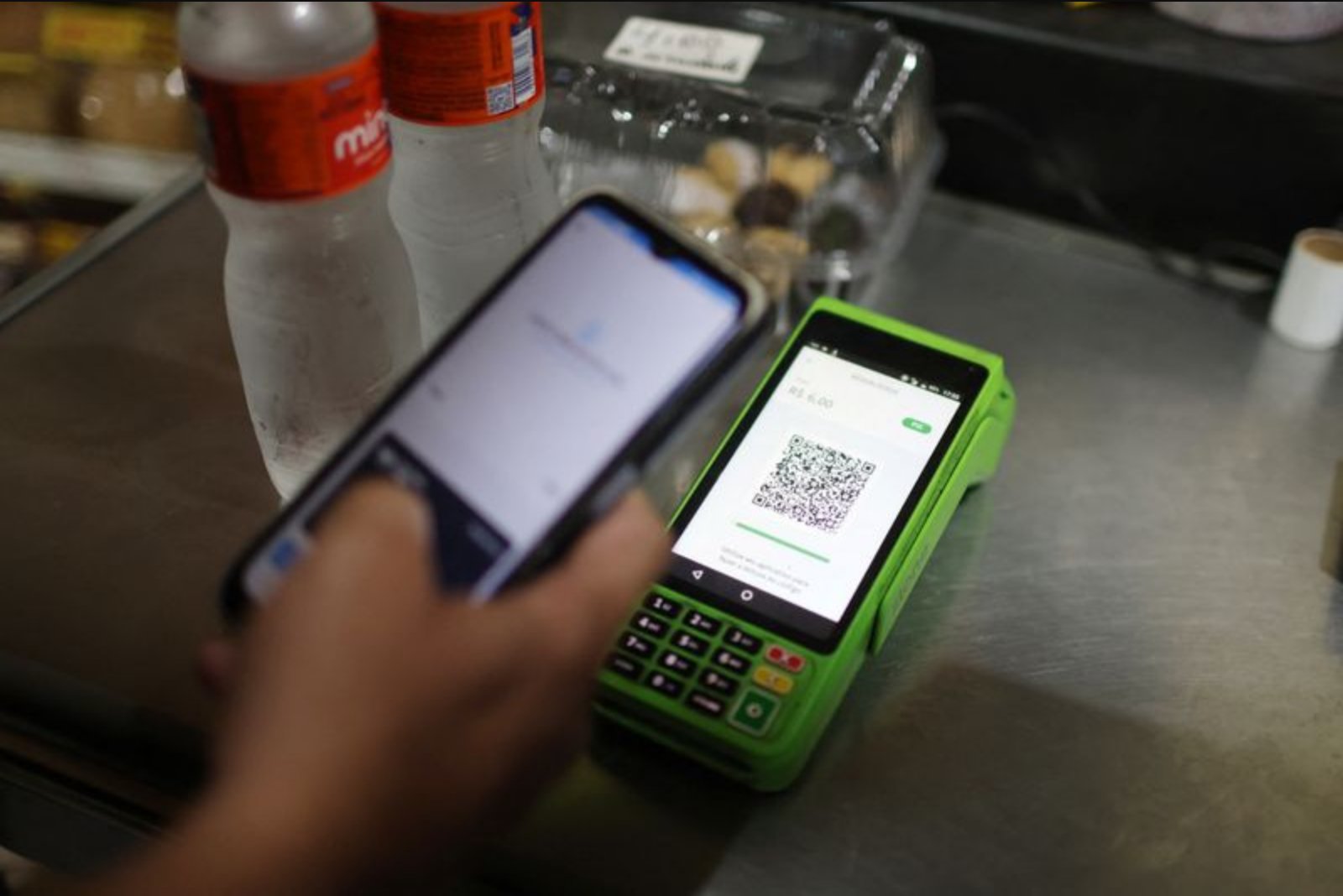
Pix, Brazil’s instant-payment platform run by the central bank, is on course to handle one in two e-commerce transactions in the country by 2028, according to a new analysis from payments company Ebanx. The forecast underscores how quickly Pix has grown since its launch and how it is reshaping payment preferences in Latin America’s largest economy.
Launched in late 2020, Pix has significantly reduced the use of cash in Brazil. In 2023 it eclipsed the combined number of credit and debit card transactions, and by transaction count it ranks ahead of cards. By value, Pix is the second most used payment method among Brazilians, trailing only traditional interbank transfers - a method typically reserved for very large payments.
The Ebanx study, drawing on data from Payments and Commerce Market Intelligence (PCMI), reported that Pix accounted for 42% of online purchases in Brazil last year, slightly above credit cards at 41%. Ebanx projects that Pix will capture 45% of online transactions by the end of this year and reach 50% in 2028, when its margin over credit cards is expected to widen to 14 percentage points.
Industry executives point to product enhancements and wider merchant adoption as drivers of Pix’s expansion online. Eduardo de Abreu, Ebanx’s chief product officer, said that the central bank’s introduction last year of a recurring-payments feature helped Pix extend beyond person-to-person transfers, where it originally gained traction. Central bank figures show that consumer payments to businesses have been Pix’s largest category by volume since September; in January they constituted 46% of total Pix transactions, while person-to-person transfers made up 40%.
De Abreu commented on consumer behavior and acceptance: "There has been a lot of trust-building among consumers around Pix, combined with wider availability on websites." That growing trust and ubiquity online have pressured the share of card-based transactions - a market segment in which U.S. firms Mastercard and Visa have traditionally been dominant.
Even so, credit cards are expected to retain a core user base in Brazil, largely due to the widespread practice of interest-free installments for larger purchases. De Abreu noted that while merchants may provide discounts for upfront payment using Pix, many consumers still prefer installment plans because of cash-flow considerations. He said, "Discounts are attractive and make mathematical sense. But people look at it and think: even with the discount, I can’t pay everything this month. I’d be cash-strapped even though it’s cheaper." He added: "Installments increasingly serve the segment of the population that really needs that cash-flow flexibility."
Pix’s expansion has also drawn regulatory attention abroad. The system was subject to scrutiny in the United States last year, where regulators probed practices they described as potentially unfair, in part because Brazil’s central bank both operates Pix and regulates the broader financial system. The central bank maintains that it provides neutral public digital infrastructure intended to improve efficiency, inclusion and competition, and it cites more than 70 million people entering the financial system since Pix was introduced.
The Ebanx projections and central bank data together illustrate a rapid shift in payment patterns in Brazil. The continued adoption of recurring payments and the growing presence of Pix on merchant websites are likely to be key factors shaping its trajectory in the coming years.
Note on related investment tools
Is MA a bargain right now? The fastest way to find out is with our Fair Value calculator. We use a mix of 17 proven industry valuation models for maximum accuracy. Get the bottom line for MA plus thousands of other stocks and find your next hidden gem with massive upside.