
Philip Morris International is projecting stronger full-year profitability, driven in large part by the rapid expansion of its Zyn nicotine pouch franchise, the company said on Friday. Zyn has become one of the standouts within the company's portfolio of smoking alternatives, trailing only the flagship IQOS heated tobacco product in performance.
The company reported fourth-quarter adjusted earnings per share of $1.70, a figure that matched analysts' expectations. It also disclosed that U.S. volumes of its nicotine pouch product rose 19% in the fourth quarter, a gain the company attributed to a broad set of commercial activities.
Looking ahead, Philip Morris set a full-year adjusted earnings-per-share range of $8.38 to $8.53 for 2026. That guidance sits above the analysts' mean estimate of $8.33 compiled by LSEG.
Market reaction to the announcement was muted. Shares of the company were down roughly 1% in premarket trading, reflecting lingering investor concern after a period of heavy promotions and other initiatives in the prior quarter. Those large, one-off promotional efforts in the third quarter had previously pressured the stock as investors questioned the profitability profile of Zyn.
Competition is also intensifying in the U.S. nicotine pouch market. Rival labels, including British American Tobacco's Velo, are capturing an increasing slice of the market, presenting a growing challenge to Zyn's expansion.
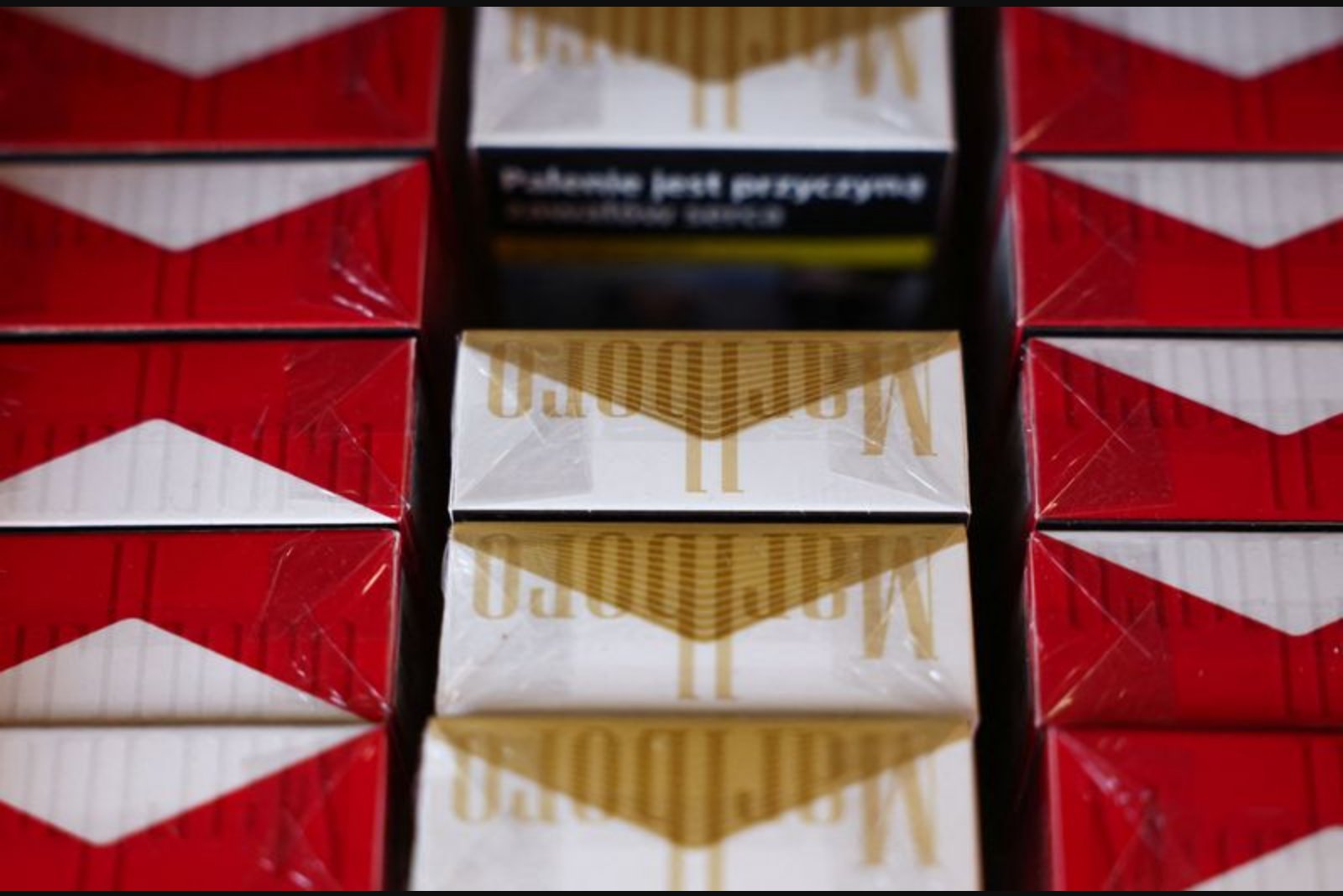
The company remains the largest tobacco firm by market capitalization and continues to sell the Marlboro brand outside the United States. Its strategic push into smoking alternatives such as heated tobacco devices and nicotine pouches comes as smoking prevalence declines in parts of the world and the company seeks to grow revenue from non-combustible products.
Philip Morris emphasized commercial efforts as the driver of pouch volume growth in the U.S., while also acknowledging that earlier intensive promotional activity had unsettled some investors. With the company forecasting adjusted EPS for the year above consensus, the market will be watching whether continued pouch momentum and controlled promotional spending can sustain the improved profit outlook.