
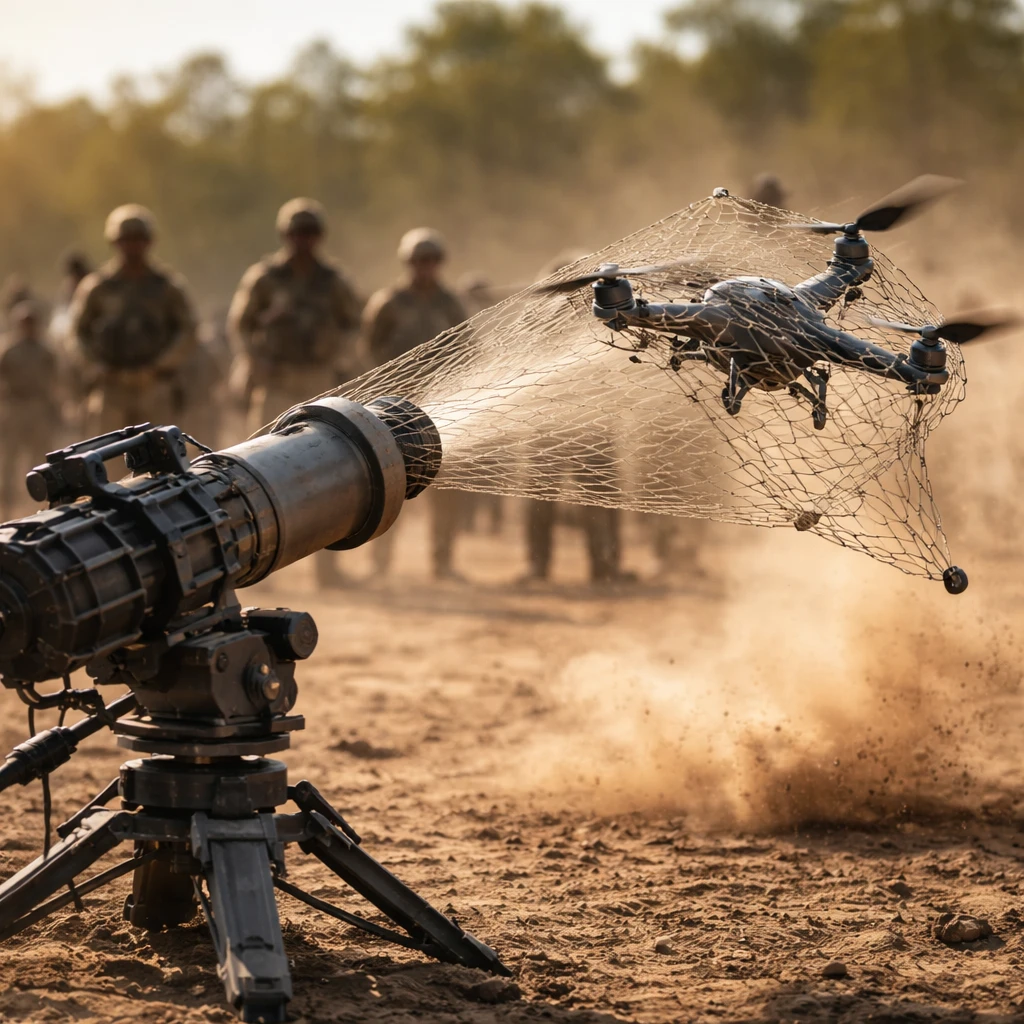
Parazero Technologies Ltd (NASDAQ:PRZO) shares climbed roughly 2% in premarket trading on Wednesday following news that the company successfully tested its DefendAir drone-interception system against a target traveling at 70 mph.
According to the company, the trial used net-launching technology to stop a high-speed unmanned aerial vehicle. Parazero described the result as a first for net-based interception at that speed, noting the test was designed to simulate a realistic combat scenario in which a hostile drone rapidly approaches ground forces.
In a statement included with the announcement, Ariel Alon, CEO of ParaZero, said: "We are thrilled to demonstrate DefendAir’s strong and reliable performance in demanding operational conditions," and added, "We believe that intercepting a 70 mph threat represent a significant advancement for force protection in modern battlefields."
The company emphasized that DefendAir provides a non-explosive, low-collateral defensive option through its net-based interception approach. Parazero highlighted that the system is offered in multiple configurations - handheld, stationary point protection, and drone-mounted - which the company says enable layered defense capabilities intended to protect troops, convoys, and high-value assets in the field.
Parazero positioned the DefendAir system as a potential countermeasure against tactical unmanned platforms, specifically citing FPV attack drones and other fast unmanned systems in combat situations. The company characterized the test as a demonstration of real-time protection against fast-moving aerial threats.
Key points
- Parazero reported a successful interception of a drone traveling at 70 mph using its DefendAir net-launching technology, coinciding with a roughly 2% premarket share price increase.
- The test was presented as a first for net-based interception at that speed and was framed as a simulation of a hostile drone rapidly approaching ground forces.
- DefendAir is available in multiple configurations - handheld, stationary point protection, and drone-mounted - intended to provide layered defense for military and security assets.
Risks and uncertainties
- The announcement reflects results from a single test; the company did not disclose a wider program of trials or operational deployment timelines, leaving uncertainty about broader operational performance.
- While described as low-collateral and non-explosive, the real-world effectiveness of net-based interception across diverse engagement scenarios and environmental conditions was not detailed in the release.
- The company's positioning of DefendAir as a solution against tactical platforms such as FPV attack drones suggests potential defense-market demand, but commercial adoption and procurement outcomes were not addressed in the statement.
The announcement focuses on the technical demonstration and possible applications for force protection; it does not provide additional operational data, timelines for deployment, or procurement details.