
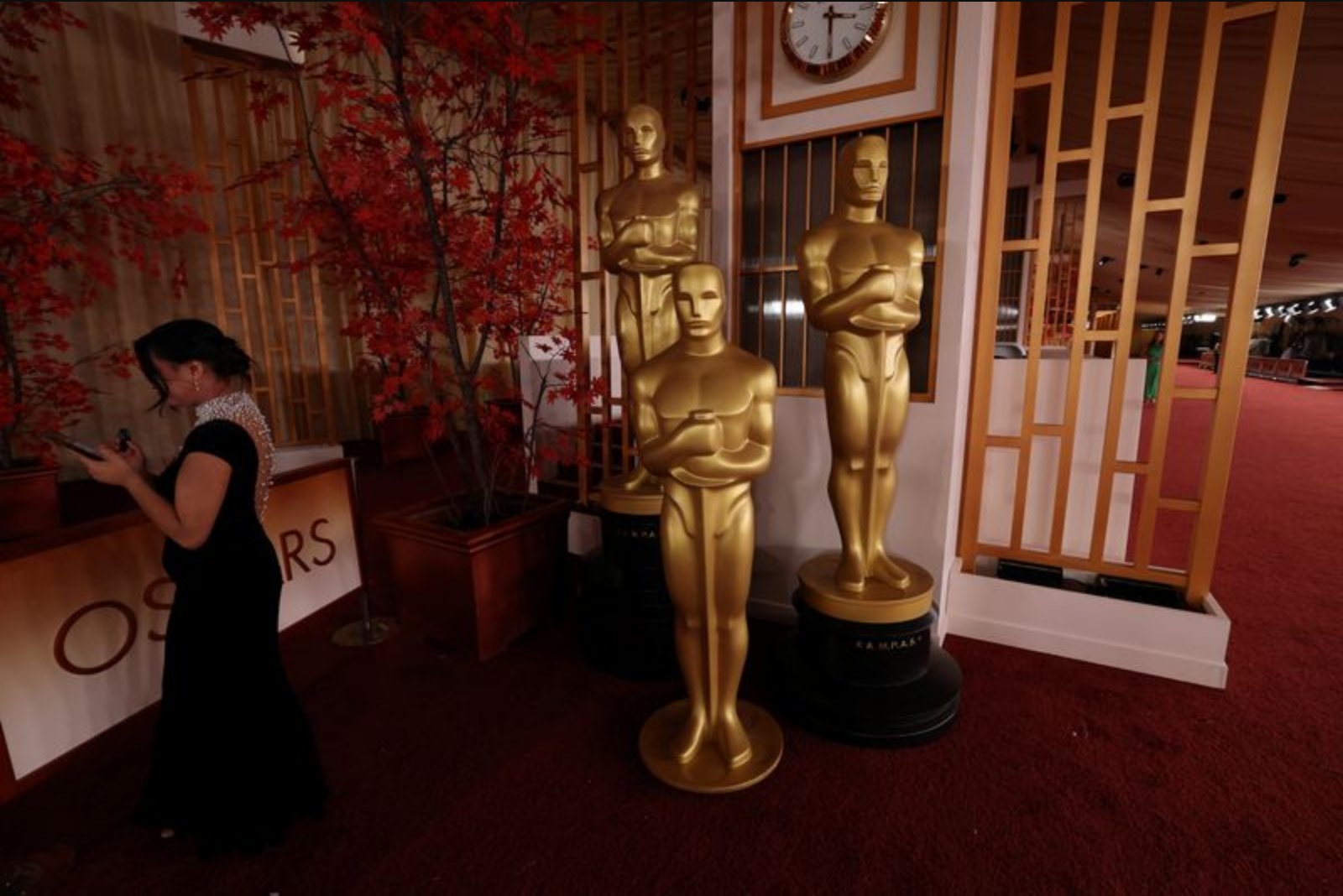
Hollywood is preparing for Sunday night’s Academy Awards amid a mix of celebration and unease as the film industry confronts shifting economics, corporate consolidation and security concerns. The best-picture contest is unusually open this year, with the vampire drama Sinners - the leading nominee with 16 nods, a record in the Academy’s near-century history - competing with the darkly comic thriller One Battle After Another.
Organizers of the ceremony at the Dolby Theatre said they are coordinating closely with federal and local law enforcement after a federal warning flagged a possible Iranian threat against California. Officials stressed that no specific or credible danger to the Academy Awards had been identified, but the Academy indicated it would work with the FBI and the Los Angeles Police Department to tighten security around the event.
Conan O’Brien returns as host for a second consecutive year. He indicated at a recent press briefing that while he intends to acknowledge current events, his primary role is to keep the audience entertained and at ease. "My job is to hit this very, very thin line, I think, between entertaining people and also acknowledging some of the realities," he said, adding that he would rely on his judgment in balancing those aims.
The live broadcast begins at 7 p.m. ET (midnight GMT) and will air on Walt Disney’s ABC network with streaming availability on Hulu. Among the performers slated for the show are the real-life singers who provide the voices for HUNTR/X, the fictional band featured in the animated nominee KPop Demon Hunters.
Beyond the red carpet and televised spectacle, the awards highlight stress points inside the business. Production is increasingly mobile as studios pursue tax incentives and lower costs outside traditional Hollywood hubs, both across the United States and overseas - a trend that has diluted the industry’s historic concentration of film production in Los Angeles.
Corporate restructuring is another source of uncertainty. Warner Bros., the studio connected to both One Battle After Another and Sinners, is in the process of being sold to Paramount Skydance in a transaction that will reduce the number of major film distributors. The proposed deal has drawn public opposition from media advocacy groups; one such group, Free Press, recently rented a mobile billboard driving around Hollywood to express its disapproval of the merger.
At the same time, creators and crew members on both sides of the camera have voiced concern that artificial intelligence could curtail job opportunities and diminish creative risk-taking. That unease over technology and automation appears to be an industry-wide worry heading into the ceremony.
The awards themselves may produce surprises. Industry observers describe the contest as unusually fluid across multiple categories. The best actor field, in particular, is difficult to call, with Timothée Chalamet, Leonardo DiCaprio and Michael B. Jordan all in contention.
Chalamet had been regarded by many as a frontrunner for his role as a ping-pong hustler in Marty Supreme, but his momentum appeared to soften during awards-season campaigning that included a public fashion collaboration, a large promotional blimp and comments that were interpreted as dismissive of ballet and opera.
One Battle After Another, which features DiCaprio as a former political radical now raising a teenager, accumulated multiple wins at preliminary award shows and was the early favorite for best picture. Yet Sinners, which celebrates blues music and Black culture in the Segregation-era American South and stars Michael B. Jordan, mounted a late surge after a recent victory at the Actor Awards.
In the best actress category, Jessie Buckley is widely regarded as a strong favorite for her role as Agnes Hathaway in Hamnet, portraying the grief of a couple following the death of their 11-year-old son. Outside of those races, awards experts say many of the top categories remain highly contestable.
Voting for the Oscars is conducted by the Academy of Motion Picture Arts and Sciences, whose membership of roughly 10,000 actors, producers, directors and craftspeople selects the winners. This year the Academy introduced tighter controls intended to confirm that members have viewed the films they vote on. For the first time, the online balloting system records whether a voter streamed a specific movie through the Academy platform. Members may still indicate that they watched a title by other means by checking a box in the system.
Finally, a commercial pitch that has circulated in the awards coverage asks whether investors should consider Walt Disney Co. stock, citing a third-party service called ProPicks AI that evaluates companies including Disney using numerous financial metrics and proprietary algorithms. The promotional material highlights prior winners under that service but does not alter the facts of the ceremony, the nominees or the operational and security concerns surrounding the event.
As the industry’s high-profile ceremony unfolds, the glitz of the evening will sit alongside substantive questions about where films are produced, who profits from consolidation, and how new technologies will affect employment and creative choices in the years ahead.