
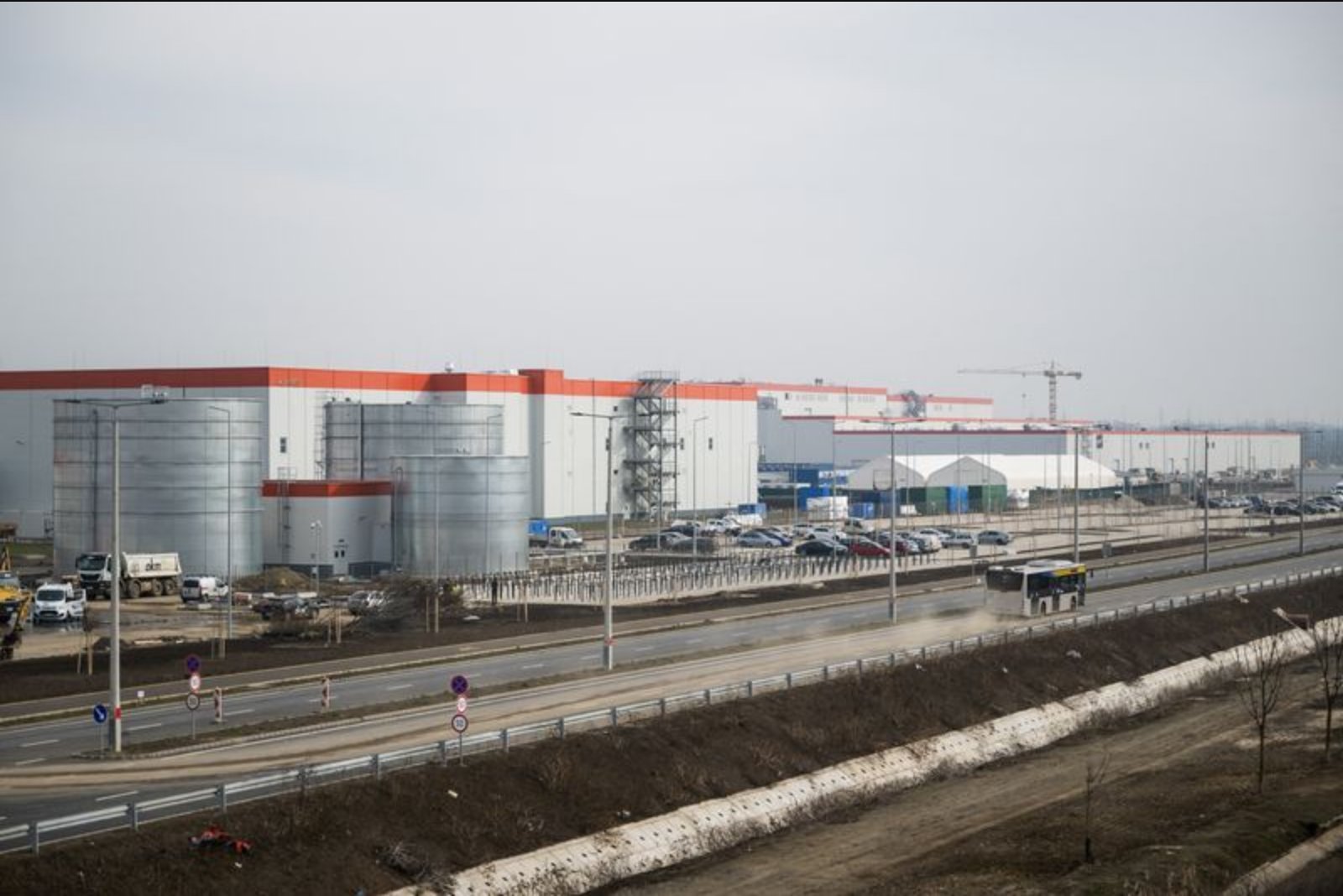
Hungary’s push to become a centre for electric vehicle batteries - a central economic pillar for Prime Minister Viktor Orban - has encountered headwinds that now threaten to undermine the political benefits the project was intended to produce.
Since 2021, Orban has prioritized attracting battery manufacturing to Hungary, drawing foreign capital the government estimates at roughly 26 billion euros, primarily from South Korean and Chinese firms. The strategy aimed to position the country as a key link in Europe’s battery supply chain. Orban, who has governed for 16 years, has leaned on this industrial shift to stimulate growth.
But the expected economic uplift has not yet materialized. The battery sector has been stuck in a prolonged downturn and has so far failed to lift Hungary’s broader economic performance. Output in the industry experienced a three-year stretch of stagnation, including two years when battery production fell. Those developments have coincided with a broader economic malaise: Hungary suffered the EU’s sharpest inflation spike following Russia’s 2022 invasion of neighbouring Ukraine, and overall growth has lagged the modest EU average that Orban had sought to outperform.
Domestically, the political payoff has also been elusive. Opinion polls show Orban trailing his centre-right challenger Peter Magyar ahead of the April 12 election. Recent public opinion research indicates that controversy around battery factories has become an electoral vulnerability for the incumbent government.
Safety and environmental disputes intensify scrutiny
Government officials and plant operators have been on the defensive after reporting and official actions raised questions about compliance at one of the largest sites. A news outlet published an account detailing health and safety violations at Samsung SDI’s battery plant in the northern town of God. In response, an Orban aide, Gergely Gulyas, said Samsung was fined several times between 2022 and 2023 for surpassing emissions limits, while the government maintains that no pollution was detected beyond the facility’s boundaries.
Authorities said police have opened four criminal procedures connected to Samsung since 2023. Those include a 2024 investigation focused on environmental damage and occupational endangerment and a 2026 probe into waste management violations. The plant also had its environmental licence temporarily suspended.
Samsung stated last month that its Hungarian factory complies strictly with environmental and safety regulations. The company’s press office did not answer follow-up questions. On its website, Samsung affirmed its commitment to employee health and safety and to maintaining responsible corporate relations with the local community.
Local residents voice frustration
Residents close to the factory have expressed unease about plant operations. Laszlo Toth, who rents a house near the site, described nightly large plumes of steam rising from the facility. Toth, 50, who works as a food courier, said the siting of the plant next to residential areas was inappropriate. "These battery plants were not supposed to be located next to human settlements but in deserts," he said. "We did not need them. We used to have farmlands."
Another God resident, Istvan Takacs, 64, who spent four decades driving tractors, said he remained undecided about his vote but was troubled by the stagnating cost of living. He recalled that when he began working, an hourly wage could buy three loaves of bread, and described the current situation as largely unchanged from his perspective: "Now, we haven’t got much further, though we’re not worse off either. I think everything’s stagnating here."
Economic and policy context
When Orban returned to power after the 2022 election, his administration publicly outlined plans to make Hungary a battery "superpower" by courting Asian investors and elevating the country to become the world’s fifth-largest battery exporter. To support that ambition, the government has provided about 1.3 billion euros in subsidies to the electric vehicle battery sector, including as much as 344 million euros last year for capacity expansion at Samsung’s plant.
Despite state aid and foreign investment, growth expectations tied to the battery strategy have been revised downward. Orban’s target of lifting growth toward 6% beyond 2026 now appears unattainable under current conditions. The International Monetary Fund projects Hungary will expand annually by roughly 2% to 2.6% through 2030 instead.
Analysts note the political optics of favouring foreign capital have become problematic for the government. David Karas, a senior researcher at the CEU Democracy Institute, said the perception that the nationalist government has put foreign investors ahead of local interests is politically damaging. "Rather than serving as an economic and geopolitical buffer for the regime, the battery bet is now eroding the social contract that underpinned Orban’s system," Karas said.
There remains a long-term case for batteries: the International Energy Agency projects that EV battery demand could more than triple by 2030 from 2024 levels. However, nearer-term political effects are already visible. A Median survey indicated nearly two-thirds of respondents believed the problems at the Samsung plant had negatively affected Orban’s chances of re-election.
Opposition leader Peter Magyar has responded by pledging tighter oversight of battery facilities and reductions in subsidies for gigafactories if his Tisza Party succeeds in unseating Orban’s Fidesz.
Implications for industry and markets
The situation ties directly to sectors that intersect manufacturing, environmental regulation and local economic development. Industrial policymakers and investors will be monitoring both regulatory enforcement actions and the political outcome of the April ballot, as these factors could influence future subsidy levels, permitting practices and investor confidence in Hungary’s battery ecosystem.
$1 = 0.8610 euros