
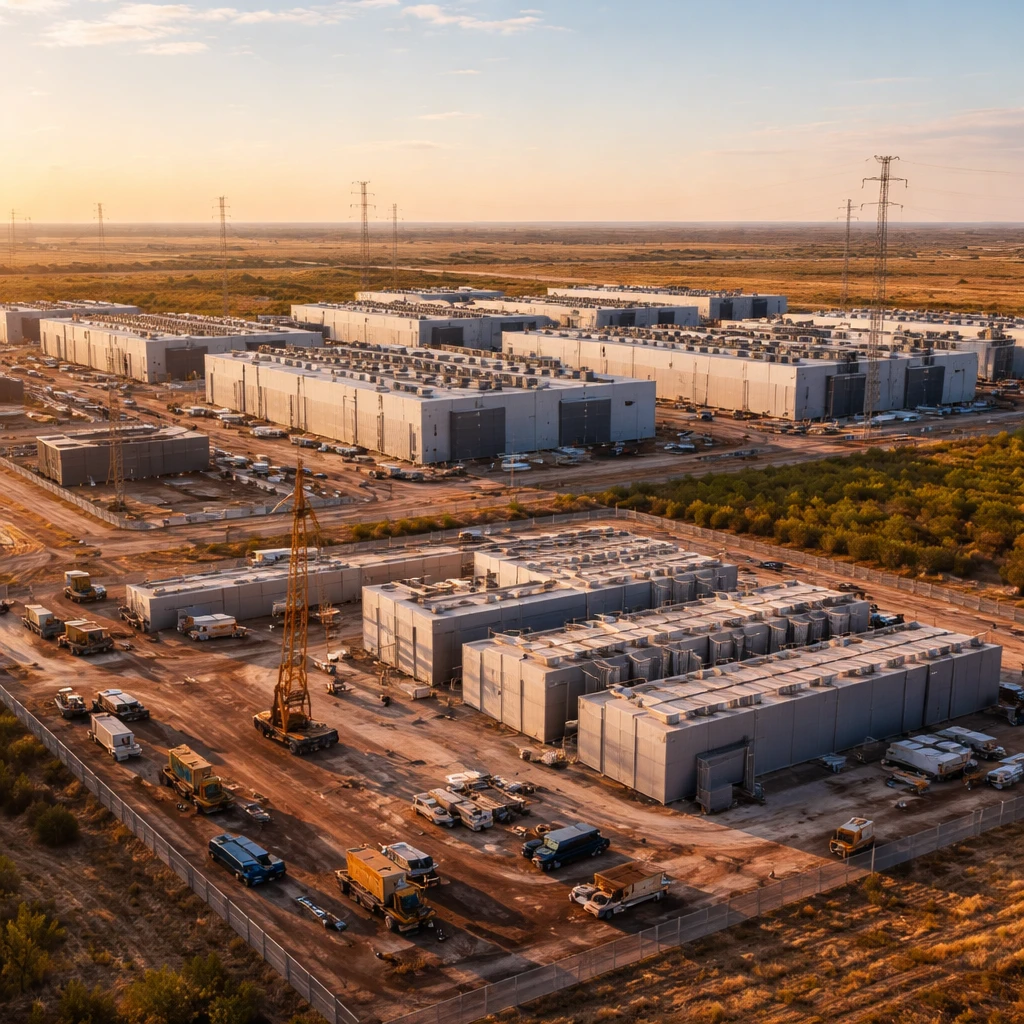
Oracle Corporation shares dipped late on Friday after news surfaced that plans to enlarge a flagship artificial intelligence data center in Abilene, Texas had been discontinued. The stock had been up as much as 3% earlier in the trading session before the development, then reversed to trade about 1% lower in the final hour before stabilizing.
According to the report, Oracle and OpenAI decided not to proceed with previously discussed expansion plans for the Abilene site after negotiations became protracted around financing and as OpenAI's requirements evolved. The breakdown in talks left the planned expansion site available and prompted interest from other potential tenants.
Developer Crusoe is building a roughly 1,000-acre campus in Abilene as part of what is referred to as the Stargate project. While portions of the campus are operational, the tentative lease for a larger expansion that involved Oracle and OpenAI will not move forward, per the report. The Stargate initiative was announced with White House-level visibility.
Following the collapse of the Oracle-OpenAI expansion talks, Meta Platforms entered discussions to potentially lease the planned expansion area from Crusoe. Nvidia, the supplier of the AI chips used by Oracle and OpenAI at the Stargate site, reportedly played an active role in facilitating conversations between Meta and the developer. As part of its efforts to help secure a tenant for the expansion, Nvidia placed a $150 million deposit with Crusoe and began courting Meta as a possible occupant.
Crusoe's search for a tenant carried strategic hardware considerations. Oracle and OpenAI are using Nvidia's AI semiconductors at the Abilene site, and Nvidia's involvement in pursuit of a new tenant was described as an effort to ensure that its processors would be installed in the expanded facility rather than those from a competitor, Advanced Micro Devices.
Context and market note - Market reaction to the report was immediate: shares surrendered earlier gains and moved lower before finding footing. The situation highlights how commercial negotiations, financing arrangements and shifting customer requirements can affect data center development plans and create rapid changes in tenant line-ups for large-scale projects.