
Ondas Holdings Inc. (NASDAQ: ONDS) saw its stock rise after the company confirmed that its smart demining subsidiary, 4M Defense, had been awarded a multi-year contract valued at in excess of $30 million to execute a large-scale land-clearance program in Israel.
Company officials characterized the initiative as one of the country's largest demining efforts, covering about 741 acres along the Israel-Syria border. The agreement includes an initial execution period of up to three years and contains options that could extend the time frame or expand the operational scope.
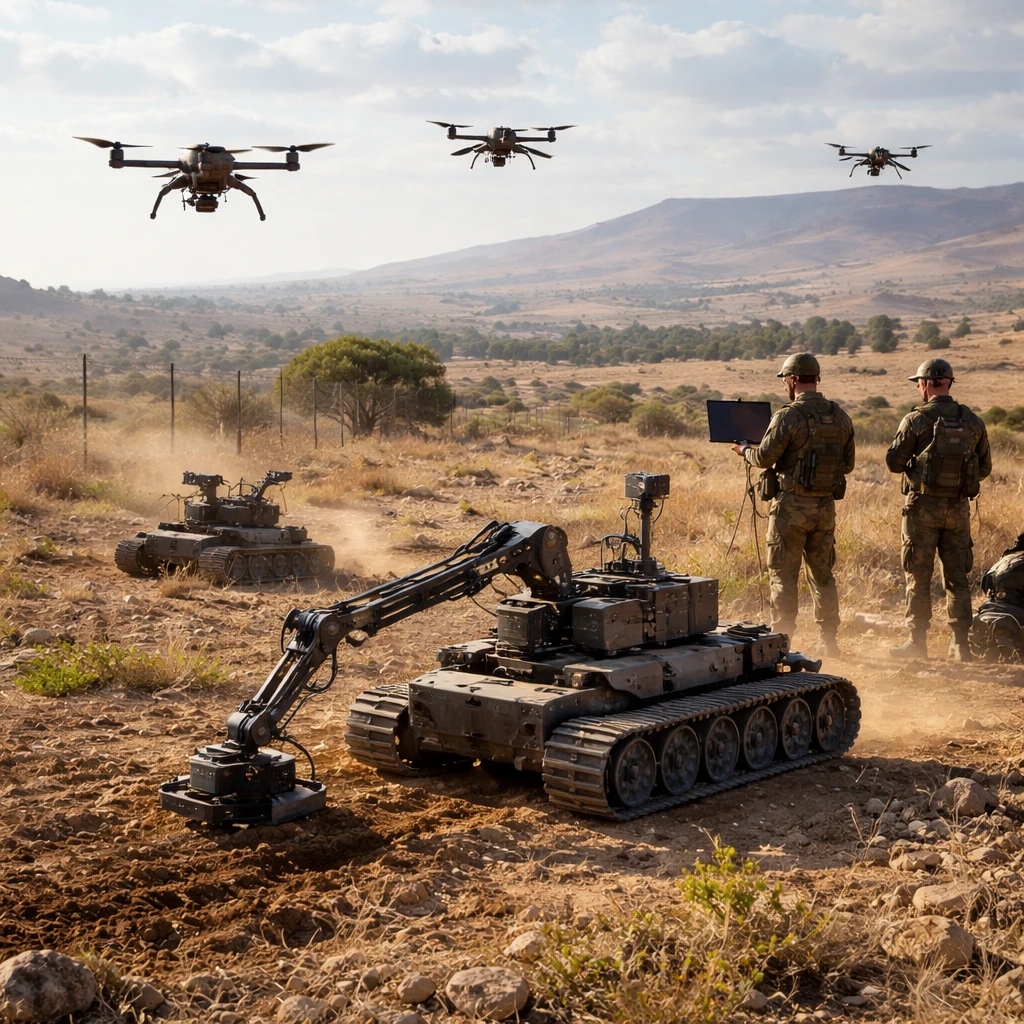
Eric Brock, Ondas' Chairman and CEO, said the award highlights growing demand for technology-driven approaches to land clearance in complex and high-risk defense settings. The demining program will be carried out using 4M Defense's technology-first model, which is designed to supplant traditional, labor-intensive clearance techniques with autonomous systems, robotics and aerial intelligence aimed at improving safety and operational efficiency.
The contract is positioned as a foothold for Ondas in Israel's defense sector and is consistent with the company's stated strategy to offer comprehensive border security solutions that can be applied across multiple phases of conflict. Ondas expects the deployment to act as a reference point for future large-scale autonomous demining projects elsewhere.
Ondas operates through distinct business units: Ondas Autonomous Systems, which provides AI-powered defense and security platforms, and Ondas Networks, which delivers software-defined wireless broadband technology. The company also recently created Ondas Capital, an entity intended to accelerate the deployment of unmanned and autonomous systems to Allied defense markets.
Key details at a glance:
- Contract value: more than $30 million.
- Coverage area: approximately 741 acres along the Israel-Syria border.
- Initial execution period: up to three years, with options for extensions and scope expansion.
The award aligns with Ondas' emphasis on bringing autonomous, robotics-driven capabilities to high-risk clearance tasks, replacing more manual practices with systems intended to reduce exposure to personnel and increase operational throughput.
While the company emphasized potential strategic benefits and future reference value from this deployment, the contract's current specifics are limited to the terms described above.