
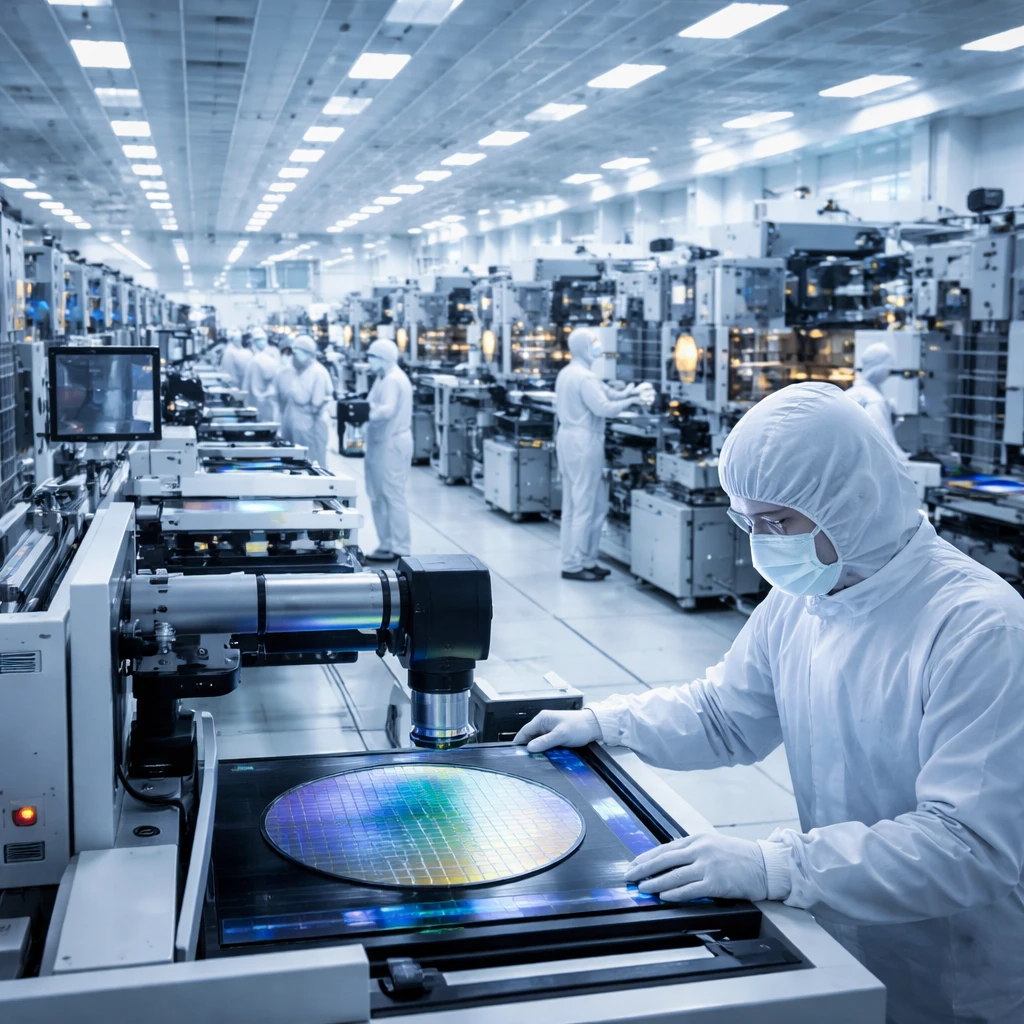
Nvidia Corporation said Tuesday it has begun restarting production of its H200 processor for customers in China, CEO Jensen Huang told reporters at the GTC 2026 conference. The move follows the company obtaining export licenses from the U.S. government and taking orders that Nvidia says prompted the supply chain to ramp up manufacturing several weeks ago.
The H200, which is built on Nvidia's earlier Hopper architecture and was taken out of production last year amid regulatory pressures in both the U.S. and China, was restarted after the permits were secured, Huang said. The chip has been positioned by Nvidia to meet U.S. export-control requirements for sales into China.
Stocks reacted mildly to the news. Nvidia shares fell 0.70% to $181.96 on Tuesday despite the broader set of announcements Huang delivered at the conference, including a sweeping revenue forecast for the company’s next-generation chips.
At GTC 2026, Huang laid out an order projection that totals $1 trillion for Nvidia’s Blackwell and Vera Rubin lines through 2027. That forecast more than doubles a $500 billion projection Nvidia provided a year earlier and was presented alongside a candid remark from Huang that computing demand could exceed even that raised target: "In fact, we are going to be short. I am certain computing demand will be much higher than that," he said during his keynote.
The restart of China-bound H200 production is being framed as a strategic response to revised export control frameworks. In December 2025, the administration announced that the H200 could be exported to vetted customers in China under licensing conditions that include a revenue-sharing arrangement with the U.S. government equal to 25% of revenues from those sales.
Nvidia has previously recorded material financial impacts related to trade and regulatory frictions. The company took a $5.5 billion charge tied to U.S. export restrictions and regulatory challenges in China over the past year, a fact Huang acknowledged while describing the company’s path back into the Chinese market.
Beyond the H200 restart and revenue projection, Nvidia used the GTC stage to introduce its upcoming Vera Rubin processors, which the company claims will deliver significant performance gains over Blackwell: 3.5 times faster on training workloads and 5 times faster on inference tasks. The company also highlighted the product roadmap tied to its December 2025 acquisition of Groq for $20 billion, and announced the Nvidia Groq 3 Language Processing Unit, set to ship in the second half of 2026.
Huang also addressed shifts in the AI compute landscape that are boosting demand for inference-oriented hardware. He pointed to the rise of agentic AI systems - where multiple software agents are spawned to complete tasks - as a major driver of increased inference workloads and the consequent need for faster processors beyond traditional training-focused GPUs.
On the automotive front, Nvidia reiterated partnerships with Hyundai, Nissan and Chinese automakers BYD and Geely to pursue an ambitious goal: building 18 million robotaxis annually. The company said systems using Nvidia compute are expected to underpin self-driving taxi services, with Nvidia-powered autonomous Ubers anticipated to launch in 2027.
What to watch next
- Regulatory developments clarifying how Nvidia will comply with U.S. export controls and the 25% revenue-sharing arrangement for H200 sales into China.
- Production pace and volumes as the company scales restarted manufacturing in response to the orders it says it has taken.
- How revenue from renewed China sales affects Nvidia’s quarterly results, given the prior $5.5 billion hit tied to export restrictions and regulatory issues.
- Customer uptake of the Vera Rubin chips when they launch, particularly the performance claims of 3.5x faster training and 5x faster inference versus Blackwell.
- Shipment timing for the Groq 3 LPU in the second half of 2026, representing the first product rollout from Nvidia’s largest acquisition.
- Execution of robotaxi partnerships with automakers and progress toward the 18 million annual vehicle target and the planned 2027 launch of Nvidia-powered self-driving taxi services.
Market and operational context
The announcements reflect a company balancing substantial commercial opportunity against a complex regulatory and geopolitical environment. Restarting H200 production required export licenses and has direct implications for Nvidia’s supply chain and manufacturing scheduling. Those operational decisions also intersect with financial outcomes for the company, as renewed sales into China could help offset earlier charges tied to export controls.
At the same time, the aggressive $1 trillion orders projection and the introduction of higher-performance chips and LPU products outline a growth strategy that depends on customer adoption of next-generation hardware across cloud providers, AI model developers and automotive partners.
Note: This article reports the statements and figures presented by Nvidia executives and the company at GTC 2026. It does not add new events or claims beyond what was announced at the conference and the regulatory decisions referenced in those announcements.