
Stock Markets March 5, 2026

Northrop Grumman to Deploy CIRCM Systems on German Chinook Fleet

47 Common Infrared Countermeasures units to be fitted to newly ordered CH-47 helicopters under a U.S. Army production award

By Jordan Park NOC
Northrop Grumman to Deploy CIRCM Systems on German Chinook Fleet
NOC

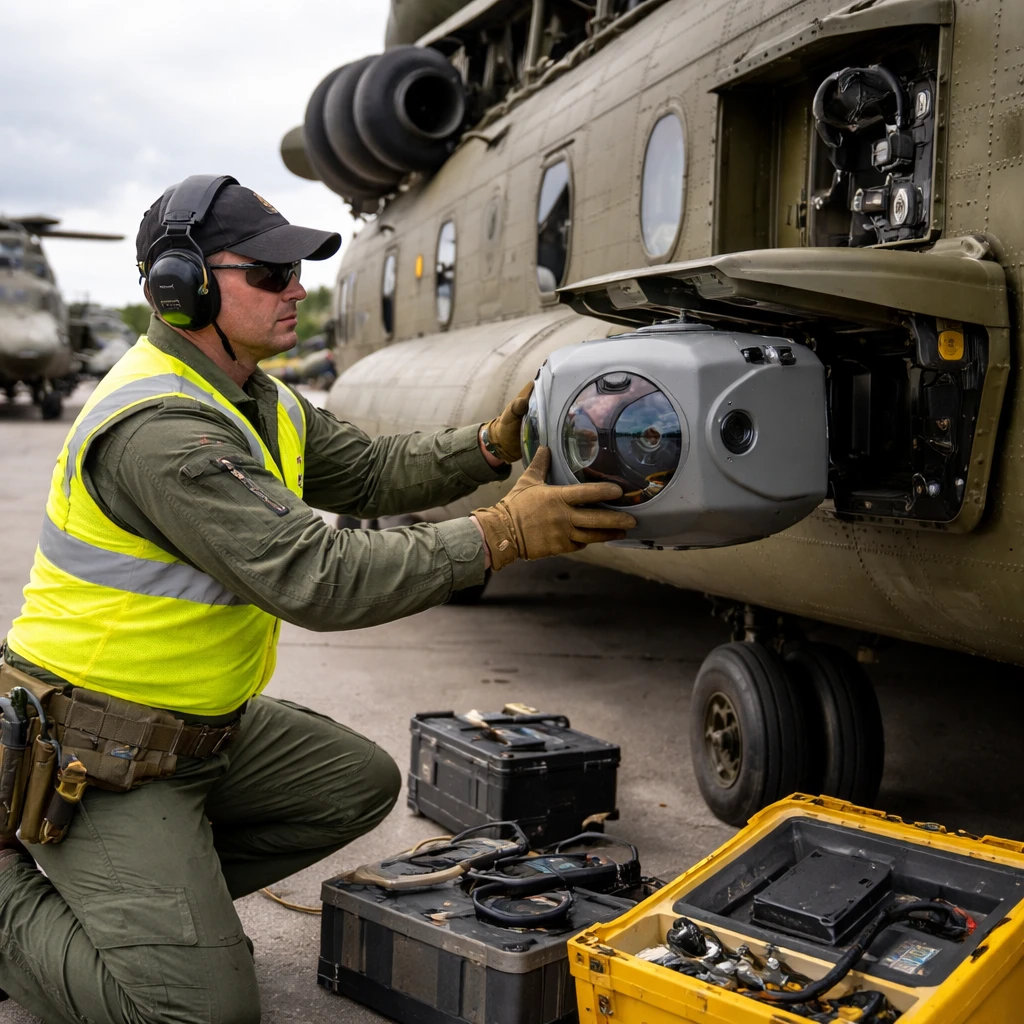
Northrop Grumman will supply 47 Common Infrared Countermeasures (CIRCM) systems to Germany, marking the first deployment of the company's CIRCM equipment in that country. The systems, procured under a U.S. Army production award, will be fitted to Germany's newly ordered CH-47 Chinook helicopters to upgrade rotary-wing survivability and meet NATO combat readiness obligations.

Key Points

  • Northrop Grumman will deliver 47 CIRCM systems to Germany under a U.S. Army production award, to be installed on newly ordered CH-47 Chinook helicopters.
  • CIRCM uses electro-optical infrared technology and a high-performance laser to disrupt the targeting signals of incoming threats like shoulder-fired missiles.
  • The system has been widely fielded - nearly 700 CIRCM installations and more than 70,000 operational flight hours on AH-64, CH-47 and UH-60 platforms, with no aircraft losses; the firm has over 50 years of IRCM development and IRCM installed on more than 1,500 aircraft of 85 types.

Northrop Grumman (NYSE:NOC) confirmed on Thursday that Germany will receive its Common Infrared Countermeasures system for the first time, expanding the firm's aircraft survivability footprint in Europe.

As part of a U.S. Army production award, 47 CIRCM units are slated for delivery to Germany. The systems will be installed on the country's newly ordered CH-47 Chinook helicopters as part of an effort to modernize capabilities for those rotary-wing platforms and to support NATO combat readiness mission requirements.

The CIRCM system is externally mounted on military helicopters and employs electro-optical infrared technology to counter incoming threats such as shoulder-fired missiles. The system directs a high-performance laser at an approaching threat in order to jam its targeting signal, disrupting tracking capability and causing the threat to fall away.

Northrop Grumman said nearly 700 CIRCM systems have been installed on rotary-wing aircraft around the world. According to the company, CIRCM has accrued more than 70,000 operational flight hours on Army AH-64, CH-47 and UH-60 rotary aircraft, with no aircraft losses recorded in those operations.

"More international partners are recognizing CIRCM's pioneering protection capabilities to maximize successful missions," said Leah Hooten, vice president of aircraft survivability at Northrop Grumman. "With open architecture, the lightweight CIRCM system stays ready for any mission with the agility for rapid technology upgrades."

Northrop Grumman highlighted its long history in infrared countermeasures development, stating the company has worked on IRCM technology for more than 50 years. The firm's IRCM solutions are installed on over 1,500 aircraft spanning 85 different types.

The company also integrates its Improved Threat Detection System with CIRCM to enhance performance against emerging threats. The U.S. Army selected ITDS for Phase II development in 2025, a development Northrop Grumman identifies as part of ongoing capability enhancements.


Summary and context in this report are drawn from company disclosures and the specifics provided by Northrop Grumman regarding the CIRCM program and related integrations.

Risks

  • The article notes integration of the Improved Threat Detection System with CIRCM and that ITDS was selected for Phase II development in 2025; the outcome and timeline of that development remain subject to program risk, affecting defense technology providers and military procurement schedules.
  • Delivery and installation of the 47 CIRCM systems depend on execution under the U.S. Army production award and subsequent fitting to Germany's CH-47 helicopters, introducing program execution and logistics risk for aerospace and defense supply chains.
  • Operational performance claims such as 'no aircraft losses' are historical performance statements and do not guarantee future outcomes against evolving threats, which may impact defense readiness and procurement decisions.

More from Stock Markets

House Oversight Chair Seeks Answers from Major Travel and Tech Firms on Personalized Pricing Mar 5, 2026 Warsaw market edges lower as basic materials, construction and energy stocks weigh on WIG30 Mar 5, 2026 Copenhagen stocks edge higher as consumer goods and tech names lead gains Mar 5, 2026 UBS: OpenAI’s Symphony Signals Shift Toward Action-Oriented Enterprise AI Mar 5, 2026 Amazon Unveils Connect Health to Automate Clinical Admin Tasks with AI Mar 5, 2026