
Stock Markets February 23, 2026

Northrop Grumman and U.S. Air Force Push to Ramp B-21 Raider Production

Company expands digital engineering and manufacturing capacity as flight testing and software certification progress

By Hana Yamamoto NOC
Northrop Grumman and U.S. Air Force Push to Ramp B-21 Raider Production
NOC

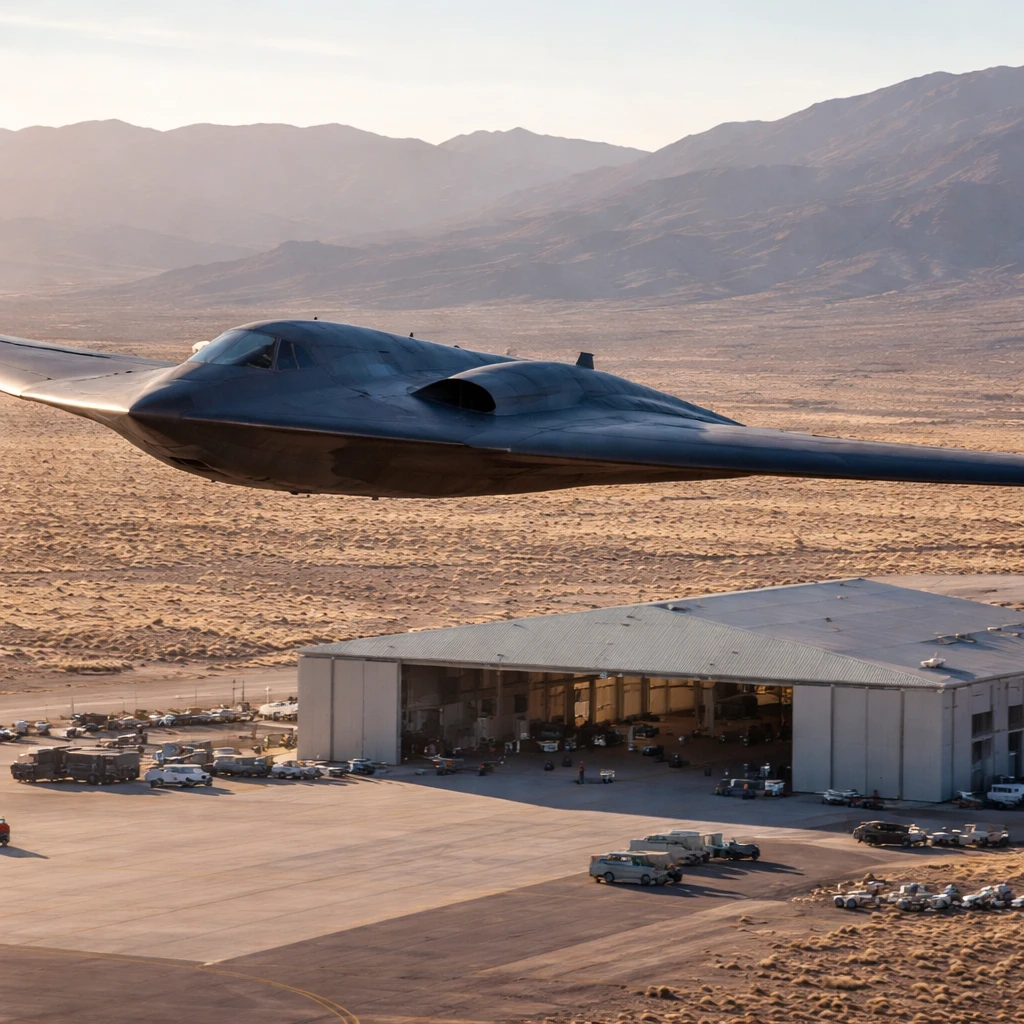
Northrop Grumman and the U.S. Air Force are accelerating production capacity for the B-21 Raider stealth bomber, backed by more than $5 billion invested in digital engineering and manufacturing infrastructure. Multiple test aircraft are flying and reporting performance that exceeds digital model expectations, the program’s first operational aircraft remains on track for delivery to Ellsworth Air Force Base in 2027, and software certification time has been cut in half through the company’s digital ecosystem.

Key Points

  • Northrop Grumman has invested more than $5 billion in digital engineering and manufacturing infrastructure to support faster B-21 production.
  • Multiple B-21 aircraft are in flight test with performance exceeding digital model expectations; the Combined Test Force can ready an aircraft for another test flight the next day.
  • The first B-21 is on track to arrive at Ellsworth Air Force Base in 2027; final assembly occurs in Palmdale, California, with manufacturing across the United States and a supplier base of more than 400 companies in 40 states.

Northrop Grumman and the U.S. Air Force are intensifying efforts to scale up production of the B-21 Raider stealth bomber, driven by a substantial investment in digital engineering and manufacturing systems. The company has committed in excess of $5 billion to build the infrastructure it says is needed to support a faster production tempo for the program.

Company officials report that several B-21 aircraft are now participating in flight testing and that their in-flight performance has surpassed the expectations set by the aircraft’s digital models. The Combined Test Force has structured operations so that an aircraft can be serviced and prepared for a subsequent test flight the following day, enabling a high cadence of validation flights.

The initial B-21 remains on schedule for delivery to Ellsworth Air Force Base in 2027. Final assembly work is being carried out at Northrop Grumman’s Palmdale, California, facility, while additional manufacturing activities take place across other U.S. locations. The program mobilizes more than 8,000 personnel drawn from industry and the Air Force, and it depends on a supplier base of over 400 companies spanning 40 states.

Northrop Grumman says its digital ecosystem has halved the time required for software certification, a change intended to accelerate bringing updates and capabilities into service. The B-21 is built with next-generation stealth technologies and an open architecture designed to permit future upgrades to mission systems and weapons. It is configured to carry both conventional and nuclear payloads.

The aircraft’s low-observable design is described as easier and less costly to maintain than earlier platforms. In parallel with production and testing, Northrop Grumman is developing training, sustainment and fleet management tools to support Air Force operations and maintenance of the bomber fleet. The test fleet was expanded in 2025, and ground and flight testing are ongoing to continue validating aircraft performance.


Context and implications

  • Investment in digital engineering and manufacturing is central to the plan to raise production capacity and shorten certification timelines.
  • Testing cadence and reported performance that exceeds digital models support a faster validation process.
  • Large-scale involvement of industry personnel and a widespread supplier network underscore the program’s manufacturing footprint across the U.S.

Risks

  • Delivery timeframe remains described as "on track" for 2027, indicating ongoing schedule exposure until delivery is complete - this affects defense procurement timelines and related aerospace contracts.
  • Flight and ground testing are continuing to validate performance, so further tests could reveal issues that require adjustments before full-rate production or deployment - this impacts program certification and operational readiness.
  • The program relies on a broad supplier base of more than 400 firms across 40 states and over 8,000 personnel, introducing coordination and supply-chain complexity that could affect manufacturing throughput and costs.

More from Stock Markets

xAI Secures Pentagon Access for Grok as Anthropic Standoff Escalates Feb 23, 2026 U.S. Official Says Chinese Startup Trained New AI Model Using Nvidia’s Top Chip Despite Export Ban Feb 23, 2026 UOB’s Q4 Profit Falls Short of Estimates as Trading Income Softens Feb 23, 2026 FedEx Seeks Full Reimbursement for Emergency Tariffs Ruled Illegal by Supreme Court Feb 23, 2026 LA28 CEO Reaffirms Backing for Chair Casey Wasserman Amid Epstein-Related Document Release Feb 23, 2026