
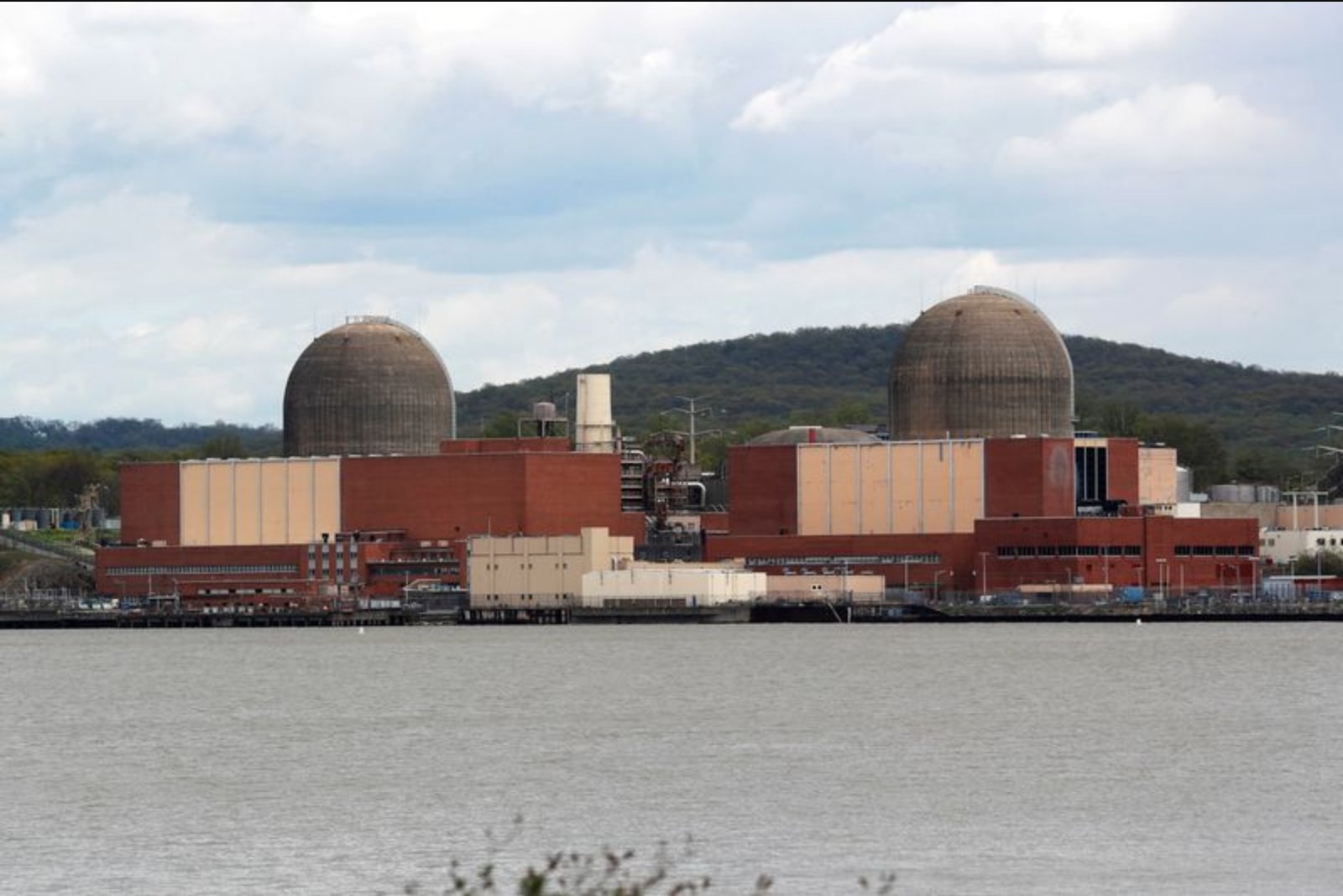
New York's governor has rejected calls from the federal administration and parts of the nuclear industry to revive Indian Point, the shuttered plant just north of New York City, a decision that is likely to block any near-term efforts to restart the facility without state backing.
Ken Lovett, senior communications adviser on Energy and Environment for Governor Kathy Hochul, said: "The governor has emphatically stated she will not support the reopening of Indian Point and is instead pushing for a significant expansion of round-the-clock, emission-free advanced nuclear power in upstate New York communities that want it." Without Hochul's support - she is a Democrat - Indian Point would likely be unable to resume operations.
The federal push to bring closed reactors back online comes as U.S. electricity demand is increasing, driven in part by the rapid growth of AI data centers and a wider move to electrify industry, buildings and transportation. President Donald Trump has set a federal target to quadruple U.S. nuclear power capacity by 2050 as part of an effort to expand domestic energy supply.
On Friday, U.S. Energy Secretary Chris Wright held a press event at the Indian Point site to advocate for nuclear power and the possibility of renewed operations there. Holtec, the owner of the site, has been carrying out decommissioning work since the plant closed in 2021.
Holtec has a long history providing services in the nuclear sector, primarily in decommissioning, and in recent months the company has signaled an interest in moving into running reactors. The company is pursuing a separate effort to restart a closed plant in Michigan.
At the event last week Holtec CEO Kris Singh supported the idea of restarting Indian Point, but the company stressed to Reuters that any repowering would require consent from multiple political and government bodies. A Holtec spokesman said: "Should the political will and financial means be available that the state wants to see a repower, we would be willing to work towards that goal. Otherwise, we will continue on our path to safely decommission IPEC."
Safety and security concerns have long been part of the debate over Indian Point. Opposition to the plant - which is relatively close to New York City - intensified after the September 11, 2001 attacks, with the site cited as a potential target for assaults.
Beyond Indian Point, other private-sector efforts are underway to reactivate shuttered reactors elsewhere. Under contracts with Microsoft and Google, power companies Constellation and NextEra are pursuing restarts at the former Three Mile Island plant in Pennsylvania and a separate plant in Iowa.
Secretary Wright framed the administration's approach as focusing on Americans and jobs, saying that energy policy should expand reliable domestic energy, create jobs, and lower electricity costs for households and businesses. In a statement he said: "The Trump Administration believes energy policy should focus on the American people - not politics - by expanding reliable American energy, creating more American jobs, and lowering electricity prices for every American family and business across the country."
Regulatory pathways for any potential restart remain formal and conditional. Nuclear Regulatory Commission Chair Ho Nieh told reporters at a recent conference: "If a restart decision is made by the owners to restart the unit, they will come to the NRC and we will talk with them about what it would take to restart the Indian Point plant."
At the state level, Hochul has advanced a different nuclear strategy for New York. She has called for 5 gigawatts of new nuclear capacity to be developed in the state and has directed the New York Power Authority to plan and build 1 gigawatt of new capacity in upstate New York - explicitly farther from New York City than Indian Point.
Context and implications
The standoff highlights a multi-layered energy policy debate in which federal ambitions, corporate initiatives and state preferences collide. The issue intersects with rising electricity demand driven by AI infrastructure and electrification efforts, the evolving role of firms like Holtec beyond decommissioning, and the procedural role of regulators such as the NRC.