
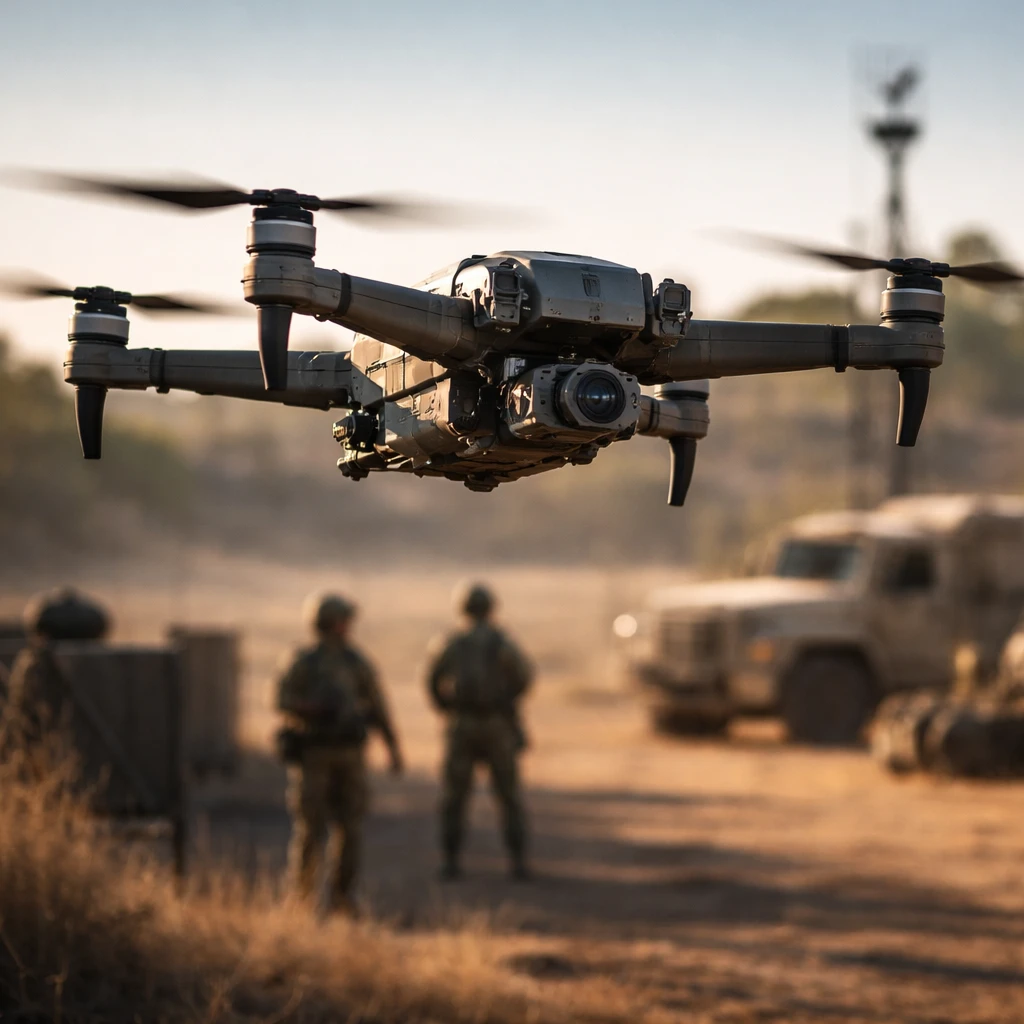
Needham & Company has released research flagging several firms it believes could gain as demand for unmanned aircraft expands across military and security applications. The brokerage describes the current market environment as an accelerating "unmanned supercycle," driven by higher global defense spending and government priorities that favor autonomous systems.
The report names a range of companies spanning battery technologies, tactical unmanned aircraft, counter-drone systems, military-grade surveillance platforms and supply-chain specialists. Needham frames these companies as positioned to benefit from a larger wave of procurement for unmanned systems by defense and security customers.
Amprius
Needham highlights Amprius for its high-performance lithium-ion batteries that use silicon anode technology. According to the brokerage, the firm’s silicon anode approach delivers greater energy density versus traditional battery chemistries. For unmanned aircraft, that improved energy density translates into longer flight durations and enhanced operational performance, attributes that are increasingly valuable for defense and aerospace platforms as adoption of unmanned systems grows.
AeroVironment
AeroVironment is noted as a long-standing participant in the defense drone market. The company develops small tactical drones, loitering munitions and autonomous systems that are used by U.S. and allied forces. Needham projects that, given robust demand for intelligence, surveillance and strike capabilities on the battlefield, AeroVironment should remain a prominent player as the unmanned systems market expands.
Draganfly
Draganfly is identified for its production of drones used in defense, security and public safety contexts. The brokerage observes that the company has been expanding manufacturing capacity while targeting opportunities in North America. Needham highlights the potential advantage for companies positioned to serve domestic procurement as governments place greater emphasis on local suppliers.
Ondas
Ondas is cited for its dual focus on autonomous drone platforms and wireless networking. The company’s drone offerings are applied to infrastructure monitoring, security and counter-drone operations. Needham points to growing global demand for counter-UAS capabilities, suggesting that investments in defensive drone technologies could create meaningful opportunities for Ondas.
Red Cat
Red Cat is characterized as a producer of military-grade drones for intelligence, surveillance and reconnaissance missions. The company has increased production capacity amid what Needham describes as higher procurement by defense agencies of small unmanned aircraft systems. The brokerage indicates Red Cat could benefit if large military programs shift from testing stages into full-scale deployment.
Unusual Machines
Unusual Machines is described as a supplier of critical components for drone manufacturing, placing it within the industry’s supply chain rather than as a direct drone manufacturer. Needham notes that as governments emphasize domestic sourcing of key technologies for defense programs, suppliers like Unusual Machines may capture rising demand across multiple drone platforms.
The firms outlined by Needham span multiple nodes in the unmanned systems ecosystem: energy storage and battery technology, purpose-built tactical platforms, counter-UAS systems, military-grade surveillance drones and specialized suppliers. The brokerage frames rising defense budgets and policy priorities favoring autonomous capabilities as primary drivers behind the opportunity set.
Needham’s note suggests that both prime contractors and smaller specialized suppliers could see meaningful demand as procurement moves from evaluation and testing toward broader deployment, particularly where governments seek domestic supply chains or defensive counter-UAS solutions.