
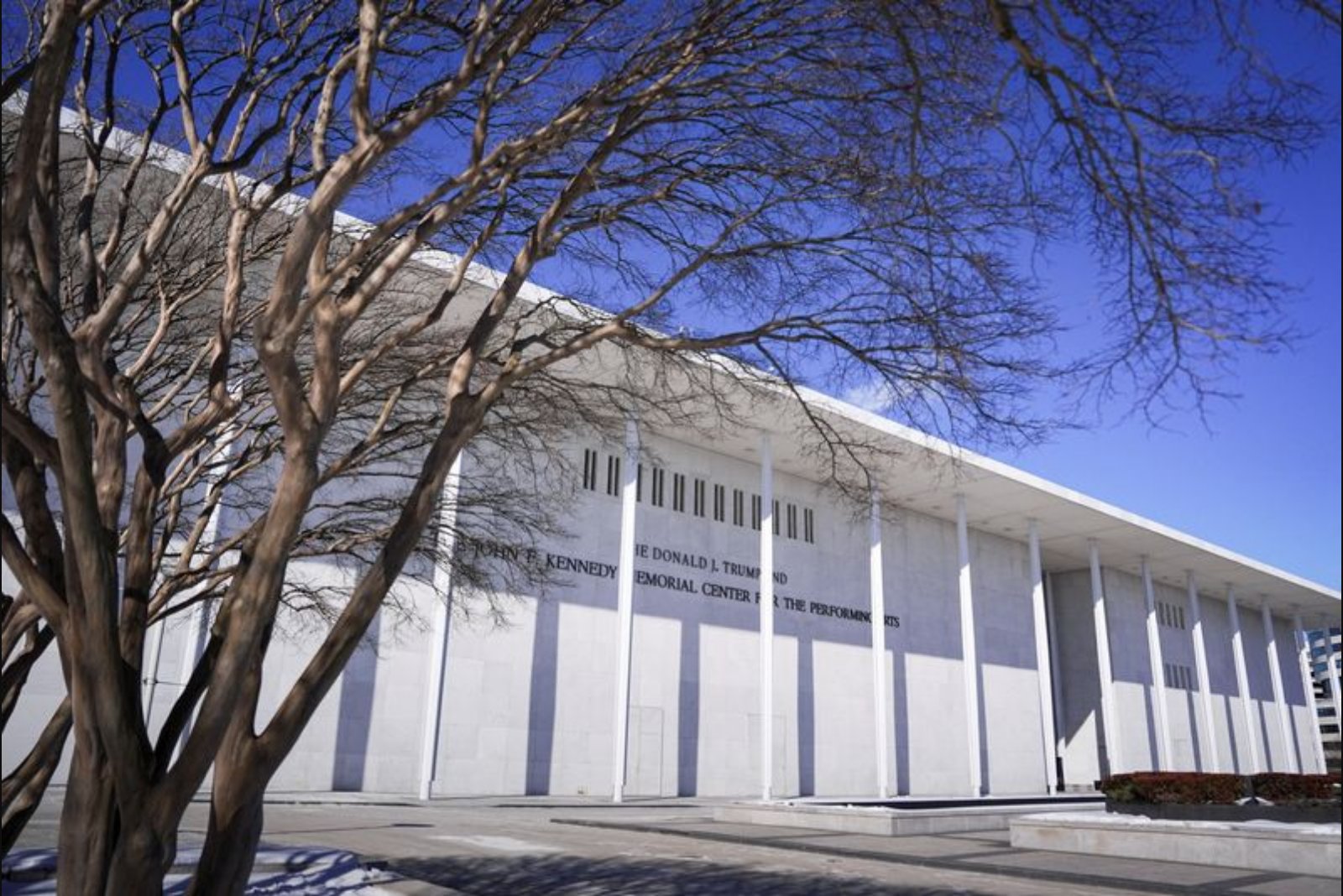
WASHINGTON, March 6 - Jean Davidson, who serves as executive director of the National Symphony Orchestra - the ensemble that primarily performs at the John F. Kennedy Center for the Performing Arts in Washington - announced on Friday that she will be leaving her post.
Davidson told the New York Times that "It’s no secret that this has been a really hard year," and that she began searching for a new opportunity several months ago. She is set to lead the Wallis Annenberg Center for the Performing Arts in California.
The National Symphony Orchestra did not immediately respond to a request for comment.
Her decision to depart arrives after months of upheaval at the Kennedy Center, a national cultural institution in the U.S. capital that was named for former President John F. Kennedy months after his assassination. The center has been the focal point of governance changes and contested decisions by its board.
President Donald Trump appointed himself as chairman of the institution, pushed to alter the organization’s focus and appointed a board that voted last year to add his name to the facility. In a recent announcement, Trump said the Kennedy Center would close for two years to allow reconstruction work to proceed.
U.S. Representative Joyce Beatty, a Democrat who serves as an ex-officio member of the Kennedy Center board, filed a court challenge last year over the decision to change the institution’s name. On Friday, Beatty amended that lawsuit to ask the court to block actions she described as moves to "shutter and gut" the facility.
Roma Daravi, vice president of public relations for the center, provided a statement expressing confidence in the board’s direction:
"We’re confident the court will uphold the board’s decision on the name change and the desperately needed renovations which will continue as scheduled."
Beatty’s amended filing also contends that board members appointed by President Trump had, unlawfully, removed voting rights from her and from other ex-officio board members who serve under an act of Congress. Ex-officio board members include representatives from both major political parties.
In response to questions about voting rights on the board, Daravi’s office pointed to comments Daravi made to the Washington Post, in which she said that ex-officio members have never voted. Daravi also wrote in an email to the Post:
"The bylaws were revised to reflect this longstanding precedent and everyone received the technical changes both before the meeting and after revisions,"a development the Post reported on late last year.
Since President Trump returned to the White House last year, dozens of artists have canceled performances at the Kennedy Center. Organizers and performers have given a range of reasons for those cancellations; some artists have explicitly cited opposition to elements of Trump’s agenda.
The Kennedy Center has historically hosted a wide variety of events, including the Kennedy Center Honors, which are typically held every December. The combination of leadership turnover, legal action and scheduled closure for reconstruction has created a period of acute uncertainty for the institution and for the arts organizations and performers that rely on the center’s calendar and facilities.
Section note: The facts in this report are drawn from statements provided by the parties involved, filings made in the legal challenge and public announcements concerning the Kennedy Center’s schedule and governance.