
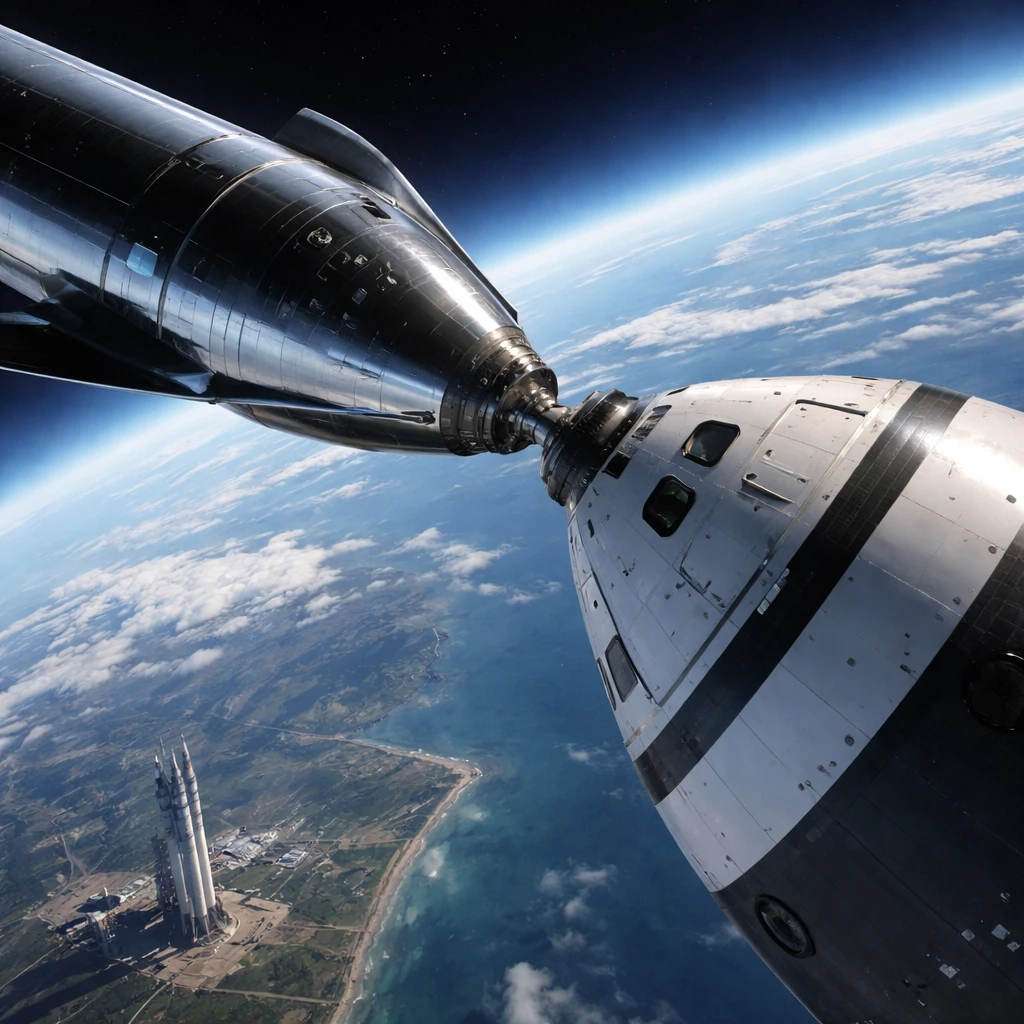
NASA is evaluating a significant adjustment to its plans for returning humans to the moon, one that would lessen Boeing Co.'s role and place SpaceX's Starship at the center of the mission to move astronauts from Earth toward lunar orbit.
Under the configuration established years ago, Boeing's Space Launch System rocket would lift the Orion crew capsule - built by Lockheed Martin Corp. - toward the moon. That plan called for Orion to place itself in lunar orbit, where a Starship lander would rendezvous and dock with the capsule before ferrying astronauts to the lunar surface.
The revised proposal under consideration would remove the SLS from the task of boosting Orion to the moon's vicinity. Instead, the two spacecraft would meet in Earth orbit, with Starship taking on the role of propelling Orion out of Earth orbit and into lunar orbit and then serving as the lander to descend to the surface.
This change would leave Orion as the crew vehicle while assigning the pivotal propulsion and descent duties to Starship. The proposal effectively elevates SpaceX’s vehicle from a surface lander that meets Orion at the moon to the primary mover that carries Orion to lunar orbit and then lands the crew.
NASA leadership is moving forward with consultations. NASA Administrator Jared Isaacman plans to meet with the companies involved in the Artemis and human landing system program - including Blue Origin LLC, Boeing and SpaceX - to review program progress and the agency's latest planning. The meeting is scheduled for Tuesday, according to agency communications.
Officials stress that any alterations to mission architecture could face scrutiny from Congress, and the agency retains the ability to reverse or modify proposals as part of an iterative decision process.
"NASA is committed to using the SLS architecture through at least Artemis V, which is necessary to support both HLS providers, and their associated acceleration plans to return American astronauts to the Moon," Isaacman said in a statement provided by an agency spokesperson. "We're incredibly supportive of both our HLS providers and their plans to accelerate America's path forward to the moon," Isaacman added.
The consideration of this revised approach is part of a broader push to accelerate the Artemis program with the aim of returning humans to the moon in 2028. As part of those deliberations, NASA has been assessing competing landing options offered by SpaceX and by Blue Origin, the latter founded by Amazon.com Inc. Executive Chair Jeff Bezos.
Both SpaceX and Blue Origin hold multibillion-dollar contracts to develop lunar landers for Artemis, and NASA's internal discussions have included evaluating how to utilize those contractor capabilities most efficiently within the broader timeline.
If the agency confirms a reduced role for SLS in delivering Orion to the moon, the rocket could still be retained for launching Orion into Earth orbit under some mission variants. The SLS would therefore remain part of the architecture for initial flights even if its formerly central propulsion role to lunar orbit is scaled back.
Boeing's SLS has experienced schedule and budget challenges. The rocket was originally planned to fly earlier than it did, but the first launch did not occur until 2022. The program has been described as years behind schedule and billions of dollars over budget, and NASA's inspector general has estimated that the combined cost of the first four flights of SLS and Orion would exceed $4 billion each.
The reported plan to use Starship to propel Orion to lunar orbit has been approved at a planning level, according to agency communications, though the decision remains subject to further review and potential change as NASA consults with its industry partners and Congressional overseers.