
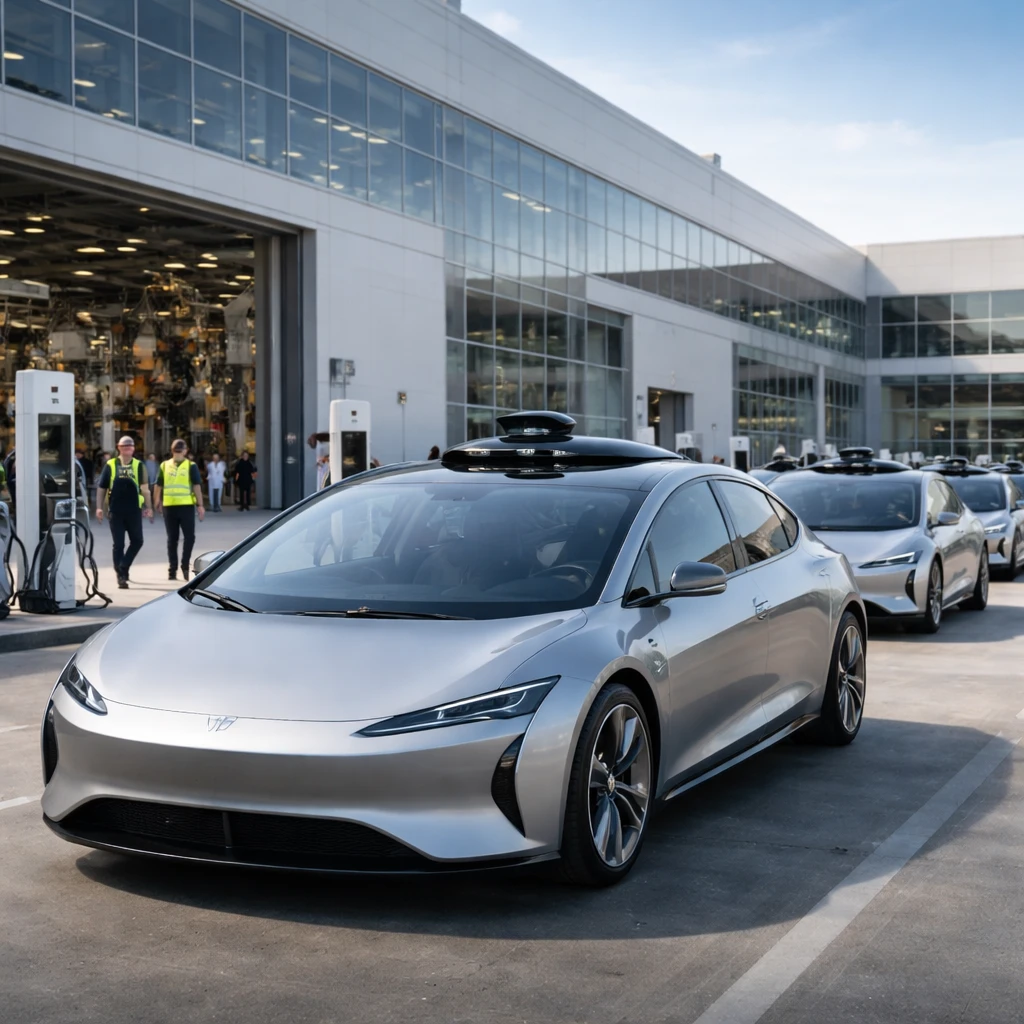
Morgan Stanley says Tesla’s ability to scale an unsupervised robotaxi fleet stands out as the single most important driver for the company’s shares in 2026, according to a note issued on Wednesday. The assessment comes from the firm’s TMT conference meetings and a subsequent tour of Giga Texas, which left analysts "incrementally more positive on the outlook for robotaxi and Cybercab production," the note adds.
Andrew Percoco, the Morgan Stanley analyst who authored the note, argued that "TSLA's ability to scale the unsupervised robotaxi fleet is the most important catalyst for the stock this year." The bank further highlighted that the start of production for Cybercab is still "on track for April."
Percoco emphasized robotaxi economics, writing that "Superior robotaxi unit economics are supported by vertical integration and innovative Cybercab production - Tesla is changing the way cars are made." The firm framed those unit economics as central to the company’s ability to improve margins in its transportation business.
Central to Morgan Stanley’s view is the feedback loop between unsupervised robotaxi operation and improvements in Tesla’s personal FSD offering. The note states that each additional robotaxi mile "accelerates learning for personal FSD," a dynamic Morgan Stanley describes as a powerful flywheel for Tesla’s broader business. Greater volumes of unsupervised miles are expected to enhance the autonomy model, which the bank says "supports higher FSD attach rates and re-accelerates auto demand," and in turn bolsters cash flow generation.
The research note also listed other items on Morgan Stanley’s milestone calendar. The bank expects Optimus Gen 3 to be unveiled in the coming months, with production planned for the second half of 2026. Energy storage was identified as a continuing growth area, though the firm cautioned that margins in that segment may compress this year because of competition and timing related to tariffs.
Morgan Stanley highlighted Tesla’s rising capital expenditures and what it called a "near-term cash burn" of roughly $8 billion. Given that context, the firm said that tangible progress on personal FSD is a critical lever to "re-invigorate auto sales and margins" and to help fund Tesla’s longer-term objectives in physical AI.
Impacted sectors: Automotive manufacturing, autonomous vehicle software, robotics/AI, and energy storage.