
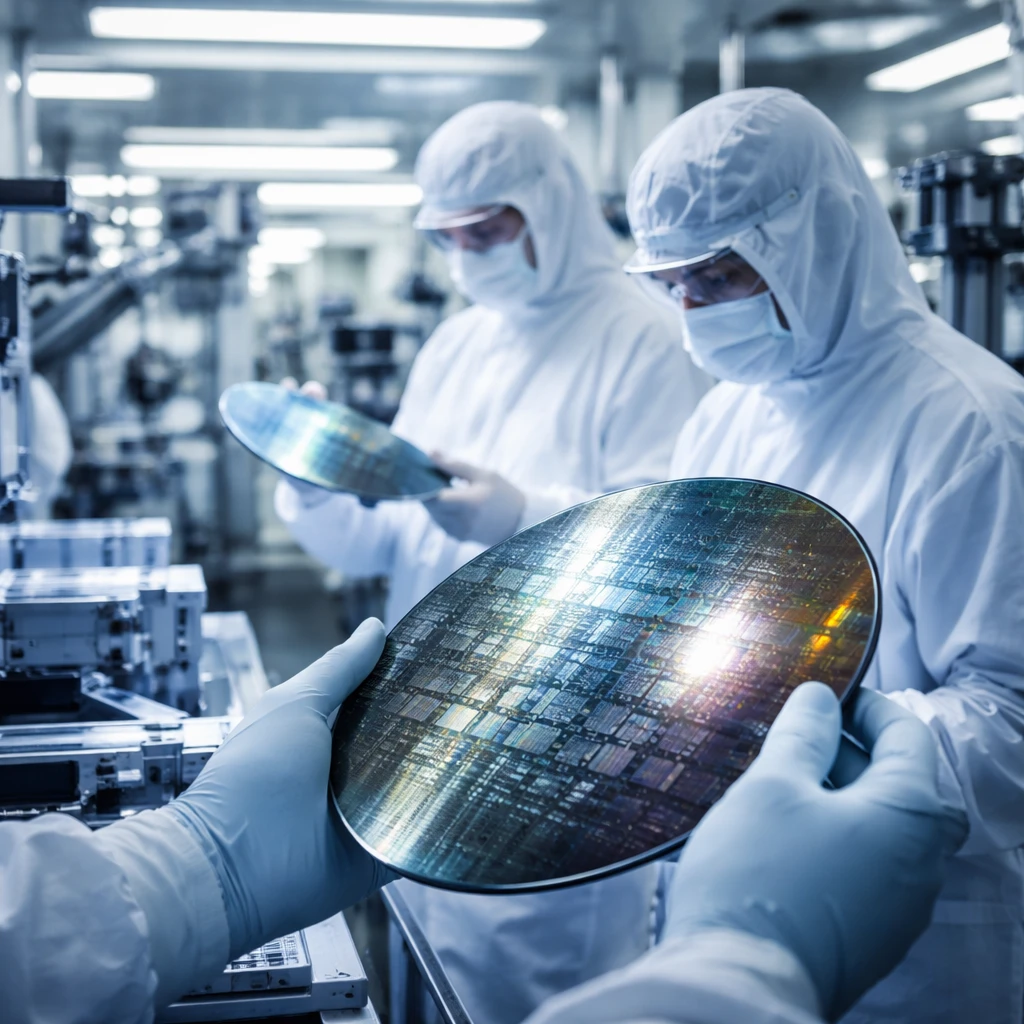
Morgan Stanley has laid out which firms it views as most likely to benefit from China's campaign to build out a domestic AI GPU supply chain, a plan anchored by a national target of 76% GPU self-sufficiency by 2030. The bank's analysis focuses on nodes of the semiconductor ecosystem that will be required if that goal is to be met.
Overview
The investment bank emphasizes three companies as critical components of the domestic effort. Each plays a distinct role: one supplies advanced-node wafer fabrication, another provides key equipment for fabrication facilities, and the third brings advanced packaging capabilities that domestic GPU designers will rely on.
Companies highlighted
-
Semiconductor Manufacturing International Corporation (SMIC) - Morgan Stanley places SMIC at the top of its list of potential winners from China's AI GPU drive. The foundry is characterized as essential to the country's semiconductor ambitions because domestic chipmakers depend on its advanced-node manufacturing capacity. The bank describes SMIC as the primary beneficiary of the 76% GPU self-sufficiency target and as the cornerstone of the domestic AI chip supply chain.
-
NAURA Technology Group - The firm is identified as the preferred semiconductor equipment exposure within Morgan Stanley's framework. NAURA is singled out for potential upside as domestic investment in fabrication facilities rises to support expanded AI chip production. Its equipment offerings are described as critical infrastructure for building out advanced chip fabrication capacity.
-
ASM Pacific Technology - Morgan Stanley favors ASM Pacific for its advanced packaging technology. As Chinese AI GPU producers increasingly adopt multi-die packaging approaches to mitigate process-node disadvantages relative to international competitors, advanced packaging becomes a differentiator. ASM Pacific is cast as an important enabler of domestic AI semiconductor strategy because of this capability.
Additional note on stock evaluation tools
A separate stock-screening product referenced in the original analysis evaluates ticker 0981 alongside thousands of other companies using over 100 financial metrics. That product states it uses algorithmic models to rank ideas by risk-reward and cites past example winners including Super Micro Computer (+185%) and AppLovin (+157%). The screening tool invites investors to check whether 0981 is included in any of its strategies or if alternative opportunities exist in the same sector.
Takeaway
Morgan Stanley's sector-level view highlights a small set of companies that serve foundational roles in wafer fabrication, fab equipment and advanced packaging. All three are portrayed as strategically important to the domestic production of AI GPUs should China pursue and progress toward its stated 2030 self-sufficiency objective.