
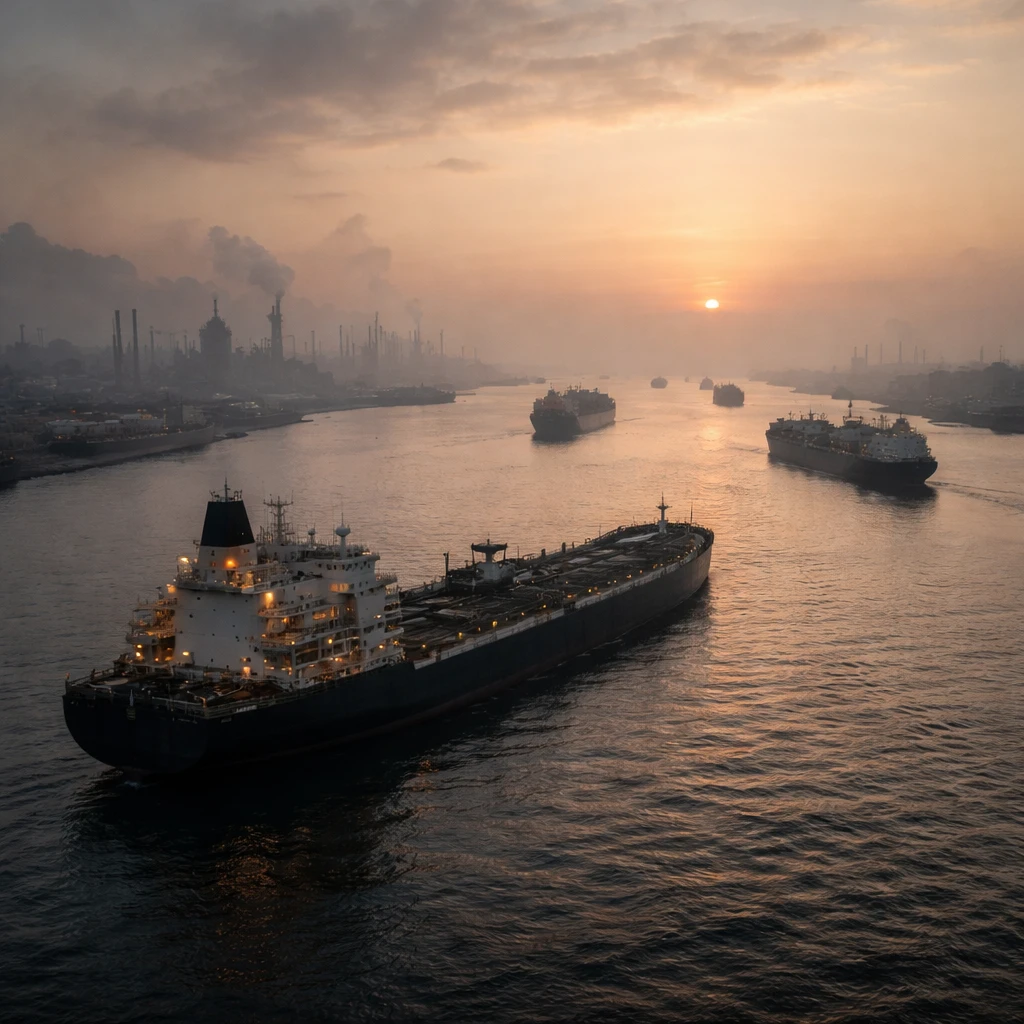
Morgan Stanley analysts say the ongoing effective closure of the Strait of Hormuz is producing immediate and lingering disruptions to energy and industrial supply chains. The bank reports that roughly 20% of global oil shipments and about a quarter of liquefied natural gas (LNG) transit the narrow waterway, which has been functionally closed for almost two weeks. Those delayed exports have already prompted production shut-ins and output losses, and normal production levels could take weeks to re-establish even after the Strait reopens.
The analysts highlight the Middle East's central role as a supplier of fertilizers, aluminum and petrochemicals - sectors that are both energy-intensive and highly embedded in global manufacturing networks. Fertilizers and many plastics are direct derivatives of hydrocarbon feedstocks, while aluminum production is singled out as one of the most energy-demanding industrial processes. Interruptions to hydrocarbon flows therefore reverberate through a range of downstream industries.
Beyond large-volume commodities, Morgan Stanley draws attention to goods with limited trade volumes but highly concentrated production. The bank cites helium as a clear example: Qatar supplies roughly a third of global helium and provides more than 60% of Taiwan's helium imports. Despite its small absolute trade share, helium serves as a critical intermediate input to semiconductor manufacturing - illustrating how a narrow supply source can become a widespread bottleneck.
The timing of this supply shock is significant. Global manufacturing indicators had been signaling an incipient cyclical recovery prior to the interruption in oil flows. Purchasing Managers' Index (PMI) readings across Asia ex-China had climbed to a four-year high, a nascent turnaround in German manufacturing was supporting broader European surveys, and U.S. manufacturing PMIs had also been trending upward. Energy price shocks historically have a disruptive effect on industrial cycles - rising energy costs compress margins and tend to reduce output - and Morgan Stanley notes that developed market PMIs dropped sharply following the onset of the Russia-Ukraine war in February 2022 and have not fully returned to pre-shock levels four years later.
Regionally, Asian economies appear most exposed. Morgan Stanley identifies North Asian economies such as Japan, Korea and Taiwan as particularly vulnerable. The bank estimates direct energy trade exposure at about 50% for Japan, India, Korea, Thailand and Taiwan. In crude oil imports specifically, Japan, India and Korea source well over 40% of their supplies from the Middle East. India, China, Korea, Taiwan and Malaysia similarly rely on the Middle East for substantial shares of their LNG imports.
On stockpiles and buffer capacity, the analysis notes that Japan and Korea maintain more than 200 days of petroleum reserves, offering them relatively larger immediate cushions. By contrast, countries such as India, Thailand and the Philippines hold comparatively smaller reserves. India was granted a 30-day waiver to procure oil from Russia, an arrangement that Morgan Stanley says is likely to relieve some near-term stress. Nevertheless, the bank points to LPG and LNG as acute points of vulnerability: India imports upward of 30% of its LPG and LNG consumption from the Middle East.
The analysts also emphasize indirect exposure through regional refining and trade linkages. Nations with limited direct trade ties to the Middle East - including Australia and Malaysia - still face significant indirect exposure because of their refiners' connections to Middle Eastern supplies. Morgan Stanley's supply chain linkage analysis suggests that exposure to the Middle East often exceeds what bilateral trade metrics alone would show, with this indirect vulnerability appearing most pronounced for Malaysia, Australia, Indonesia and the Philippines.
For the moment, Morgan Stanley's assessment is that the primary macroeconomic risk from the disruption is driven by price effects. Higher energy prices can compress margins across industrial sectors and restrain output, potentially slowing the nascent manufacturing upswing that had been emerging in recent surveys. The bank warns that some production shut-ins and related supply disruptions could persist for weeks after the Strait of Hormuz reopens, particularly where production is concentrated or where intermediate inputs have limited alternative sources.
Summary - The temporary closure of the Strait of Hormuz has already forced production shut-ins and created delays in oil and LNG flows that may last well beyond the physical reopening of the waterway. Concentrated production of key intermediates such as helium, and heavy regional dependence on Middle East energy, heighten the risk of persistent supply disruptions across fertilizers, petrochemicals, aluminum and chip manufacturing.
Key Points
- Strait of Hormuz closure - Roughly 20% of oil and a quarter of LNG transit the Strait, which has been effectively closed for almost two weeks, causing shut-ins and delayed exports.
- Downstream vulnerability - Fertilizers, aluminum and petrochemicals are highly energy-intensive and tightly integrated into global supply chains, making them sensitive to prolonged energy disruptions.
- Concentrated intermediates - Goods with limited trade volumes but concentrated production, such as helium (with a third of global supply from Qatar), can produce outsized bottlenecks in sectors like semiconductor manufacturing.
Risks and Uncertainties
- Persistent production disruptions - Even after shipping lanes reopen, Morgan Stanley expects normal production to take weeks to resume, affecting industrial output in energy-intensive sectors.
- Price-driven macro risk - Rising energy prices are the primary macro risk cited, with potential margin compression and reduced industrial activity across developed and emerging markets.
- Regional supply vulnerability - Asian economies, particularly Japan, Korea, Taiwan, India, Thailand and Malaysia, face elevated exposure due to high shares of energy imports from the Middle East and varying reserve levels.