
Morgan Stanley's technology and energy analysts expect demand for AI compute to remain well ahead of supply, driven by fast gains in large language model (LLM) capability and accelerating economic value from AI integration. The firm argues that owners of critical constraints in the AI stack - including experienced labor, electrical power, and top-tier AI hardware - will see their importance and value increase.
Investor interest in the infrastructure that supports advanced AI has surged, the firm noted. Attendance at Morgan Stanley's December 2025 Powering AI Summit almost quadrupled compared with the prior year, and the subject has become a central theme at the firm's recent TMT and Energy/Power conferences.
Analysts outlined several notable developments shaping the AI infrastructure landscape. Firms in the bitcoin hosting space have renegotiated terms with hyperscalers to convert capacity toward high-performance computing (HPC) data center deployments, lifting unlevered free cash flow yields from around 12% last summer to the high teens by the end of 2025. Separately, 'neocloud' providers have obtained sizeable prepayments to fund capital expenditures for HPC data center and compute infrastructure.
Morgan Stanley emphasized that capital spending tied to AI infrastructure remains a principal driver of performance among US power-related stocks. The firm sees the flow of prepayments and the improved economics from contract restructuring as evidence of the expanding pool of capital targeting compute capacity.
Alongside the growth story, the analysts identified emerging headwinds. Local opposition to new data center builds has risen, prompted by concerns about electricity costs and, in some cases, the potential impacts on employment. Developers are beginning to adapt by designing connections to the grid that can provide net benefits - for example, one-way flows that supply power back to the grid when feasible, which can help utility customers.
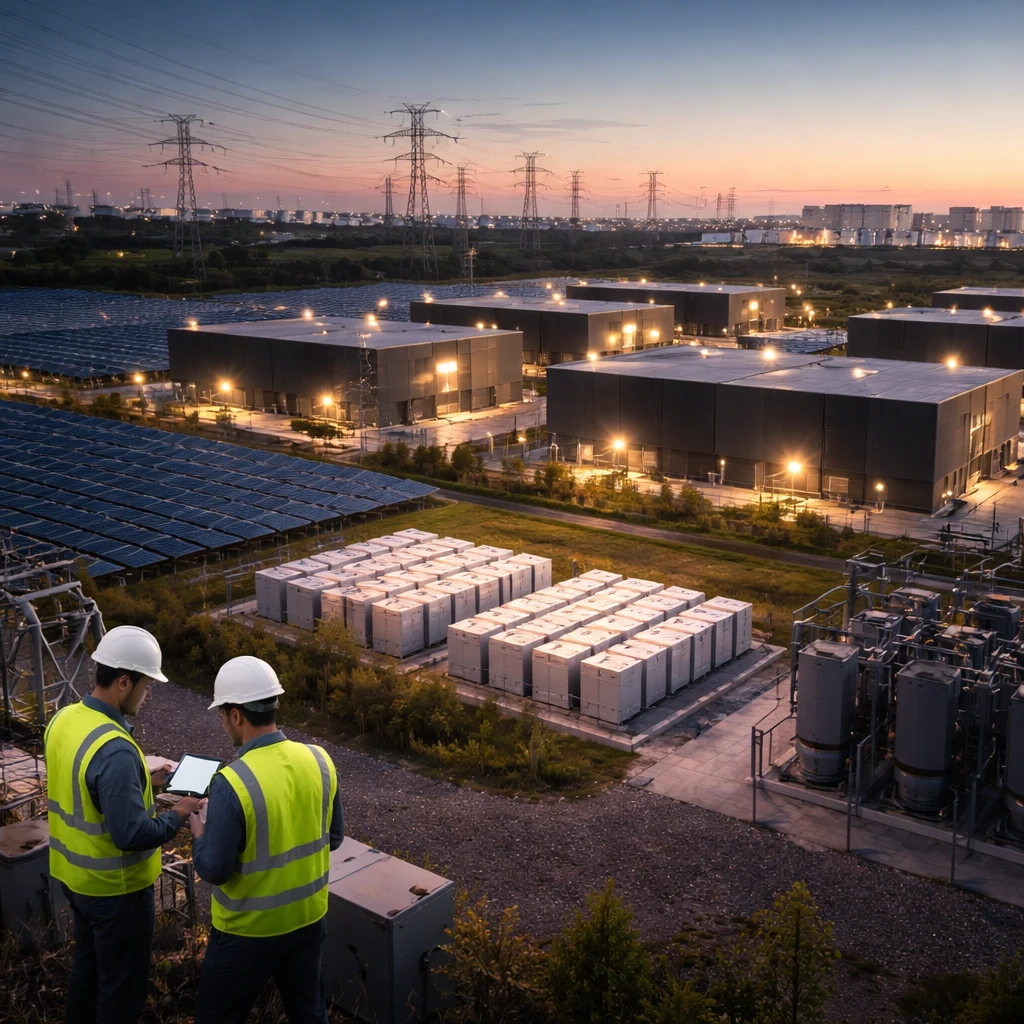
Morgan Stanley pointed to private energy storage projects as part of the solution set. The firm cited a transaction involving long-duration storage provider Form Energy to help power a Google data center in Minnesota as an example of pairing cost-effective long-duration storage with renewables to address power intermittency and economics.
Looking to the near term, the analysts said the US strategic imperative to scale AI without raising consumer costs will become more visible this spring and summer as US-based LLMs are released showing substantial capability gains. Morgan Stanley expects those capability steps to intensify global urgency around securing compute capacity and data center space.
The report also notes that US hyperscalers are increasingly offering direct credit support and stepping into operational roles to accelerate data center and power build-outs, further aligning capital and operational risk with providers of compute capacity.
Finally, the firm listed a group of US and international stocks it believes are well positioned to benefit from ongoing AI infrastructure investment. The equities named include GE Vernova (GEV), Bloom Energy (BE), TeraWulf (WULF), Cipher Digital (CIFR), Solaris (SEI), Sempra (SRE), Vistra (VST), NextEra Energy (NEE), Talen Energy (TLN), American Electric Power (AEP), FirstEnergy (FE), Cummins (CMI), Eaton (ETN), Vertiv (VRT), Schneider Electric (SCHN), Siemens Energy AG (ENR1n), EQT (EQT), and Williams (WMB).
Summary
Morgan Stanley expects AI compute demand to continue outpacing supply as LLM capability improvements accelerate and the economic value of AI adoption grows. The firm highlights improved economics for data center and compute capacity providers, growing prepayments to fund HPC build-outs, and the strategic role of power and hardware holders. It also warns of rising opposition to data center construction and the need for grid-aware solutions.
Key points
- LLM capability improvements are advancing at a non-linear pace, increasing the economic incentive to expand compute capacity.
- Improved commercial terms and prepayments have materially improved cash flow profiles for certain data center and hosting operators, elevating returns on AI-related capex.
- AI infrastructure investment is a primary driver for US power-related equity performance as hyperscalers provide credit support and operational involvement to scale capacity.
Risks and uncertainties
- Escalating local opposition to data center development over power cost concerns could constrain build-out timelines and site availability, affecting data center and energy sectors.
- Potential job displacement concerns tied to data center automation and scale may fuel political or regulatory resistance, creating permitting and policy uncertainty for developers and utilities.
- Integration of renewable generation and long-duration storage solutions is evolving; the pace and economics of those integrations will influence the viability of certain power and energy storage business models.