
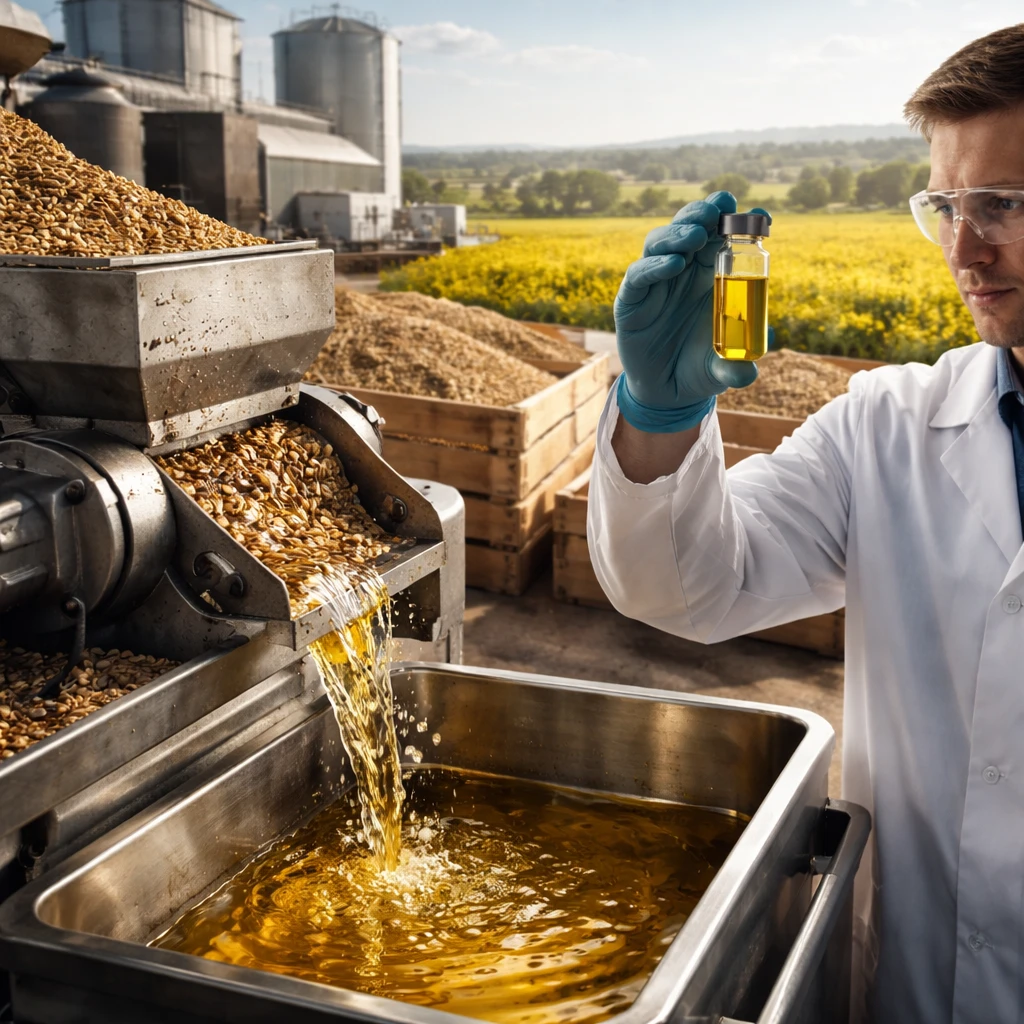
Shares of Moolec Science SA (NASDAQ:MLEC) surged 100% in premarket trading Friday after the company disclosed that its safflower processing reached an approximate 45% concentration of gamma-linolenic acid (GLA) during commercial-scale crushing operations.
Moolec said the result stems from its 2025 U.S. GLASO1 safflower campaign, which the company described as a major operational milestone that validates its plant-engineered molecular farming approach. The company reported that the crushing process confirmed compatibility with prevailing U.S. agricultural and industrial infrastructure.
According to Moolec, the 2025 campaign encompassed 1,100 acres of engineered safflower planted across the United States and produced an average yield of roughly 2,200 lbs per acre. The company noted this represented a 57% year-over-year increase from an average of about 1,400 lbs per acre in 2024, and said harvest performance exceeded its internal forecasts.
"The U.S. GLASO1 platform has reached an inflection point," said Alejandro Antalich, CEO at Moolec Science. "Achieving approximately 45% GLA concentration at commercial scale confirms that our technology is not only scientifically differentiated, but operationally executable within existing U.S. agricultural and processing infrastructure."
Moolec indicated that the high GLA concentration reinforces its position in the U.S. nutrition and dietary supplements market, where demand favors high-concentration functional lipids and plant-engineered, traceable ingredients. The company emphasized that its strategy is focused on scaling platforms with demonstrated performance while leveraging existing U.S. agricultural infrastructure.
Moolec also highlighted cost discipline as a central element of its approach as it pursues repeatable commercial-scale production. The company framed the 2025 campaign results as both a technical validation and an operational step toward broader commercial deployment of its safflower-derived ingredients.
The company release did not introduce further financial projections, timelines for broader commercial rollout, or additional operational details beyond the acreage, yields, GLA concentration, and the statement on compatibility with U.S. processing systems.