
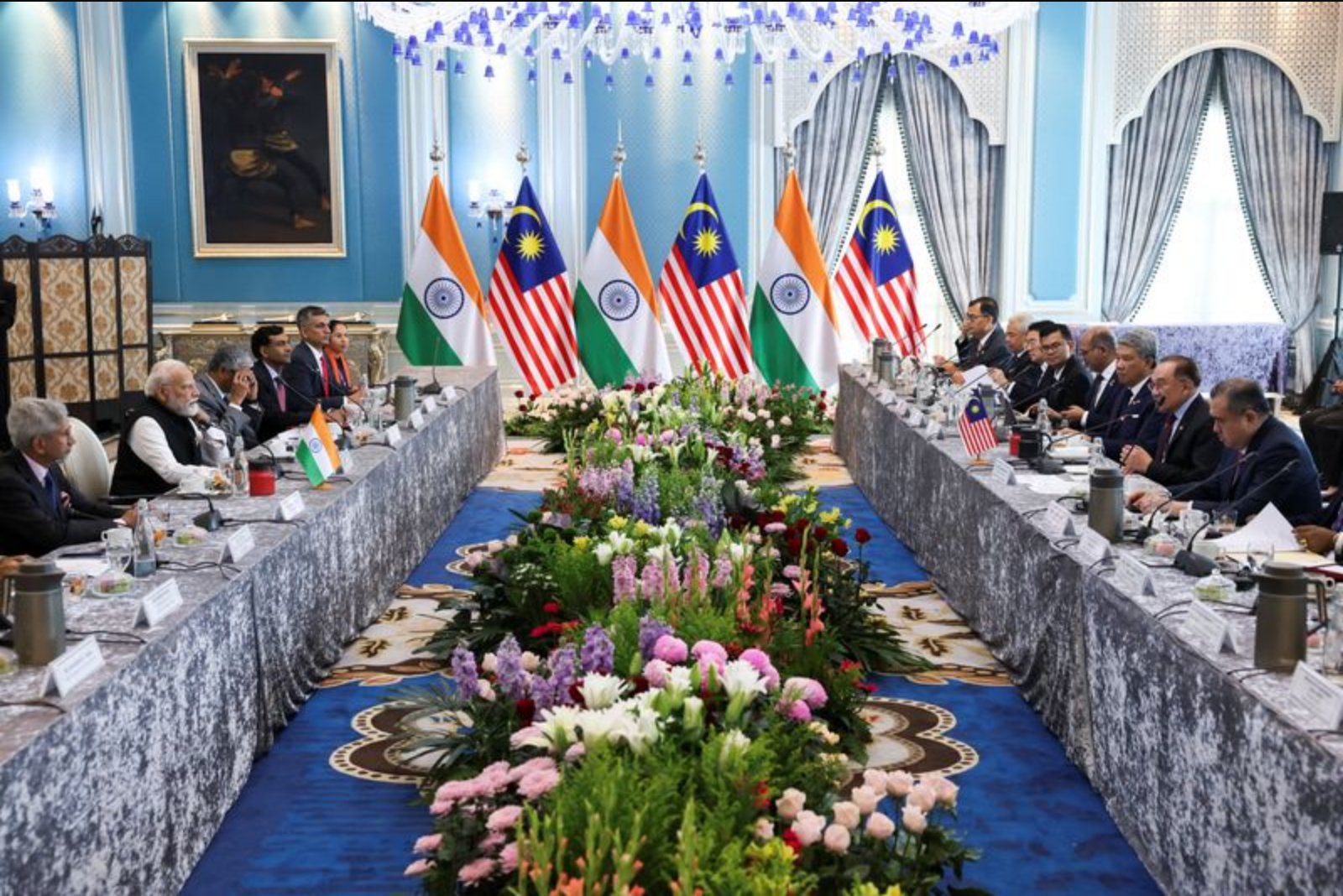
KUALA LUMPUR, Feb 8 - India’s Prime Minister Narendra Modi concluded a meeting with Malaysian Prime Minister Anwar Ibrahim in the administrative capital Putrajaya where both leaders renewed their commitment to advance bilateral trade and broaden cooperation across a range of sectors.
Modi is on a two-day state visit to Malaysia, his first since the two countries elevated their relationship to a comprehensive strategic partnership in August 2024. At a press conference following the meeting at the Malaysian prime minister's official residence, Anwar described the upgraded partnership as comprehensive, noting it spans trade and investments, food security, defence, healthcare and tourism.
After their discussions, the two leaders witnessed the exchange of 11 cooperation agreements. The signed memoranda and accords touched on several areas explicitly mentioned by the leaders, including semiconductors, disaster management and peacekeeping.
On the financial front, Anwar said the two governments would continue to push for greater use of local-currency settlement in cross-border activity. He also expressed the aspiration that bilateral trade would rise above last year’s reported total of $18.6 billion.
In addition to trade and payments cooperation, Malaysia signalled support for India’s plan to establish a consulate in Sabah on the island of Borneo, a move Anwar said Malaysia would back.
The leaders framed their discussions and the exchanged agreements as part of an effort to operationalize and accelerate the comprehensive strategic partnership, with both governments committing to implement the commitments made during the visit in a timely manner.
Context and next steps
The formal witnessing of agreements and the public commitments by both prime ministers underline an intent to translate diplomatic ties into concrete cooperation in areas named by the leaders. Specific details of each of the 11 agreements were not enumerated at the press briefing beyond the sectors mentioned, and the pledges include actions that will require follow-through by government agencies and private-sector partners.