
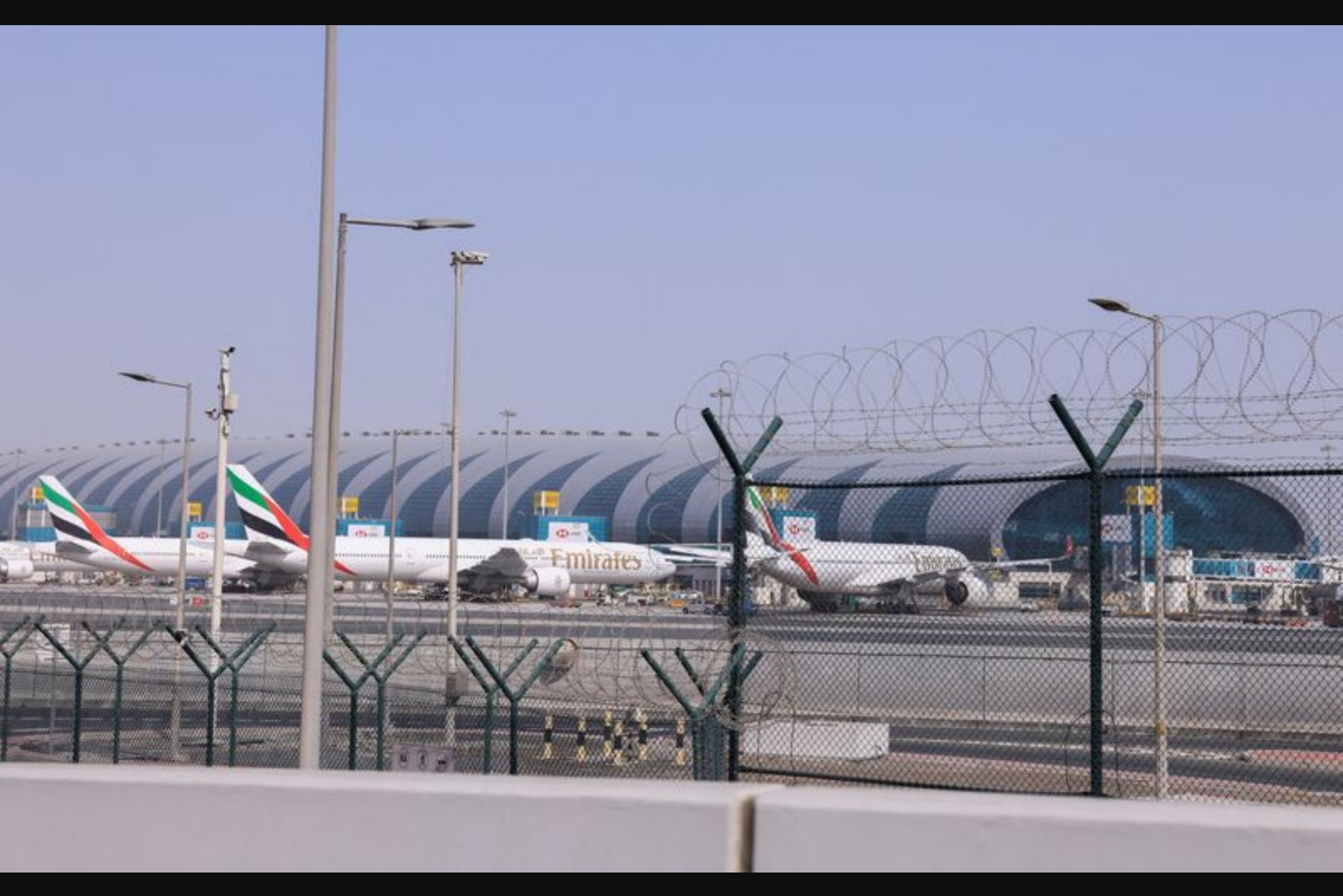
Escalating hostilities in the Middle East have underscored the outsized role a handful of Gulf hubs play in global aviation and left Dubai - which runs the world’s busiest international airport - scrambling to stitch its network back together after Gulf airspace was shut down and the airport itself was struck.
Four decades after Dubai leveraged its strategic location to launch Emirates with two rented jets and two routes, the city now anchors a global matrix that serves 110 nations and supports 454,000 flights a year. Dubai Airports CEO Paul Griffiths emphasised the network's geographic breadth and mix of visitors and transit traffic as strengths, telling Reuters: "That we’ve got such a well-spread geographic business model and are well spread between visitors and those in transit suggests it’s very robust and will continue to survive any geopolitical tension that exists, wherever it may be."
On Saturday, U.S. and Israeli strikes against Iran brought such tensions to Dubai’s doorstep, including an attack on the airport itself. The immediate consequence was the unprecedented closure of airspace across the key Gulf hubs - Dubai, Abu Dhabi and Doha - triggering rapid knock-on effects through airline schedules and passenger itineraries worldwide.
Operational pressure and displaced passengers
Dubai was left with a large, urgent operational challenge: managing tens of thousands of displaced travellers while trying to limit harm to inbound traffic that accounts for roughly half of the airport’s volume. Restoring the network will require aircraft and crew repositioning, rebooking flows and coordination with other hubs and carriers - all under an unusually intense geopolitical cloud.
Most analysts argue that the hub trio will regain traffic as long as the crisis does not broaden into a prolonged regional war. The momentum of existing connections and the aggregation power of these hubs provide a potent foundation for recovery. "There’s no doubt at all this is temporary. They have seen major incidents before and recovered very quickly due to their importance as global hubs," said UK-based travel consultant Paul Charles.
But not all observers are unequivocal. There are concerns that this episode could nudge travellers and carriers toward different routing choices, with a tilt to more direct long-haul services that bypass traditional stopovers. "Travellers are likely to consider more direct flights rather than stop over in Dubai or Doha. All this hub traffic is likely to take a hit," warned independent aviation adviser Bertrand Grabowski.
Geography, competition and changing aircraft economics
Geography remains a core advantage for the Gulf hubs. Griffiths noted the favourable catchment: "One third of the world’s population is within four hours’ flying time and two thirds within eight hours. We’ve seen the incredible aggregation power that a hub delivers." That aggregation underpins the transfer flows that make these airports pivotal nodes on many long-distance itineraries.
Nevertheless, competitive pressures are intensifying. Turkish Airlines, operating from a major hub outside the conflict zone, could seize short-term market share, according to independent aviation analyst John Strickland. Saudi Arabia and India are also pushing to capture spillover traffic, and Asian carriers stand to pick up displaced passengers as networks reconfigure.
Advances in aircraft design may further erode the structural advantage Gulf hubs once enjoyed. The economics of ultra-long-range aircraft enable more nonstop, point-to-point links. Airbus has already moved to assemble a second ultra-long-range A350 to support plans by Qantas to fly directly from Sydney to London, a development that could alter routing dynamics that previously favoured hub-and-spoke routing through the Gulf.
Historical resilience and the current uncertainty
Emirates itself was established in 1985 during the Iran-Iraq war. Its rapid expansion contributed to the fragmentation of Gulf Air - at the time the national carrier for Qatar, Bahrain, Abu Dhabi and Oman - and spurred the creation of separate Gulf carriers in Qatar and Abu Dhabi, producing the ongoing competition among the three major Gulf hubs.
The present crisis has shaken Dubai’s reputation for orderly safety, with Iranian attacks and anti-missile shrapnel cited as factors that may harm perceptions of the city as a destination. Analysts caution that while transit traffic should rebound, there may be "some lasting damage" to Dubai’s appeal as a destination, according to Bertrand Grabowski.
Questions have also emerged about the timetable for the already delayed expansion of a large new airport outside Dubai. Uncertainty around construction and opening schedules could complicate capacity planning and investment decisions tied to expected post-crisis recovery.
For market leaders such as Emirates and its partner carrier flydubai, the response may involve leveraging their scale and market influence to restart flows and incentivise passengers to return. "People have short memories and they might be incentivised by some bargain deals to bring people back, but I don’t think that would need to be there for long," said Eddy Pieniazek, head of advisory at aviation and leasing consultancy Ishka.
Short promotional note included in original reporting
Should you be buying THYAO right now? ProPicks AI evaluates THYAO alongside thousands of other companies every month using 100+ financial metrics. Using powerful AI to generate exciting stock ideas, it looks beyond popularity to assess fundamentals, momentum, and valuation. The AI has no bias-it simply identifies which stocks offer the best risk-reward based on current data with notable past winners that include Super Micro Computer (+185%) and AppLovin (+157%). Want to know if THYAO is currently featured in any ProPicks AI strategies, or if there are better opportunities in the same space? See Stocks
As Gulf carriers and airports work to restore routes and confidence, the sector faces a test of resilience. Recovery appears likely if the conflagration remains geographically and temporally limited, but the episode also highlights growing competition and technological shifts that could reshape long-term routing patterns.