
Summary: Israel and Iran engaged in reciprocal military strikes on Thursday as the confrontation in the Middle East entered its sixth consecutive day. Israeli strikes reportedly hit Iranian government infrastructure in Tehran, while Iran launched missiles toward Israel earlier in the day, prompting air raid sirens in Tel Aviv and Jerusalem. Explosions have been reported elsewhere across the Gulf, with several states saying they intercepted missiles or were struck by drones. The flare-up has stoked market volatility, propelled crude prices higher and raised questions about maritime traffic through the Strait of Hormuz.
Hostilities broadened geographically on Thursday. In the Iranian capital, a significant Israeli barrage was reported to have struck infrastructure linked to Iranian authorities. Earlier in the day, Iran reportedly fired missiles at Israel, triggering civil defense alerts in both Tel Aviv and Jerusalem.
Beyond Israel and Iran, explosions were reported across the Gulf region. Qatar and Bahrain experienced incidents consistent with strikes or explosions, while Saudi Arabia said it had intercepted missiles and drones. Azerbaijan, north of Iran, disclosed that it had been hit by a drone attack launched from Iranian territory, marking it as the latest neighbor to be drawn into the expanding scope of the confrontation.
There were also reports that a U.S. destroyer operating in the eastern Mediterranean downed a missile that had been launched from Iran and was on a trajectory toward southern Turkey. Parallel to these events, reporting indicated that Iranian Kurdish militias, primarily based in Iraq, had discussed with U.S. officials the possibility of striking Iranian security targets in western Iran. Iran's intelligence ministry said it was targeting "separatists groups" attempting to enter the country through western borders.
The United States has been conducting strikes on Iran in coordination with Israel, and officials have described the situation as potentially open-ended - saying it may go on for an indefinite period of time. U.S. officials also reported a marked decline in Iran's missile activity, stating that Iranian missile launches had fallen by 86% over four days.
Political and legislative developments
The conflict has also reverberated through U.S. politics. Republican senators in the U.S. Senate blocked a resolution intended to limit the president's authority to carry on the offensive without explicit congressional authorization. Democrats had sought to use the measure to provide legislators a stronger formal role in weighing further military action. The Senate defeated the resolution in a 53-47 vote, rejecting a motion that would have directed the president to end strikes against Iran or any element of Iran's government or military absent a formal war declaration or authorization from Congress.
Market reactions
Financial markets registered the disruption. Oil prices extended gains, feeding a broader rally for the week as concerns about supply from the major crude-producing region intensified. By the latest levels reported, Brent futures rose 2.9% to $83.75 a barrel, while U.S. West Texas Intermediate futures increased 3.2% to $77.08 a barrel. Both benchmarks recorded a string of gains across five consecutive sessions, with Brent reaching its highest level since July 2024 before easing somewhat after a suggestion from the U.S. president that the United States could provide escorts and insurance for vessels attempting to transit the Strait of Hormuz.
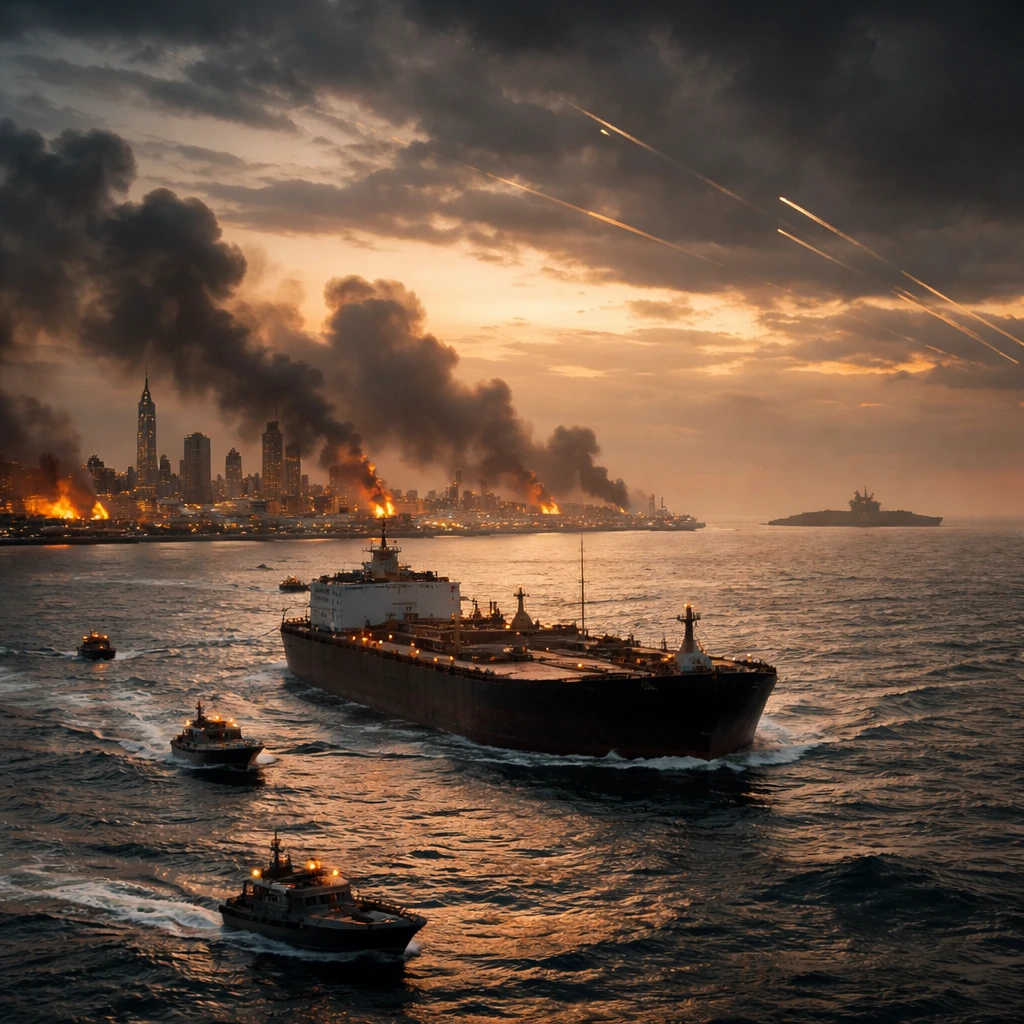
Part of the upward pressure on benchmarks stemmed from attacks on tankers in the Strait of Hormuz, a narrow waterway south of Iran through which about a fifth of the world’s oil and liquefied natural gas normally flows. Those incidents effectively closed traffic through this critical chokepoint off Iran's southern coast during the reported attacks, contributing to supply disruption fears.
Equity futures in the United States moved lower on Thursday as investors weighed the uncertain trajectory of the conflict. By 03:10 ET (08:10 GMT), Dow futures were down 285 points, or 0.6%, S&P 500 futures had declined by 29 points, or 0.4%, and Nasdaq 100 futures were lower by 115 points, or 0.5%.
Despite the later sell-off in futures, U.S. cash markets had posted gains in the prior session. On Wednesday, major U.S. averages moved higher while oil and bond markets moderated. At the close, the Dow Jones Industrial Average had gained 0.5%, the S&P 500 was up 0.8%, and the Nasdaq Composite rose by 291 points, or 1.3%. Sentiment on that day had been partially supported by a services-sector activity reading that some analysts interpreted as pointing to a potential reacceleration in the underlying U.S. economy.
In Asian markets, which are seen as particularly vulnerable to disruptions of oil and gas flows through the Strait of Hormuz, indices showed signs of settling after recent volatility. South Korea's Kospi was among the larger gainers in the region following a steep slide that had earlier triggered a temporary trading halt the previous day. Airline stocks in Asia in particular rebounded as flights delayed by the regional unrest were able to resume.
European equities traded around the flatline as investors weighed the potential for energy-price shocks to lift inflation. Like Asian markets, Europe relies substantially on energy supplies that transit the Strait of Hormuz, leaving investors sensitive to the prospect of further spikes in oil and gas prices.
Context and next steps
The fighting showed few signs of abating as the sixth day unfolded, with attacks and interceptions reported across a swath of the Middle East and stretching into neighboring states. Military actions, diplomatic responses and domestic political decisions in the United States continue to shape the outlook for how long the campaign may persist. Observers noted both a sharp reduction in the frequency of missile launches by Iran over the short term and the widening geographic footprint of the fighting, as neighboring states reported strikes on their territory.
This is a developing story. Additional updates may follow as new information becomes available.
Key takeaways - sectors affected
- Energy - Oil and LNG markets are directly affected by attacks near the Strait of Hormuz, pushing crude prices higher and raising supply disruption risks.
- Shipping and maritime services - Tankers and transit through the Strait of Hormuz have been targeted, affecting vessel operations, insurance and logistics in the region.
- Financial markets - Equity futures, bond markets and regional exchanges have responded to the conflict's uncertainty, with notable volatility in U.S., Asian and European markets.