
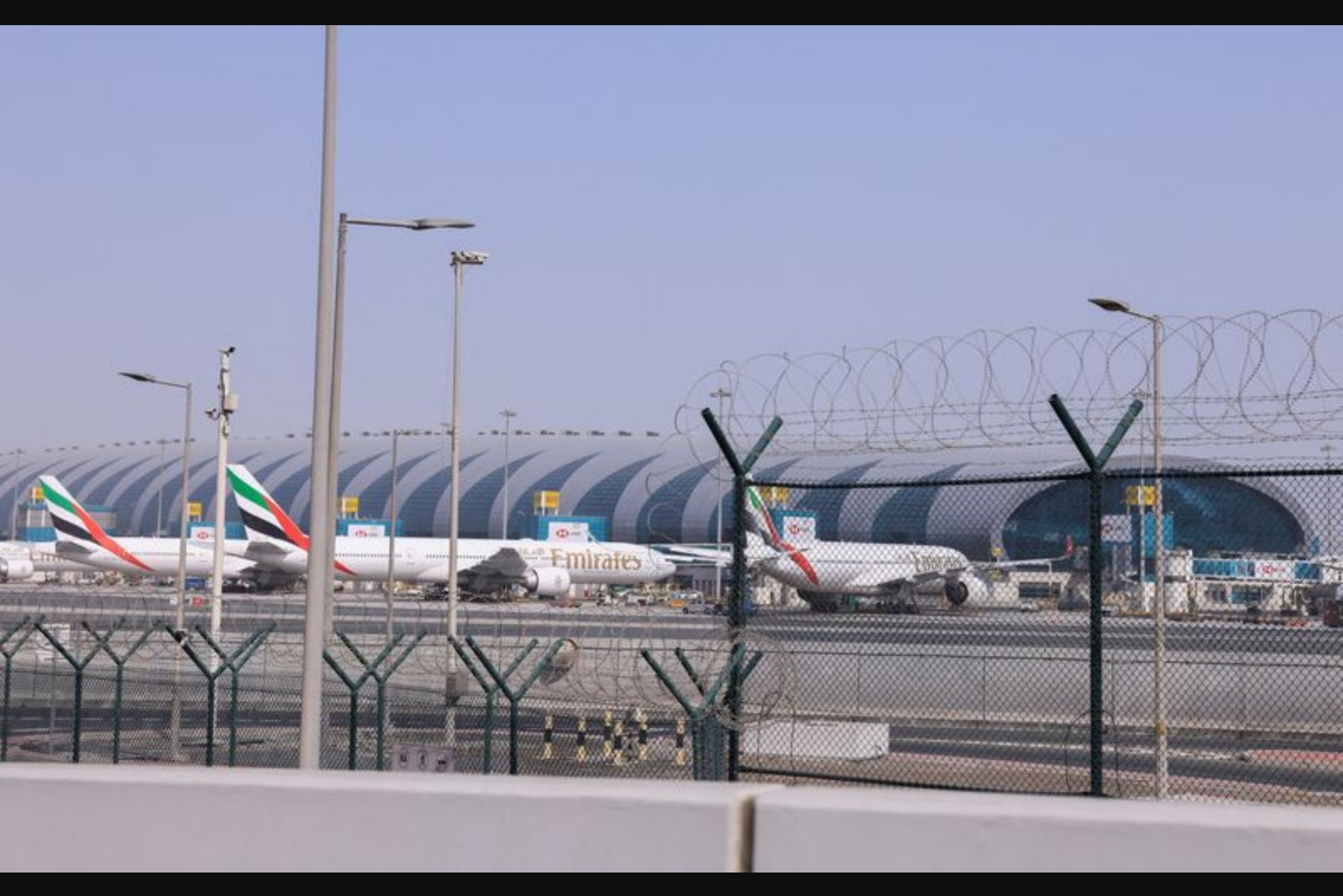
Escalating conflict across the Middle East has underscored the reliance of global air travel on a small set of transit hubs, with Dubai - the world’s busiest international airport - at the epicenter after Gulf airspace closures sent shockwaves through airline networks.
Dubai has built a global web of connectivity over four decades, originating from a modest start with Emirates operating two leased aircraft on two routes. The city’s airport now serves travelers to and from 110 countries across roughly 454,000 flights per year, making it central to many carriers' routing strategies.
Paul Griffiths, chief executive of Dubai Airports, said in an interview last month, before U.S. and Israeli strikes against Iran, that the airport’s geographic diversification and mix of origin-destination and transit traffic make its system resilient. "That we’ve got such a well-spread geographic business model and are well spread between visitors and those in transit suggests it’s very robust and will continue to survive any geopolitical tension that exists, wherever it may be," he said.
The recent strikes, which occurred on Saturday, have brought tensions to Dubai’s doorstep and included an attack on the airport itself. The city now faces the immediate operational task of processing tens of thousands of displaced passengers while trying to reconnect a fractured route network and protect Dubai-bound origin traffic, which accounts for about half of the airport’s volumes.
Reassembling that network is a considerable logistical challenge. Most analysts interviewed say the Gulf hubs will rebound if the conflict does not expand into a prolonged regional war, citing the deep integration and momentum those hubs enjoy. "There’s no doubt at all this is temporary. They have seen major incidents before and recovered very quickly due to their importance as global hubs," said UK-based travel consultant Paul Charles.
Yet some observers worry that the current pattern of travel could shift. The aviation market rebounded after the COVID-19 pandemic because demand outstripped capacity, but this crisis threatens demand rather than supply. Independent aviation adviser Bertrand Grabowski warned that passengers may increasingly choose direct flights over stopovers in Gulf hubs. "Travellers are likely to consider more direct flights rather than stop over in Dubai or Doha. All this hub traffic is likely to take a hit," he said.
Geography remains a core competitive advantage for the Gulf airports. As Griffiths noted in a November interview, "One third of the world’s population is within four hours’ flying time and two thirds within eight hours." That proximity underpins what he called "the incredible aggregation power that a hub delivers." Even so, rivals are positioning to capture traffic if disruptions persist.
Turkish Airlines, operating from a large hub outside the immediate conflict zone, could be a principal short-term beneficiary, according to independent aviation analyst John Strickland. Saudi Arabia’s aviation sector is also advancing to attract passengers, and Indian carriers are picking up market share in certain flows. Together these developments represent growing competition to the Gulf trio of Dubai, Abu Dhabi and Doha.
Technological shifts in aircraft design are further changing the competitive landscape. Platforms that once advantaged Gulf carriers by concentrating long-haul traffic through their hubs are increasingly enabling direct, ultra-long-haul services. Airbus has recently begun assembling a second ultra-long-range A350 variant to support plans by Qantas to fly non-stop between Sydney and London, an example of how new aircraft capabilities can reduce the need for intermediate stops.
The Gulf hubs were born in conflict-era conditions. Emirates was established in 1985, at the height of the Iran-Iraq war, and its rapid expansion contributed to the fragmenting of the earlier Gulf Air consortium and the later emergence of separate national carriers for Qatar and Abu Dhabi. That history shows how geopolitical disruption and airline strategy have long been intertwined in the region.
Analysts say the most uncertain outcome after the recent strikes is the effect on Dubai’s appeal as a destination. With Dubai’s reputation for orderliness marred by attacks and anti-missile shrapnel, experts caution that leisure and business travel to the city could suffer longer-term reputational damage even if hub flows recover.
Questions have also arisen about the timetable for the already-delayed expansion of a major new airport outside the city, with analysts noting that project timing could be affected by changes in demand patterns.
Emirates and its partner carrier flydubai have the market influence to help restart network connectivity. Eddy Pieniazek, head of advisory at aviation and leasing consultancy Ishka, suggested that discounted fares or incentives could quickly draw passengers back. "People have short memories and they might be incentivised by some bargain deals to bring people back, but I don’t think that would need to be there for long," he said.
What this means for markets and sectors
- Airlines and airports face an operational and demand shock as Gulf airspace closures displace passengers and disrupt schedules.
- Aircraft manufacturers and lessors may see evolving demand patterns as carriers reassess route networks and aircraft utilization in response to shifting passenger preferences.
- Travel, tourism and related service sectors tied to Dubai’s destination traffic could experience a near-term downturn if perceptions of safety and convenience are affected.
Outlook
Industry views diverge on the duration and scale of impact. If conflict remains limited, Gulf hubs’ routing centrality and the commercial might of carriers such as Emirates and flydubai should support a relatively rapid restoration of services. Longer or intensified hostilities, however, pose a greater threat to demand and could accelerate competitive realignments toward other hubs and more direct services.