
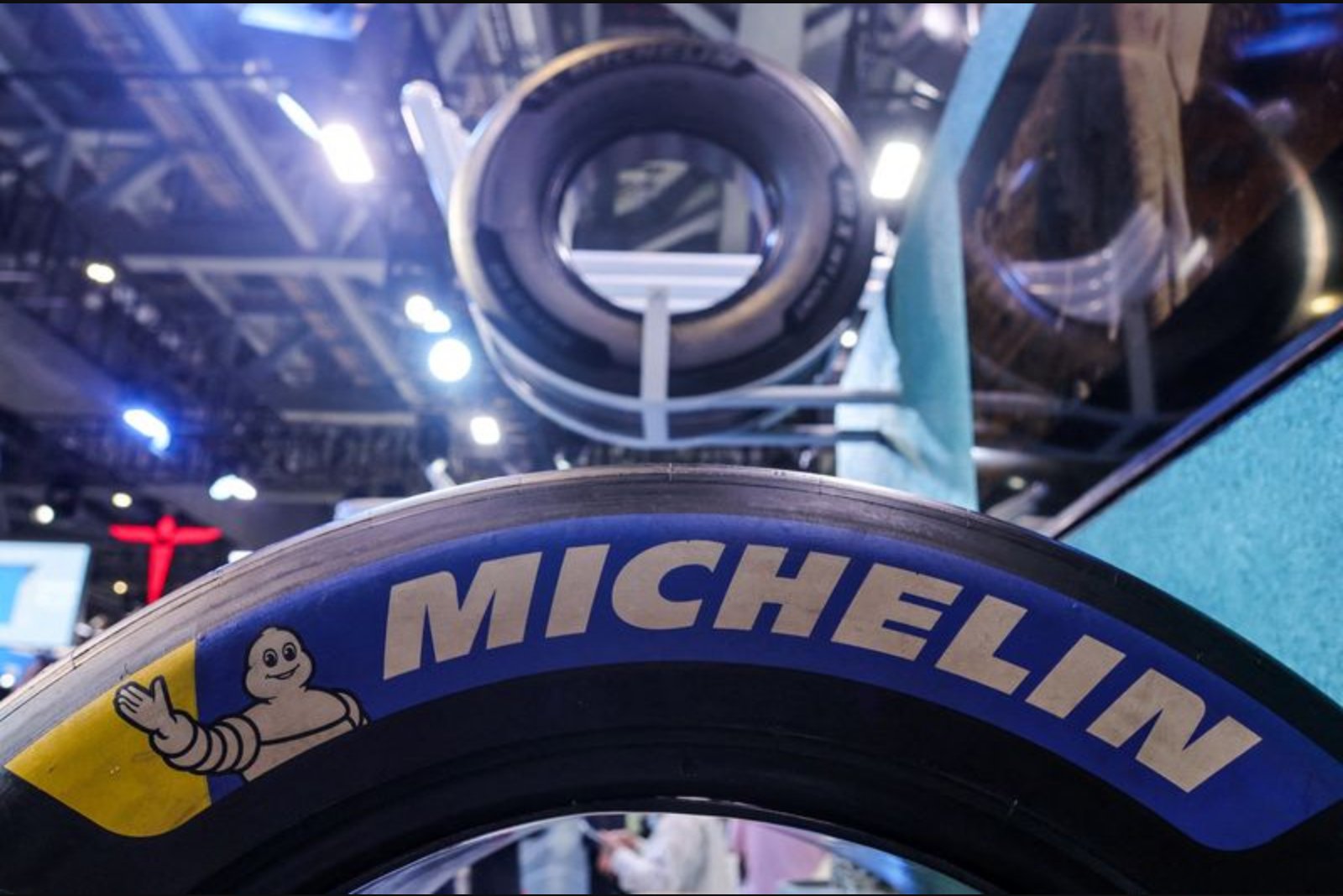
French tyre manufacturer Michelin reported a decline in segment operating income in 2025 and attributed much of the fall to a slowdown in the U.S. market, while forecasting a recovery the following year. The company said it expects segment operating income - the aggregate profit from its Automotive and Two-wheel, Road Transportation and Specialties divisions - to exceed last year’s level in 2026.
For 2025, Michelin recorded segment operating income of 2.9 billion euros, a drop of more than 14% versus the prior period. That result was nevertheless above a company-compiled analyst consensus that had been centred on 2.7 billion euros. Total sales for the year fell 4.4% to 26 billion euros, slightly better than the consensus estimate of 25.8 billion euros.
Tyre volumes declined 4.7% in 2025, a smaller contraction than the 4.9% decrease expected by analysts in the company-compiled forecast. Management said the bulk of the volume decline - around 80% - was tied to original equipment, and in particular to business-to-business original equipment such as trucks. The weakness was most pronounced in the United States and in the agricultural sector, according to Chief Financial Officer Yves Chapot.
Chapot told reporters that the company had already signalled a fall in North American truck demand in its third-quarter results. That weakness followed the postponement of U.S. vehicle emissions regulations and the knock-on effect of Chinese retaliatory measures on North American farmers’ incomes, factors the group highlighted as weighing on the market.
He also noted that Michelin expected the drop in sales volumes tied to the end of a contract with a major North American wholesaler on July 1 to be fully recognised by year-end. North America remains Michelin’s largest market, and while local tyre production shields the company from direct tariff duties, management said higher raw material costs and softer car sales - after automakers raised prices and consumers became more cautious - had an indirect effect.
On U.S. tariffs specifically, Michelin reported a 230 million euro impact on its 2025 costs and said it anticipates approximately 120 million euros of tariff-related cost impact in 2026. The company is keeping its dividend unchanged at 1.38 euros per share, a level 10 euro cents above market expectations.
In addition to the dividend, Michelin unveiled a 2.0-billion-euro share buyback programme spanning 2026 to 2028, which management said is supported by strong cash generation. The company’s guidance that segment operating income should be higher in 2026 than in 2025 signals management’s expectation of improved conditions after the challenging year driven in part by the U.S. slowdown.
Summary
Michelin reported a more than 14% decline in segment operating income to 2.9 billion euros in 2025 and a 4.4% fall in sales to 26 billion euros, driven largely by weaker original equipment demand in the U.S. and agricultural markets. The group expects segment operating income to be higher in 2026, is maintaining its 1.38-euro per share dividend, and announced a 2.0-billion-euro share buyback for 2026-2028. Tariff impacts were recorded at 230 million euros in 2025 with an expected 120 million euros in 2026.
Key points
- Segment operating income fell over 14% to 2.9 billion euros in 2025; Michelin expects it to be higher in 2026.
- Sales declined 4.4% to 26 billion euros and tyre volumes dropped 4.7%; around 80% of the volume decline came from original equipment, notably B2B truck demand in the U.S. and the agricultural sector.
- Michelin recorded a 230 million euro tariff-related cost impact in 2025 and expects about 120 million euros in 2026; it will maintain a 1.38-euro dividend and has approved a 2.0-billion-euro share buyback for 2026-2028.
Risks and uncertainties
- Continued weakness in the North American truck market could further pressure original equipment volumes and segment operating income - affecting the Automotive and Road Transportation divisions.
- Persistently higher raw material prices and indirect effects from U.S. tariffs may sustain cost pressure, impacting margins across Michelin’s product lines.
- The end of a major North American wholesaler contract contributed to volume declines and, if similar contract changes occur, could weigh on future sales and distribution dynamics.