
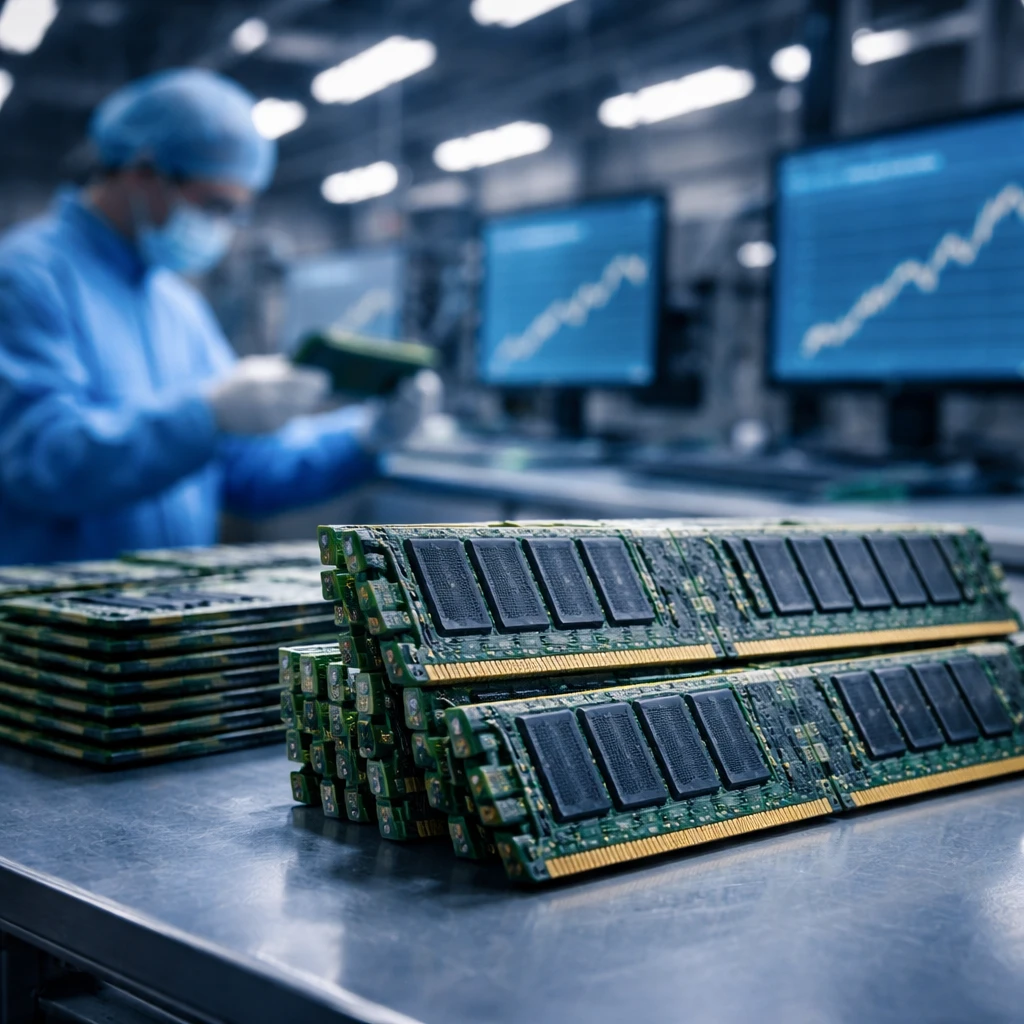
Shares of major PC manufacturers fell after Lenovo Group signaled a prolonged memory chip disruption that could weigh on the broader hardware industry for the next year. Dell Technologies stock slipped 4.7% and HP Inc. shares declined 4.5% amid the warning from the Chinese technology company.
Lenovo's chief executive Yang Yuanqing outlined the outlook on Thursday, telling reporters that the mismatch between memory supply and demand is not just a short-term oscillation. According to a report attributed to Bloomberg News, Yang said memory costs rose by 40% to 50% in the last quarter. He also warned that contract memory prices could potentially double in the current quarter.
Those cost dynamics were disclosed alongside Lenovo's quarterly financials. The company recorded a 21% fall in net income for the December quarter, while revenue climbed to $22.2 billion, a figure that surpassed expectations. Investors reacted to both the earnings and the cautionary note on component costs - Lenovo's shares fell 4.7% after the report and outlook.
The memory shortage has implications for margins across the electronics supply chain, the company said. Rising component costs place pressure on profit margins for original equipment manufacturers, and PC vendors such as Dell and HP are among the firms likely to feel that squeeze. The market moves in all three stocks reflected investor concern about ongoing supply-chain constraints in the technology sector.
From a logistics and operations perspective, a sustained rise in memory prices and constrained supply can affect manufacturers' procurement strategies, inventory turns, and price mix decisions. For companies operating with thin hardware margins, a structural imbalance in a key input like memory can force deferment of shipments, altered model mixes, or compressed profitability on shipped units if cost increases cannot be fully passed to customers.
Lenovo's public comments and its quarterly results together underscore how component-market volatility can transmit through hardware manufacturers' financials and share prices. The company's statement positioned the memory cost surge as a structural issue rather than a transient blip, a framing that appears to have amplified investor sensitivity across the PC sector.
Key points
- Lenovo warned memory supply disruption could affect the global hardware industry for a year.
- Memory costs rose 40% to 50% in the last quarter, with contract prices potentially doubling in the current quarter.
- Dell and HP shares fell 4.7% and 4.5% respectively; Lenovo shares fell 4.7% following the earnings report and outlook.
Risks and uncertainties
- Persistently higher memory prices could compress profit margins for PC manufacturers and other hardware vendors.
- Ongoing supply-chain constraints in memory components create uncertainty for production schedules and inventory management across the electronics sector.
- Investor reactions to earnings and warnings can increase share-price volatility for companies exposed to component-cost swings, especially in the PC market.
Note: This article reflects the company statements and financial figures released with the quarterly report and related comments attributed to Lenovo's CEO. It does not introduce additional data or forecasts beyond those disclosures.