
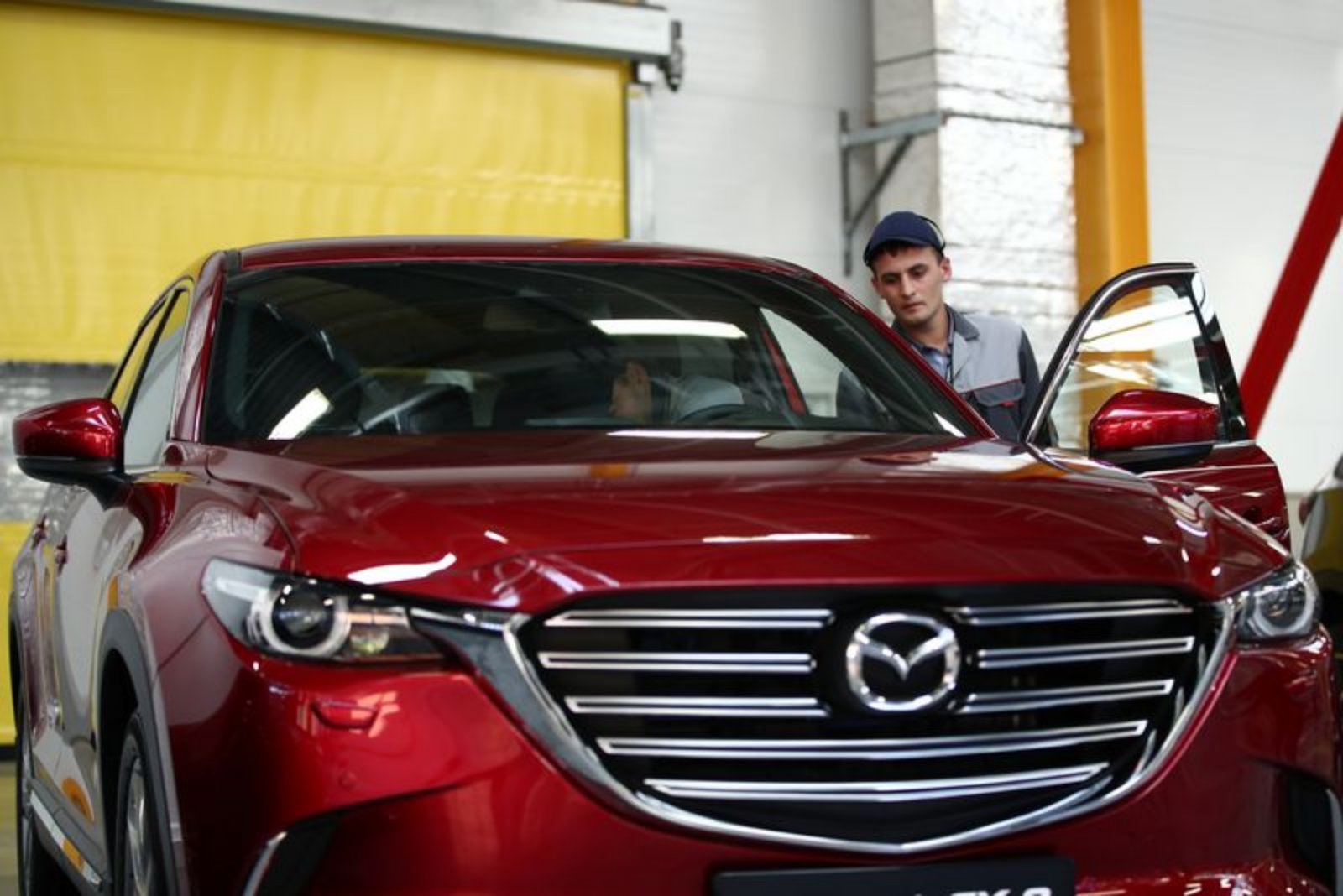
Japan's Mazda has re-emerged as one of the best-selling foreign car brands in Russia following regulatory changes that altered the economics of individual vehicle imports. Data from Russian analytical agency Autostat indicate Mazda sold 4,871 vehicles in January-February, up from 338 in the same period of 2025, lifting the brand to sixth place in the market.
The CX-5 was the standout model among imported cars: it led sales within the subset of imports that feature smaller, lower-output engines and therefore qualify for substantially reduced scrappage fees compared with larger, more powerful vehicles. That fee differential has become a decisive factor in buyer choice since the government adjusted scrappage charges late last year.
Autostat and market commentators cite the December 1 policy adjustment as the turning point. On that date, the scrappage fee for powerful and expensive cars imported by individuals for personal use rose by hundreds of percent. The steep increase sharply diminished the attractiveness of high-powered imports while leaving fees for smaller-engine cars largely unchanged, tilting consumer preference toward more economical models.
Those import dynamics are playing out against a backdrop of third-country routing. Tens of thousands of cars made by foreign companies that exited Russia are still entering the country via third countries - mainly China - without the manufacturers' consent, according to Autostat's reporting. Import patterns have shifted as a result, with vehicles crossing borders through intermediaries rather than arriving directly from the original manufacturers.
Mazda itself formally pulled out of Russia in 2022. Last year the company also lost the contractual right to buy back its 50% stake in a manufacturing joint venture in Vladivostok. The company has been asked for comment; it has previously stated that third-party sales are outside its control.
Overall passenger car sales in Russia showed modest growth in February. Autostat reported that car sales rose 2.5% year-on-year in February to 80,027 vehicles. Among the top 10 brands, Toyota sits in ninth place and is the only non-China, non-Russia, non-Belarus brand to appear in that group.
Investment-oriented services have also highlighted specific tickers tied to the current market narrative. One such example asks whether investors should consider buying 7261 now. According to the promotional material, ProPicks AI evaluates ticker 7261 alongside thousands of other companies every month using more than 100 financial metrics. The material claims the AI looks beyond popularity to assess fundamentals, momentum, and valuation, and cites past winners identified by the system, including Super Micro Computer (+185%) and AppLovin (+157%). It offers to report whether 7261 features in any active ProPicks AI strategies or to surface alternative opportunities in the same sector.