
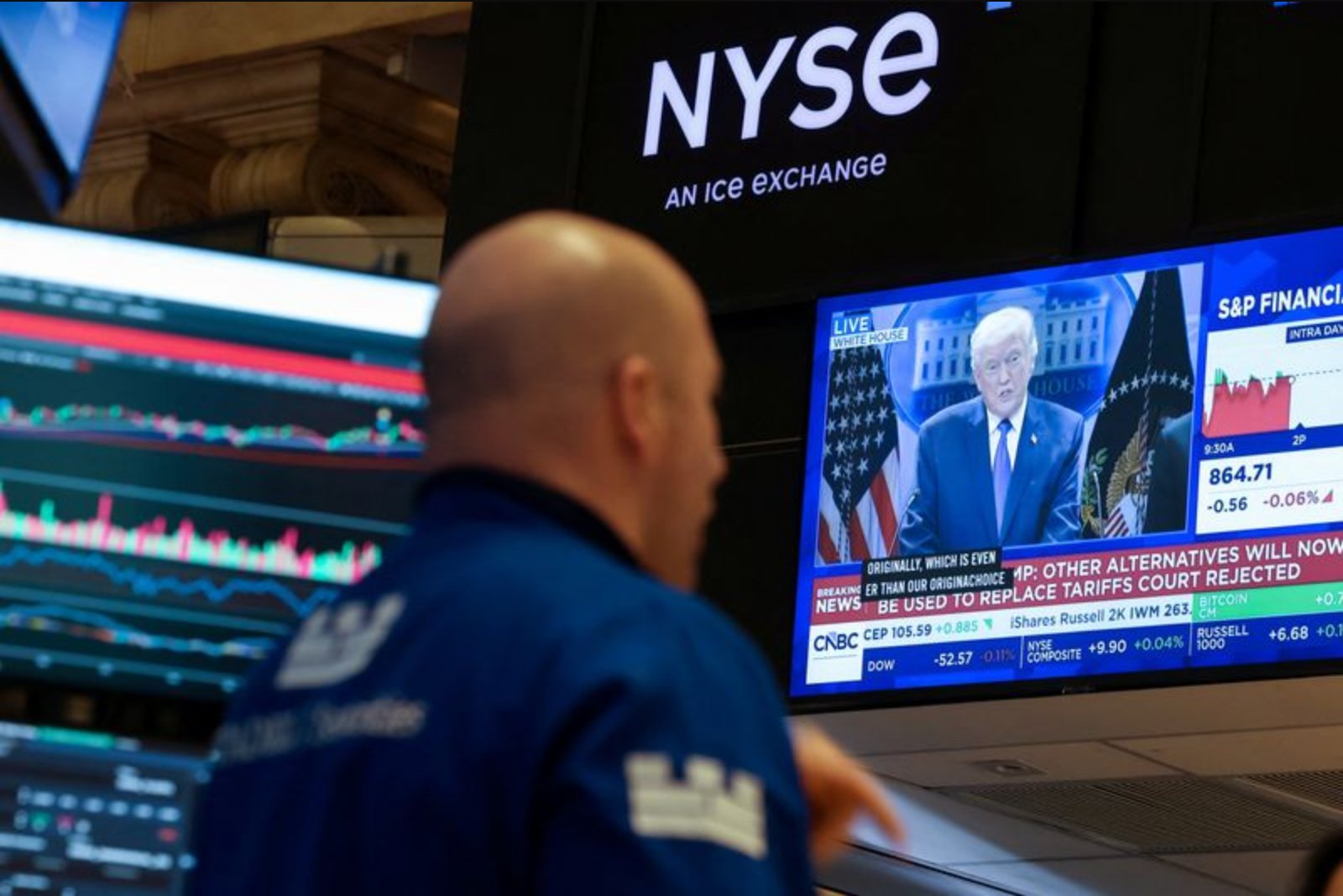
Tariff uncertainty has returned to the market following an announcement by U.S. President Donald Trump that a new 15% duty will replace the broader levies which a Supreme Court ruling struck down last week. The adjustment has already altered near-term market dynamics: domestic makers of lumber products declined on Monday amid investor concerns that lower-cost imports will exert downward pricing pressure, while Wall Street analysts noted that emerging market-focused exchange-traded funds and certain retailers could ultimately see gains.
Market participants and analysts are parsing the detail to identify which companies, sectors and regions will feel the most acute effects. The consensus view is mixed - some segments will face renewed competitive pressure from imports, while others may benefit from reduced tariff rates compared with the previous structure.
Retail and consumer goods
Investment bank Jefferies identified a set of consumer-facing retailers that could be advantaged if tariff rates decline for many imported goods. The brokerage specifically named Best Buy, Ralph Lauren and Nike among those that would likely benefit the most. Jefferies also cited large-format retailer Target and cosmetics group Elf Beauty as additional potential beneficiaries.
Morgan Stanley analysts pointed to categories such as toys, sports equipment and games as likely to gain because they faced particularly high tariff rates under the earlier regime. The new levy being imposed by President Trump is 4% lower than the previous level for those categories, Morgan Stanley noted, suggesting a relative improvement in cost dynamics for import-reliant items.
E-commerce companies
BofA Global Research expects a mixed outcome for small and midcap e-commerce names. Following the court decision last Friday, several online platforms rallied, including Etsy, eBay, Wayfair and Chewy. However, the announcement of a new global tariff is likely to reintroduce ambiguity into their cost and pricing outlooks.
BofA highlighted Etsy as the most insulated from tariff swings because of its wide geographical diversification - roughly half of its buyer and seller network sits outside the United States - and because no single import country contributes more than 4% of the platform's total gross sales. By contrast, BofA identified Chewy and Wayfair as among the least affected, noting that Wayfair in particular has already adjusted to tariff shifts implemented last year.
Paper, lumber and packaging
Analysts warned that the ruling and the reconfigured tariff structure will erode some of the competitive protection that domestic packaging and lumber manufacturers had enjoyed versus lower-cost imports. RBC analysts flagged companies such as Clearwater Paper, Rayonier, Sylvamo and Smurfit WestRock as potentially vulnerable to increased import competition.
Supporting this view, a recent industry survey showed that a majority of U.S. buyers reported lower containerboard prices in February. The same survey pointed to a surge of European imports that expanded supply and intensified pricing pressure for domestic producers. Reflecting market moves on Monday, Smurfit and U.S.-based International Paper were down 7% and 6%, respectively.
Automobiles; metals
Legacy automakers such as Ford Motor and General Motors have been navigating tariff volatility since the start of the administration's second term, but Barclays analysts said the new ruling is unlikely to provide meaningful relief for the sector. That is because most automotive tariffs are levied under Section 232 of the Trade Expansion Act of 1962 and are unaffected by the removal of the prior IEEPA-based levels.
Similarly, producers of steel, aluminum and copper are not expected to see an impact from the Supreme Court's decision or the subsequent 15% global tariff, according to ING and UniCredit analysts. Firms such as Steel Dynamics, Alcoa and Freeport-McMoran are understood to remain under the protection - and the constraints - of Section 232 tariffs.
Emerging markets and regional winners
Brokerages broadly expect some economies to emerge as beneficiaries from the reworked U.S. tariff schedule, with China frequently cited among them. Hong Kong's benchmark index closed 2.5% higher on Monday, led by gains in major technology names including Alibaba and Tencent.
On specific tariff rate expectations, Morgan Stanley and J.P. Morgan foresee reductions in the levy on China - to 24% and 27%, respectively - down from an earlier 32% rate. Outside China, analysts see potential upside for India, much of Southeast Asia and Brazil. BofA projects tariff reductions across most of Southeast Asia of roughly 4-5%, while Morgan Stanley expects levies on India could decline to 14%.
In the near term, the revised tariff plan has injected fresh uncertainty across sectors that are sensitive to import costs and global supply chains, while creating clearer paths to benefit for some consumer-facing and emerging market-exposed assets. Market reactions on the first trading day following the announcement reflected a rapid re-pricing of winners and losers as investors sought to align portfolios with the new trade landscape.