
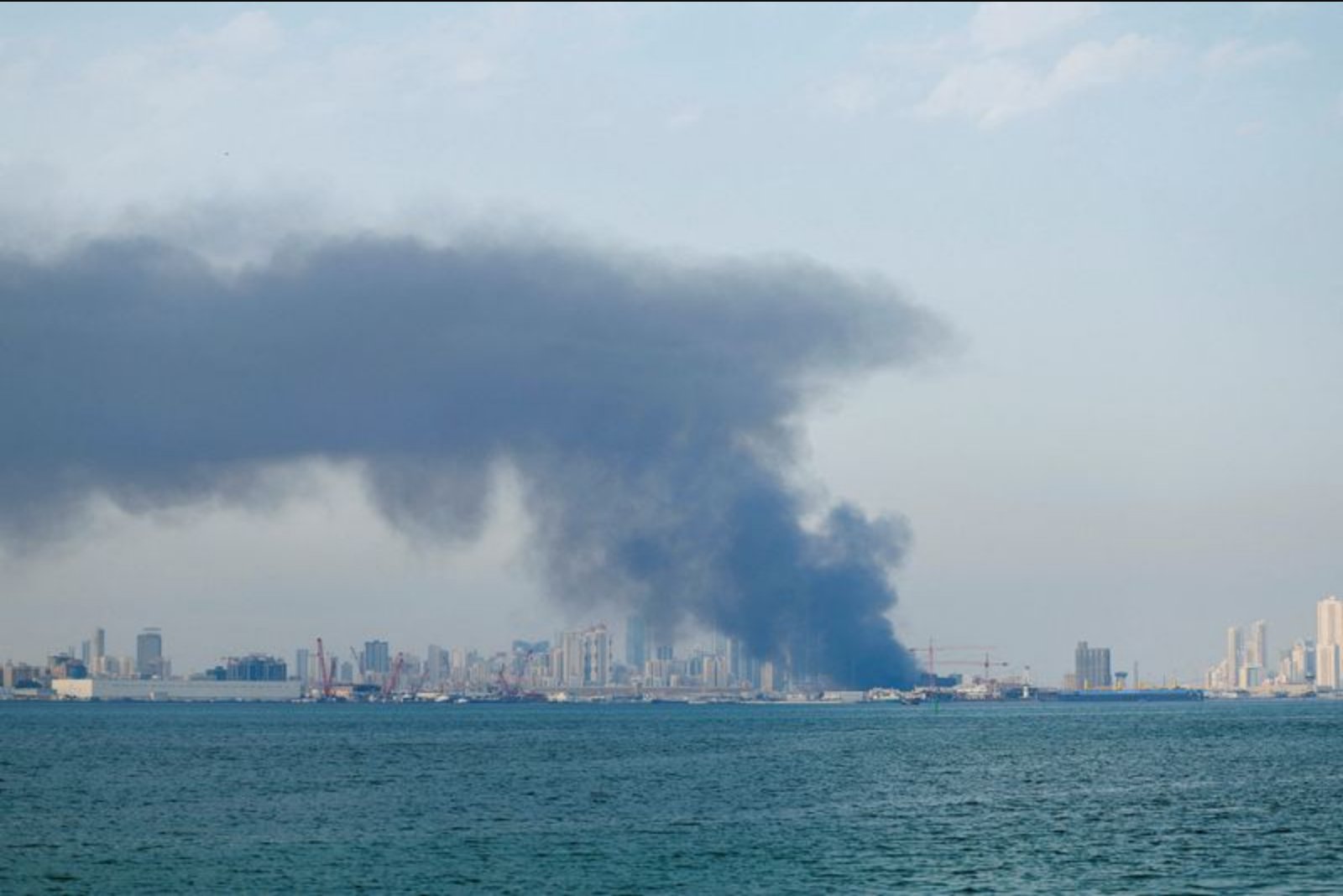
On Saturday the United States and Israel executed strikes aimed at Iranian leadership, an action that has already prompted Iranian missile launches toward Israel and heightened fears of wider regional conflict. President Donald Trump characterized the operation as intended to remove a security threat and as an opportunity for Iranians to seek change in their own leadership.
The strikes unsettled nearby oil-producing Gulf Arab nations and triggered precautionary moves across the energy supply chain. Several major oil companies and leading trading houses suspended crude and fuel shipments transiting the Strait of Hormuz because of the attacks, four trading sources said on Saturday. The suspension of cargoes underscores how fragile flows remain when geopolitical tensions intensify in this strategic chokepoint.
Market and commodity reactions expected
Market strategists and analysts said the immediate financial-market response is likely to follow familiar patterns: safe-haven assets may jump, oil prices are likely to firm on concerns about supply disruption, and risk assets could face bouts of volatility. Christopher Wong, strategist at OCBC in Singapore, summed up that the strike increases geopolitical risk premia heading into Monday’s market open.
"The immediate reaction function is fairly predictable: safe-haven assets such as gold are likely to see an upside gap, while oil prices may also firm on supply-disruption concerns. Risk assets and high-beta currencies… could face an initial bout of volatility, particularly if headlines suggest potential retaliation or regional spillovers."
Nick Ferres, chief investment officer at Vantage Point Asset Management in Singapore, emphasized where investors may focus their trades in the near term: "Energy is still inexpensive. That’s the obvious sector that rallies on Monday. And gold."
Analysts outline downside scenarios for oil and shipping
Several analysts highlighted the possibility that oil prices could include a sizable risk premium while the situation remains unresolved. Vishnu Varathan, head of macro research for Asia ex-Japan at Mizuho in Singapore, warned that a sustained period of regional attacks and instability - consistent with Iran’s warnings - would keep oil prices elevated because production and passage remain vulnerable to disruption.
"Oil prices are likely to remain elevated as production and passage remain prone to attacks and disruptions. OPEC may be under pressure to raise production to try and offset. But a 10-25% premium on oil is not outlandish - even without a blockade of the Straits of Hormuz, which is easily a 50% premium risk event."
Saul Kavonic, MST Marquee energy analyst in Sydney, described early indications of broad-scale attacks on Iran with counterattacks that could escalate and potentially draw in multiple Gulf countries. He said if Iran perceived an existential threat it might attempt to block the Strait of Hormuz - a move that, while uncertain, would have outsized consequences for global energy flows.
"If Iran were to manage to disrupt flows through the Strait, over 20% of global oil and LNG flows could be impacted. This could present a scenario three times the severity of the arab oil embargo and Iranian revolution in the 1970s, and drive oil prices into the triple digits, while LNG prices could retest the record highs of 2022."
Kavonic set out a range of market-disruption scenarios that oil markets may begin to price in immediately, from a modest cut in Iranian exports of 2 million barrels per day to attacks on regional oil infrastructure, up to passage disruption through the Strait in a worst-case event. He noted that such shifts could add several dollars to oil prices and leave the market poised for even larger spikes if the conflict broadens.
That said, Kavonic judged a full prolonged closure of the Strait of Hormuz unlikely. He added that even a partial disruption or changes in tanker routing that reduce flows by several million barrels per day could be sufficient to push oil above $100 a barrel.
Implications for markets
Across these assessments, analysts highlighted several immediate market implications: higher oil price risk premia, near-term strength in gold and other safe havens, and elevated volatility for risk assets and high-beta currencies. Energy, commodities, and shipping sectors are the most directly exposed, while defense and insurance-related markets could also feel spillovers if tensions escalate.
For now, market participants are monitoring headlines closely and pricing a range of outcomes. The potential scale and direction of future moves will depend on whether the strikes precipitate further retaliation, draw in additional regional actors, or are contained without a broader blockade or sustained disruption of key maritime routes.