
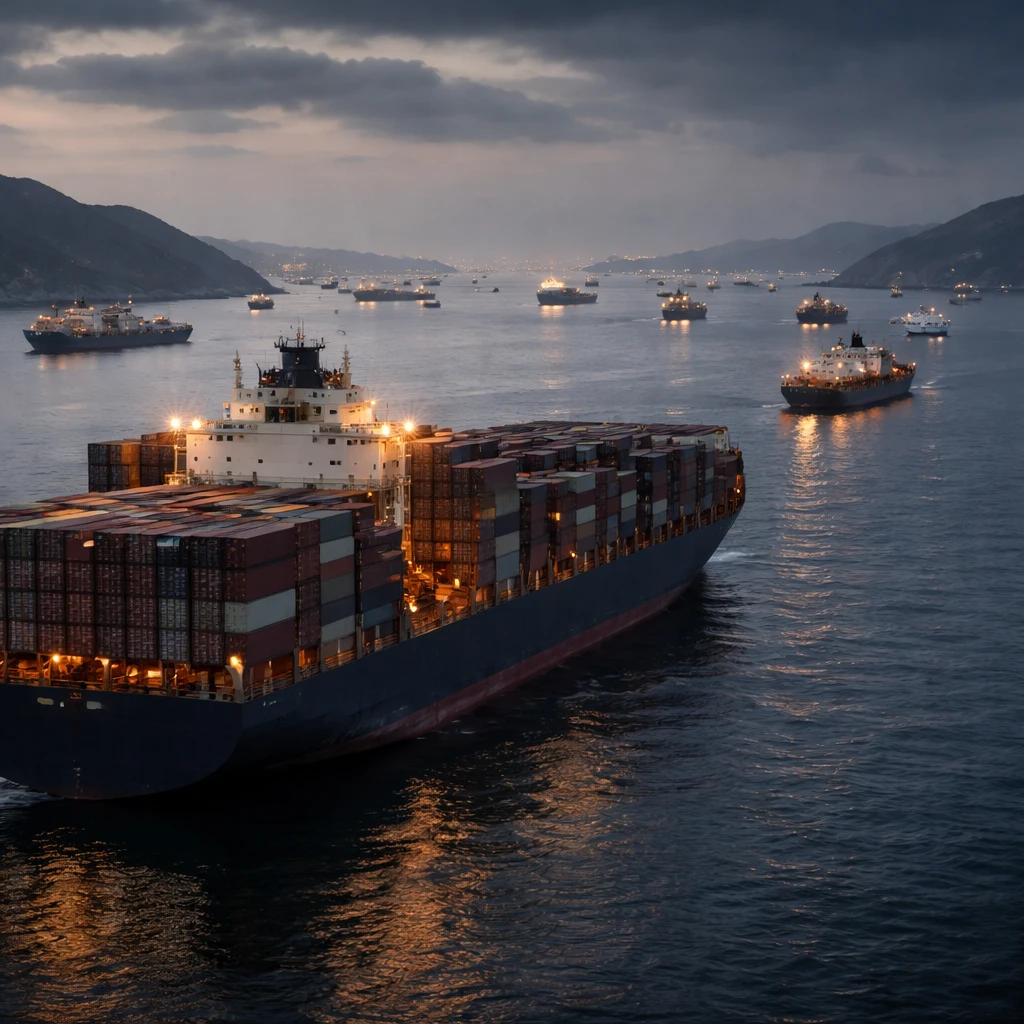
Major container operators A.P. Moller-Maersk and Hapag-Lloyd have announced temporary suspensions and adjustments to services that transit the Middle East, citing risks tied to the ongoing conflict in Iran and its broader regional spillover. The changes reflect immediate operational responses intended to protect crews and ships while preserving wider network stability.
Maersk said that after conducting a risk assessment and an operational review amid an expanding conflict - which has encompassed several countries across the Middle East - it would temporarily suspend its FM1 Service, which connects the Far East to the Middle East, as well as its ME11 Service, which connects the Middle East to Europe. The company described the move as a "precautionary measure" to ensure the safety of its personnel and vessels while minimizing operational disruption across its wider network.
The Danish carrier had already suspended routes through the Suez Canal following recent joint U.S. and Israeli attacks on Iran, electing to reroute ships around the southern tip of Africa. Maersk also paused crossings of the Strait of Hormuz - the narrow channel south of Iran through which roughly a fifth of the world's oil passes - and halted bookings for cargo of certain goods from several countries including Saudi Arabia, the United Arab Emirates, Oman and Qatar. The company noted these nations, among others in the Middle East, have been targeted by Iranian strikes.
German group Hapag-Lloyd said on Friday that it would temporarily alter parts of its network and halt several services "due to the ongoing conflict in the Middle East and the resulting impact on regional operations." The carrier framed the adjustments as steps to maintain reliable service and operational stability amid the disruption.
Shipping industry observers and market participants have pointed to heightened concern over the security of passages such as the Strait of Hormuz. The risk of supplies being restricted via the strait has coincided with a rise in oil and gas prices this week, according to market reports. Vessel traffic has accumulated on both sides of the strait since the conflict began, as operators weigh the safety of ship crews and grapple with challenges in obtaining insurance coverage for sailings.
These service suspensions and network adjustments by two leading carriers have immediate implications for freight flows between the Far East, the Middle East and Europe, and have added strain to an already sensitive maritime environment. Carriers are balancing the need to keep cargo moving against the imperative of protecting personnel and assets while insurance markets and regional security conditions remain uncertain.
Key developments at a glance
- Maersk has suspended FM1 (Far East to Middle East) and ME11 (Middle East to Europe) services as a precautionary measure following a risk assessment.
- Maersk previously stopped Suez Canal transits and rerouted ships around the southern tip of Africa; crossings of the Strait of Hormuz and bookings for certain cargoes from Saudi Arabia, the UAE, Oman and Qatar were paused.
- Hapag-Lloyd is temporarily adjusting parts of its network and halting several services to preserve operational stability amid the conflict.
What this means for markets and logistics
- Regional maritime routes are under strain, with potential knock-on effects for freight schedules and transit times between the Far East, Middle East and Europe.
- Energy markets have seen price pressure amid concerns over potential constraints on oil and gas flow through the Strait of Hormuz.
- Insurance availability and costs for vessels operating in the region are a factor in carriers' routing and booking decisions.