
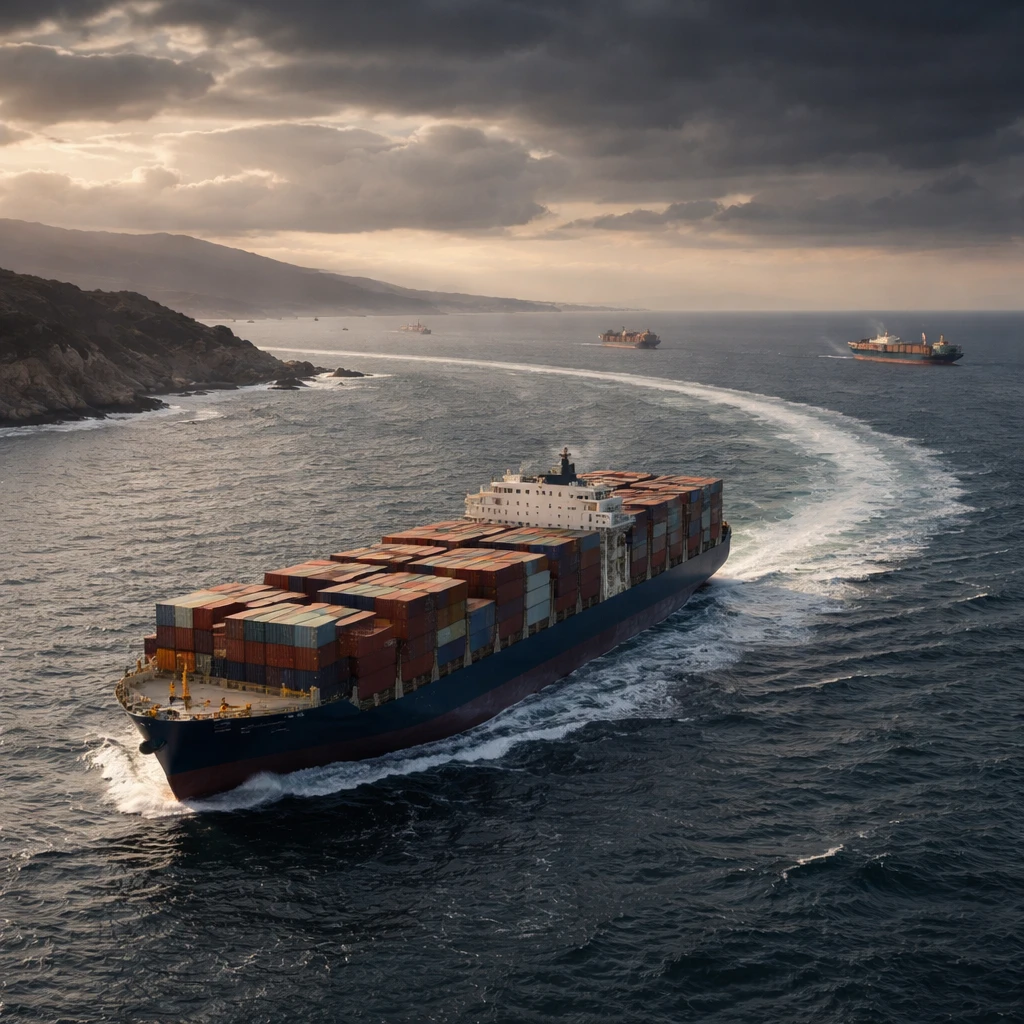
Macquarie analysts warned on Tuesday that the ongoing conflict involving Iran is producing tangible freight and fuel cost headwinds for Australian household retailers, with furniture importers among the most exposed. The analysts link the disruption to a combination of closures and proxy activity in key shipping chokepoints and expect a meaningful near-term hit to profitability if conditions continue.
According to Macquarie, the closure of the Strait of Hormuz has interrupted roughly 29% of global oil production, while Houthi proxy activity has further disrupted the Suez Canal shipping corridor. The firm estimates an immediate negative impact of more than 2% on fiscal year 2027 net profit after tax for retailers if the current disruption persists.
The analysts identify three direct channels through which the Iran situation transmits to Australian retailers.
- Higher fuel and freight costs - The Hormuz closure lifts fuel prices, and rerouting Suez traffic around the Cape of Good Hope reduces container availability, which can raise freight rates.
- Longer transit times - Alternative shipping routes lengthen transit periods to key destinations, including the UK, affecting inventory flow and timing.
- Inflationary rates and pass-through constraints - Iran conflict-related inflation increases both input costs and complicates retailers' ability to pass those costs to consumers.
Household retailers are singled out because furniture items typically have large physical dimensions and relatively low retail price density. Macquarie notes freight represents about 8% of cost of goods sold for furniture, making the category particularly sensitive to shipping cost escalation. The report also points to timing risk: both of the retailers examined in the analysis have upcoming freight cost renewals, which could elevate costs if Iran-related disruption to Hormuz and Suez lasts longer than three weeks.
Market moves in recent sessions reflected investor concern over rising fuel and freight costs, the analysts say. Macquarie cautions that passing through higher freight costs to consumers will be challenging because discretionary spending on household big-ticket items is already under pressure in a rising-rate and inflationary environment. The firm’s household furniture and consumer durables data show furniture spend fell to 0% in February 2025, down from 5% in January 2025.
Macquarie also flags currency implications. Expected gross margin tailwinds for retailers in fiscal year 2027 from a stronger AUD/USD are now less certain, since higher USD-denominated fuel costs are likely to exert downward pressure on the AUD/USD exchange rate.
In scenario modelling, the firm quantifies potential net profit after tax downside from the current fuel cost spike alone. For one retailer the range is a 2% to 18% hit, and for the other the range is 3% to 28% if the spike endures into fiscal year 2027. The analysts add that further fuel cost spikes or continued shipping availability problems could drive even larger impacts - on the scenarios presented, downside could widen to between 26% and 105%.
Macquarie notes its analysis does not incorporate several potential additional stressors, including higher last-mile freight costs, demand-side impacts from softer consumer spending, or the possibility of carrier and forwarder bankruptcies. The analysts warn that disruptions extending beyond three weeks will have an exponential effect on oil supply and pricing and will require mitigation measures. For now, Macquarie says it will await further updates before changing its view.
Clear summary
Macquarie warns that disruptions stemming from the Iran conflict - notably closures in the Strait of Hormuz and proxy activity affecting the Suez Canal - could raise fuel and freight costs, lengthen transit times, and make cost pass-through more difficult. Furniture retailers are particularly vulnerable because freight accounts for roughly 8% of their cost of goods sold, and Macquarie’s scenario work shows meaningful potential downside to FY27 net profit after tax if current conditions persist.