
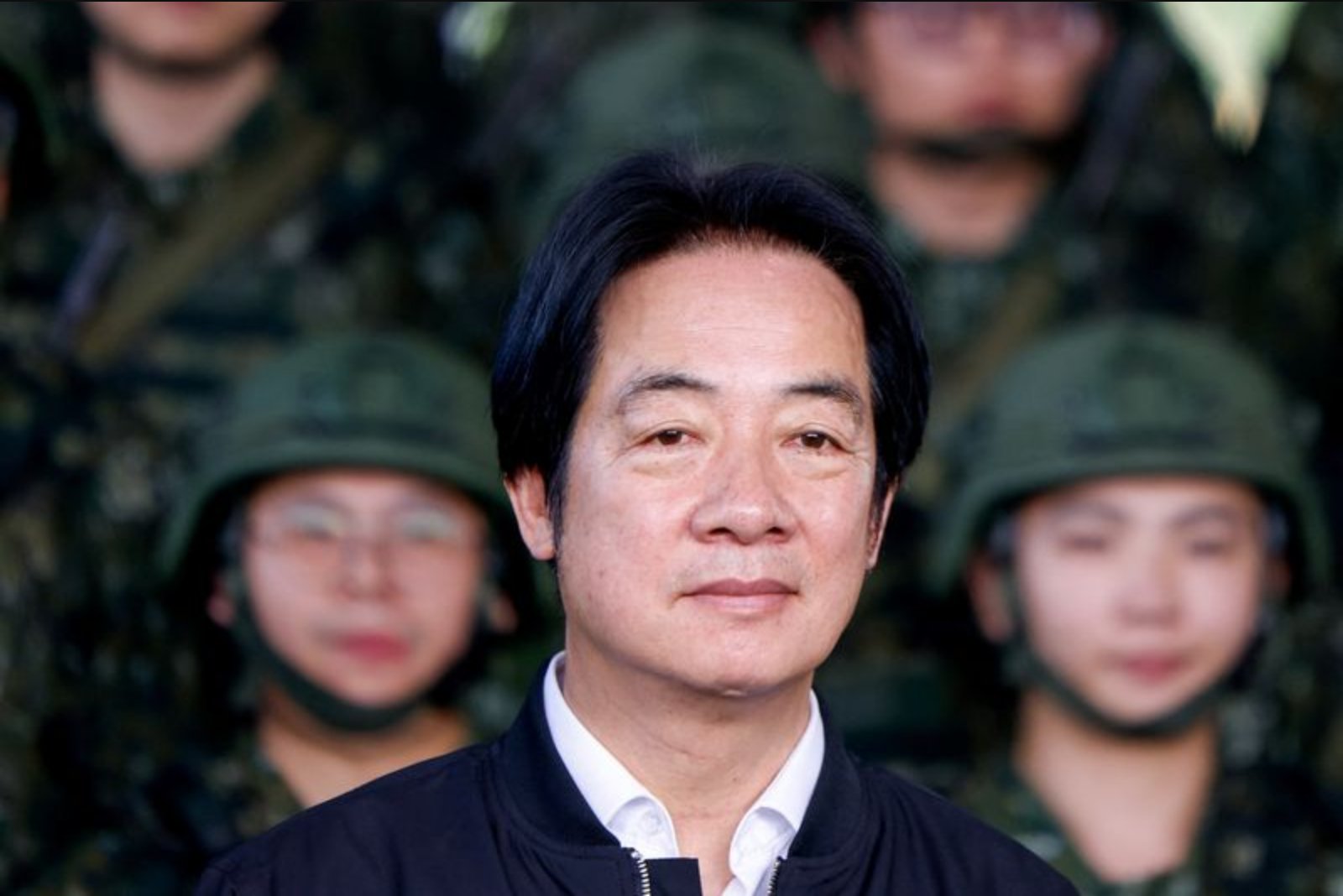
President Lai Ching-te said on Friday that decisions about where to allocate the $250 billion Taiwan has pledged for investments in the United States are for individual companies to make, and he stressed that Taiwan will continue to host its primary production capabilities.
The remarks followed U.S. action this week: Trump administration officials on Thursday signed a final reciprocal trade agreement that establishes a 15% U.S. tariff rate on imports from Taiwan while obtaining a timetable from Taiwan to eliminate or lower tariffs on nearly all U.S. goods.
The trade outline reached last month included a commitment that Taiwan companies would invest $250 billion to expand production in the United States across semiconductors, energy and artificial intelligence sectors, with $100 billion of that amount already attributed to Taiwan Semiconductor Manufacturing Corp.
When asked whether investments by TSMC and other firms in the United States might hollow out Taiwan’s industrial base, Lai reiterated a message he said he delivered upon taking office two years ago: Taiwan’s national economic strategy is to position itself globally and sell to the entire world.
"This round of tariff negotiations is also a very important opportunity. Its purpose is precisely this: to enable our industries to go global," Lai said.
He went on to spell out the government’s view of how Taiwan can continue to grow: "Whether it is TSMC or other industries, as long as their research and development centres are in Taiwan, their advanced manufacturing processes are in Taiwan, and their largest production capacity is in Taiwan, Taiwan can continue to develop steadily," he said.
Lai added that the government will respect companies’ individual investment choices. "This includes our negotiations with the United States this time: of course, the $250 billion in investment refers to companies’ own, voluntary investment decisions," he said.
TSMC, which has committed to invest a total of $165 billion in Arizona to construct factories, did not reply to a request for comment. The company, described in the announcement as the world’s main producer of advanced chips that underpin the trend toward artificial intelligence, noted last month that additional U.S. manufacturing capacity was planned.
What this means for markets and industry
- Tariff changes and the pledged corporate investments are directly relevant to semiconductor, energy and artificial intelligence sectors.
- The scale of investments in the United States—driven by corporate decisions—could reshape manufacturing footprints but, according to the president, not displace Taiwan’s largest production bases.
- Management decisions by firms will determine the pace and location of capital deployment, with the government framing the $250 billion figure as voluntary corporate commitments rather than a state-imposed transfer.
Notes
The information above reflects statements made by President Lai and the terms described in the U.S. reciprocal trade agreement announcement. The reporting includes the cited investment figures attributed to Taiwan companies and TSMC and notes TSMC’s lack of response to a request for comment.